Sales order template 2026

Get Form
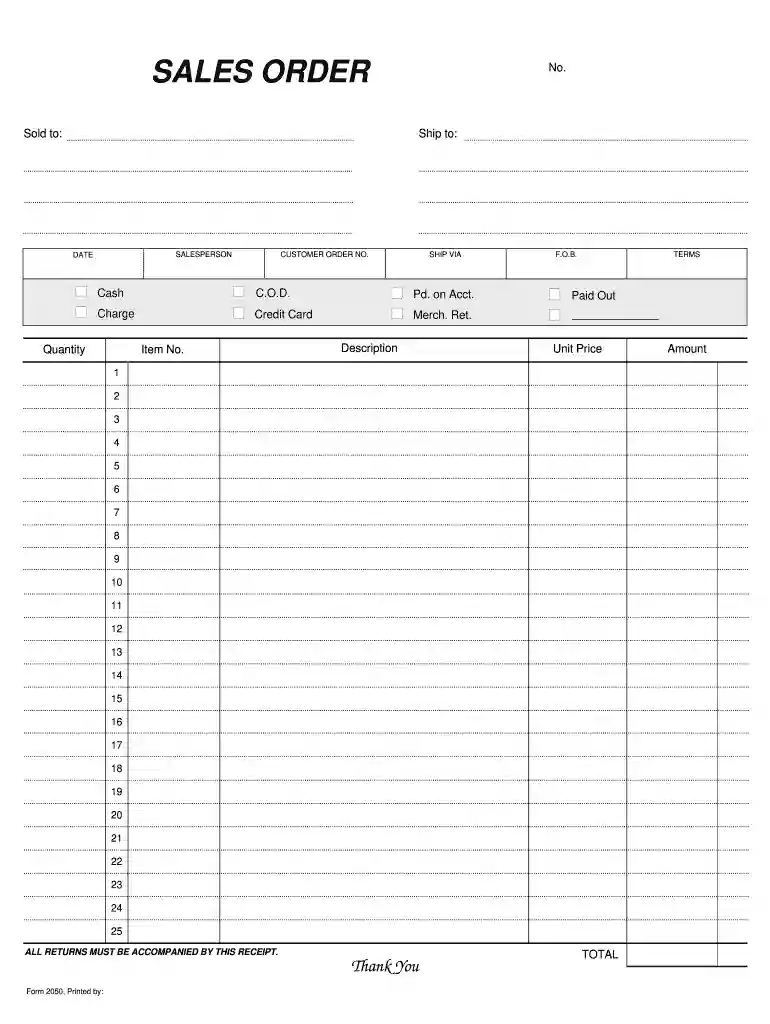
sales order template Preview on Page 1

Here's how it works

01. Edit your sales order template online
Type text, add images, blackout confidential details, add comments, highlights and more.

02. Sign it in a few clicks
Draw your signature, type it, upload its image, or use your mobile device as a signature pad.

03. Share your form with others
Send sales order forms via email, link, or fax. You can also download it, export it or print it out.

Definition and Purpose of a Sales Order Template

A sales order template serves as an official document that confirms a sale transaction between a buyer and a seller. It outlines key details about the order, including products or services purchased, quantities, prices, and payment terms. This clarity helps prevent misunderstandings and ensures all parties are aware of what has been agreed upon.

Key Components of a Sales Order Template

  • Customer Information: The template should capture essential details about the buyer, including name, address, and contact information.
  • Salesperson Details: Including the name of the salesperson or the representative handling the order establishes responsible communication channels.
  • Payment Information: Clear payment methods (credit card, bank transfer, etc.) and any related terms are crucial.
  • Item Descriptions: This section details the products or services being sold, including SKU numbers, which aid in inventory management.
  • Quantities and Pricing: Listing quantities alongside unit prices helps in calculating the total order value, ensuring both parties are in agreement.
  • Terms and Conditions: Any specific conditions regarding returns, warranties, or delivery need to be highlighted for transparency.

How to Use a Sales Order Template Effectively

Using a sales order template can streamline the order management process, improve accuracy, and enhance communication between businesses and their clients. Here are steps for effective usage:

  1. Select the Appropriate Template: Choose a format that best suits your business needs, whether it’s a sales order template in Word, Excel, or a customizable online format.
  2. Fill in Customer and Order Details: Input all relevant information accurately to reduce the chances of errors.
  3. Review Before Sending: Double-check each field, especially the pricing and quantities, to avoid miscommunication.
  4. Send to the Customer: Deliver the finalized document to the customer via email or provide a printed copy.
  5. Maintain a Record: Keep a copy of each sales order for your records, which can assist in future transactions and provide a trail for audits.

Creating a Sales Order Template in Excel

An Excel sales order template is a practical choice because it allows easy modifications and calculations. Here’s how to create one:

  • Set Up the Spreadsheet:

    • Use the first row for headings: Item Number, Description, Quantity, Unit Price, and Total Price.
    • Include automatic calculation formulas to ensure totals are computed based on the quantities and unit prices entered.
  • Include Drop-down Lists: For fields that require consistent entries, create drop-down menus (e.g., payment methods) to maintain data integrity.

  • Formatting: Apply conditional formatting to highlight critical areas, such as items that are low in stock.

  • Template Save Options: Save the file in a template format (.xltx) for easy future use, allowing you to start fresh without altering your previous records.

Common Use Cases for Sales Order Templates

Sales order templates are versatile and applicable across various industries. Here are some common situations where sales order forms are utilized:

  • Retail: Both small and large retailers use sales order forms to manage customer transactions efficiently.
  • Wholesale Distribution: Distributors can track bulk orders, ensuring that inventory levels are maintained while facilitating faster processing of orders.
  • Service Industry: For businesses offering services, such as repairs or consultancy, sales order templates can formalize agreements and document payments.

Legal Considerations for Sales Order Templates

Ensuring compliance with relevant laws is crucial when utilizing sales order templates. Here are key points to consider:

  • Contractual Terms: A sales order functions as a contractual agreement; therefore, clear terms regarding returns, refunds, and deliveries should be established to prevent legal disputes.
  • Sales Tax Inclusion: Make sure the template adheres to state and local sales tax laws, capturing the correct rates applicable to the goods or services sold.
  • Documentation: Retaining copies of sales orders can aid in resolving disputes and serve as proof of transaction in case of legal challenges.

Examples of Customized Sales Order Templates

  • Basic Sales Order Template: This may include customer name, date, item description, quantity, unit price, and total price, suitable for smaller transactions.
  • Detailed Sales Order Form: It can feature sections like shipping instructions, payment terms, and a customer signature line, ideal for larger or more complex sales requiring clarity in agreement.
  • Industry-specific Sales Order Templates: Custom templates for sectors like construction may include additional elements such as project numbers or specific terms relating to project deliverables.

Each of these examples highlights the importance of tailoring sales order templates to fit specific business models, ensuring that all necessary information is captured efficiently while meeting compliance standards.

be ready to get more

Complete this form in 5 minutes or less

Get form

Got questions?

We have answers to the most popular questions from our customers. If you can't find an answer to your question, please contact us.
Contact us
Typically, a sales order should contain the following: Company name and contact information. Customer name and contact information. Customer billing information. Customer shipping information.
Components of sales order Name and contact information of the company (seller) Name and contact information of the customer. Customer billing information. Customer shipping information.
A sales order is a document that provides the details of an order and the terms of the transaction. Its created by the seller after a buyer submits a purchase order. If a purchase order is not involved in the sale, the seller creates the sales order after the customer agrees to purchase a product.
A sales order is a commercial document prepared by a seller and issued to a customer confirming the sale of goods or services involved in a given transaction.
Generally speaking, a sales order should include the following: Selling company name/address. Purchaser contact info (name, address, phone number, email) Order date. Shipping and/or delivery date. Product information. Price (before taxes) Taxes and other fees.

People also ask

A sales order is a document issued by a seller to confirm a buyers purchase request. It includes key details such as product or service descriptions, quantities, prices, delivery dates, and terms of the agreement. This document formalises the transaction and ensures all parties have clarity on the deal.

sales order form excel