
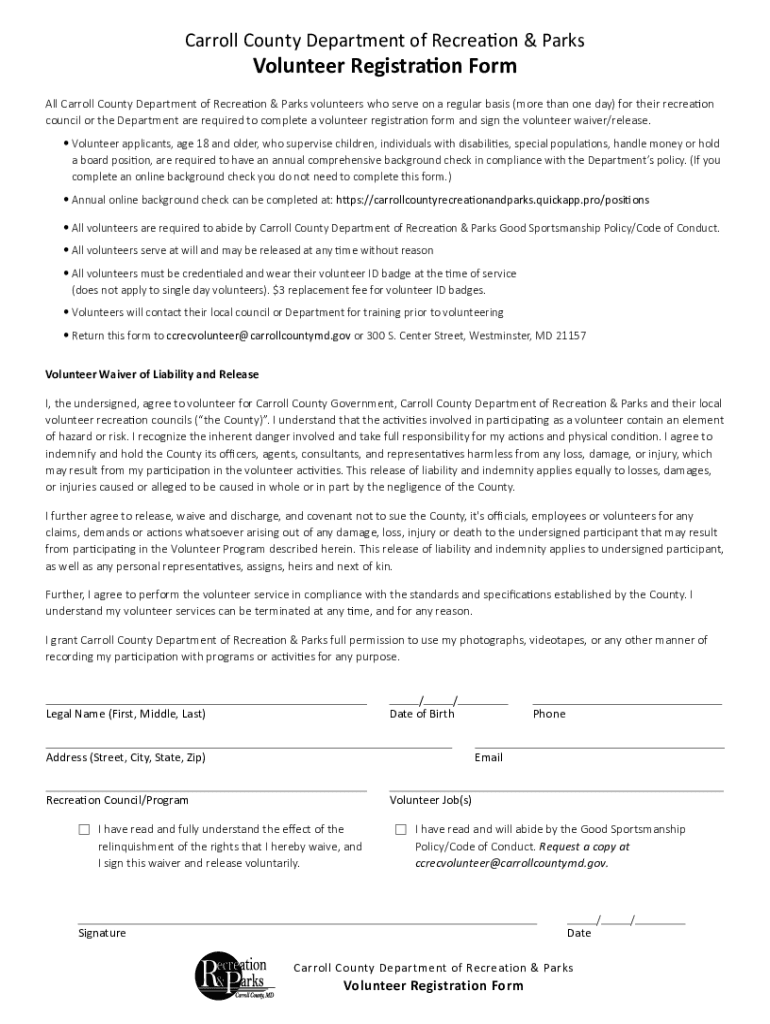







Definition and Purpose of the Volunteer Registration Form
The volunteer registration form is a critical document designed to capture essential information from individuals seeking to volunteer. This form serves as a formal application, ensuring a structured approach to documenting volunteers’ personal details, skills, availability, and areas of interest. Its primary function is to streamline the onboarding process by collecting necessary data, which helps organizations match volunteers with appropriate roles. The form also facilitates the management of volunteer records, aiding in maintaining up-to-date contact information and tracking volunteer involvement over time.
Using the Volunteer Registration Form
To effectively use the volunteer registration form, it's important to understand how it captures key volunteer information. Volunteers begin by filling out personal details such as name, address, phone number, and email. They may also indicate their areas of interest or specialization, helping organizations assign suitable tasks. Availability is another crucial part, where volunteers specify the days and times they are available to help. Some forms might additionally require references or emergency contact information to ensure thorough vetting and safety. Upon completion, the form provides an overview of the volunteer's commitment and qualifications, crucial for any organization’s records.
Obtaining the Volunteer Registration Form
Typically, the volunteer registration form can be accessed in multiple ways, depending on the organization. Many nonprofits and community organizations provide digital versions of the form on their websites, easily downloadable or fillable online. Occasionally, forms may also be available in-person at an organization’s premises or through local community centers. Large organizations might integrate these forms into their volunteer management software systems, ensuring easy access for interested individuals. Regardless of the method, obtaining the form is generally straightforward, promoting accessibility and broad participation.
Steps to Complete the Volunteer Registration Form
Completing the volunteer registration form involves a systematic approach to gather accurate and thorough information.
- Personal Information: Begin by entering your full name, contact details, and address, ensuring accuracy.
- Experience and Skills: List any previous volunteering experience, specific skills, or qualifications that might benefit the organization.
- Availability: Clearly specify the days and times you are available to volunteer.
- Interests and Preferences: Indicate any particular areas of interest or preferred volunteer activities.
- Emergency Contacts: Provide contact information for a person who can be reached in case of an emergency.
- Supplementary Information: Some organizations may require additional documents, such as a resume or background check authorization, which should be prepared in advance.
- Review and Submit: Carefully review all entered data for accuracy before submission, ensuring compliance with any specified submission guidelines (e.g., online or paper forms).
Importance of Volunteer Registration Forms
Volunteer registration forms play an integral role in the effective management and organization of volunteer programs. They act as a formalized mechanism for capturing detailed information, ensuring volunteers are adequately vetted and coordinated. Additionally, these forms highlight the individual's commitment, allowing organizations to allocate resources and plan initiatives accordingly. By structuring the onboarding process, registration forms help foster accountability and responsibility among volunteers, contributing to more successful project outcomes and volunteer satisfaction.
Key Elements of the Volunteer Registration Form
Several fundamental components are present in most volunteer registration forms:
- Personal Information: Full name, contact details, age, and sometimes identification number.
- Experience and Skills: Sections to outline previous volunteering experiences and any relevant skills.
- Availability: Specific sections for volunteers to detail their availability.
- Areas of Interest: Preference sections, allowing volunteers to express the types of activities they are interested in.
- Supplementary Documents: Placeholders or requests for additional documentation such as background checks or references.
These elements ensure the form captures comprehensive data essential for volunteer coordination and role assignment.
Who Typically Uses the Volunteer Registration Form?
The volunteer registration form is predominantly utilized by nonprofit organizations, community groups, and sometimes governmental departments that rely on volunteer support. Generally, individuals from various backgrounds who are seeking to contribute their time and skills complete these forms. The range includes students, retirees, professionals seeking community engagement, and individuals fulfilling service requirements. By submitting a form, these individuals express their readiness to assist in fulfilling the organization’s mission and objectives.


Collecting and Managing Form Data
The collection and management of form data are crucial for maintaining an efficient volunteer program. Once forms are submitted, organizations usually digitize the information, adding it to a central database or a volunteer management system. This process helps in tracking volunteer hours, roles, and contact information, ensuring easy access for future reference or project planning. Data management systems also aid in identifying gaps or trends within the volunteer community, which can be pivotal during recruitment drives or special event planning.
Legal Use and Compliance with Volunteer Registration Forms
Legal use of the volunteer registration form involves compliance with data protection and consent laws, such as the collection of personal information and background checks. Organizations must ensure that they have legal grounds for collecting sensitive data, including obtaining explicit consent from volunteers where necessary. Many forms include disclosure statements or privacy notices to inform volunteers about data usage. Furthermore, it's essential that stored data is handled securely, adhering to privacy laws to maintain trust and compliance.




