
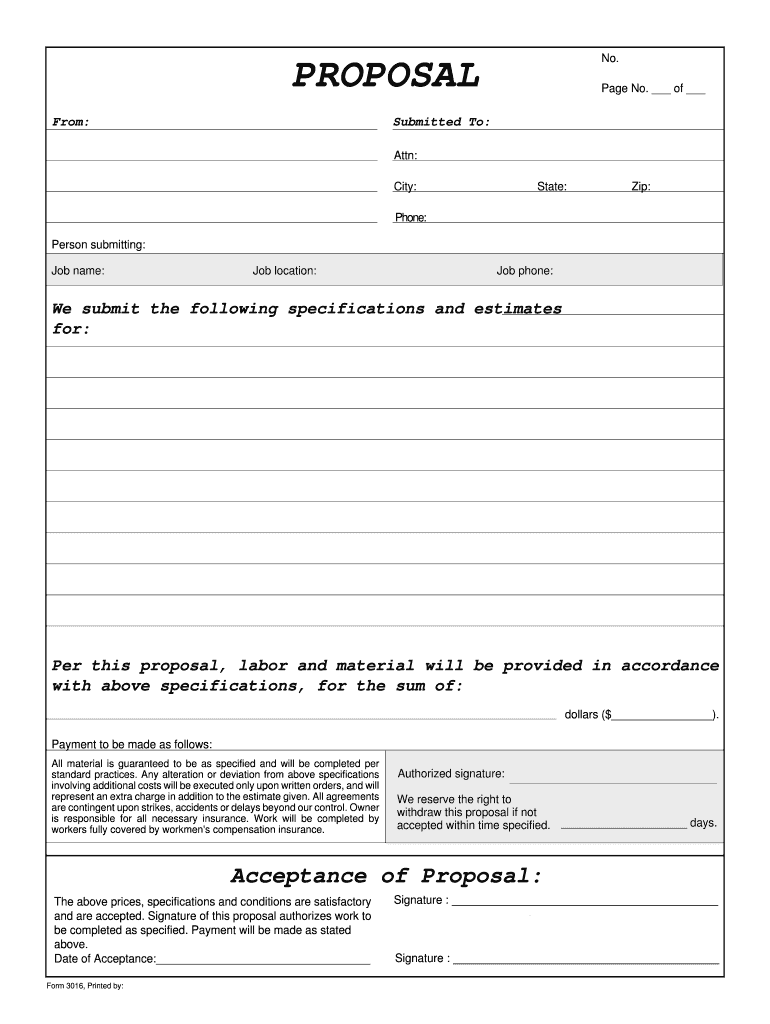







Definition & Meaning of the Proposal Form
A proposal form is a formal document used to outline the terms and details of a potentially binding agreement or contract. It serves as a foundational element in the process of soliciting services, projects, or partnerships across various industries. Typically, it includes specifications such as payment terms, project timelines, responsibilities, and conditions for acceptance.
In essence, this document is critical for establishing mutual understanding between parties involved, detailing what is to be delivered, and setting the stage for further negotiations. For example, a contractor may submit a proposal form to a client to outline the labor and materials required for a construction project, including cost estimates and completion dates.
Key Components of a Proposal Form
- Contact Information: Basic details of the parties involved.
- Project Description: Clear and concise description of the work to be undertaken.
- Terms and Conditions: Detailed terms, including payment structure and timelines.
- Acceptance Conditions: Timeframe within which the proposal must be accepted.
- Signature Lines: Space for signatures to formalize the agreement.
Steps to Complete the Proposal Form
Completing a proposal form accurately is essential to ensure that all parties understand the terms of the agreement. Here are the necessary steps:
- Gather Information: Collect all relevant details about the project or services offered, including costs and legal obligations.
- Fill in Contact Details: Include names, addresses, and contact information for all parties involved.
- Describe the Project: Clearly articulate the scope of work, including objectives and deliverables.
- Outline Costs: Provide a breakdown of costs, including materials, labor, and any potential taxes.
- Specify Terms and Conditions: Include conditions that govern the proposal, such as payment schedules and deadlines.
- Submit for Signature: Once completed, present the form for signature, ensuring all parties agree to the outlined terms.
Important Terms Related to the Proposal Form
Understanding the terminology associated with proposal forms can enhance clarity and prevent misunderstandings in the contract process. Here are several key terms:
- Bid: An offer to undertake a project at a specified price.
- Contractor: The individual or entity that completes the work outlined in the proposal.
- Scope of Work: Detailed description of the tasks and responsibilities included in the project.
- Terms of Agreement: Legal stipulations that outline the obligations of each party.
- Acceptance: The act of agreeing to the terms laid out in the proposal, often requiring a signature.
Digital vs. Paper Version of the Proposal Form
In today's digital age, proposal forms can be completed and submitted in either format. Each method carries distinct advantages and potential drawbacks.
Digital Proposal Forms
- Accessibility: Able to be filled out from any device, enhancing convenience.
- Speed: Immediate delivery via email or online submission accelerates the process.
- Integration: Often includes checkboxes and dropdown menus, streamlining completion.
Paper Proposal Forms
- Tangible Record: Provides a physical copy for filing and reference.
- Personal Touch: Some stakeholders prefer physical documents for signing and review.
- Reduced Technical Issues: Avoids potential complications from digital submission failures.
Both formats meet legal requirements, but digital forms have become increasingly popular due to their efficiency.
Examples of Using the Proposal Form
Proposal forms are utilized across various sectors, highlighting their versatility. A few practical examples include:
- Construction: A general contractor submits a proposal form to secure a job for building a school, detailing materials and labor costs.
- Consulting: A business consultant provides a proposal form to a potential client outlining the services offered, timeline, and fees for a marketing strategy implementation.
- Event Planning: An event planner uses a proposal form to present a detailed plan and budget for organizing a corporate event or wedding.
- Freelance Services: A freelance designer submits a proposal form to a company, specifying design ideas and pricing for a branding project.
Each example shows the importance of clarity and mutual understanding fostered through a well-structured proposal form.


