







Definition & Meaning
The Conservatorship Care Plan is a legal document that outlines the framework that a conservator must follow to manage the personal and financial affairs of an individual, known as the conservatee, who is unable to do so independently. This plan aims to ensure that the conservatee's health, welfare, and finances are managed in their best interest. Conservatorships can be established due to various reasons, such as severe mental illness, old age, or developmental disabilities.
How to Obtain the Conservatorship Care Plan
To obtain a Conservatorship Care Plan, a petition must be filed in the appropriate court within the conservatee's jurisdiction. The court will generally require specific documentation, including medical evaluations and proof of the conservatee's inability to manage their own affairs. Legal professionals often assist in drafting the petition and gathering necessary documentation. It is crucial to adhere to state-specific laws and procedures during this process to ensure that the petition is accepted by the court.
Key Elements of the Conservatorship Care Plan
- Assessment of Needs: Evaluation of the conservatee's current medical, financial, and social needs.
- Financial Management: Strategies for managing the conservatee's assets, income, and expenditures.
- Healthcare Arrangements: Plans for medical treatments, healthcare providers, and long-term care options.
- Living Arrangements: Recommendations for housing, whether staying at home, assisted living facilities, or other supportive environments.
Legal Use of the Conservatorship Care Plan
The Conservatorship Care Plan functions as a legally binding document once approved by a court. It directs the conservator to manage the conservatee’s affairs within defined legal parameters. This includes adhering to fiduciary standards, which require acting in the conservatee's best interests with loyalty and care. Non-compliance with the plan can result in court intervention or legal penalties.
Steps to Complete the Conservatorship Care Plan
- Initial Evaluation: Conduct a comprehensive assessment of the conservatee’s needs and current circumstance.
- Drafting the Plan: Outline the care plan, including medical, financial, and daily living arrangements.
- Submission to Court: Present the proposed plan to the court for review and approval. This may involve a court hearing.
- Implementation and Monitoring: Upon approval, implement the plan and regularly monitor its effectiveness, making necessary adjustments.
Important Terms Related to the Conservatorship Care Plan
- Conservator: An individual appointed by the court to manage the conservatee's affairs.
- Conservatee: The individual who is the subject of the conservatorship due to incapacity.
- Fiduciary Duty: The legal obligation of the conservator to act in the conservatee's best interest.
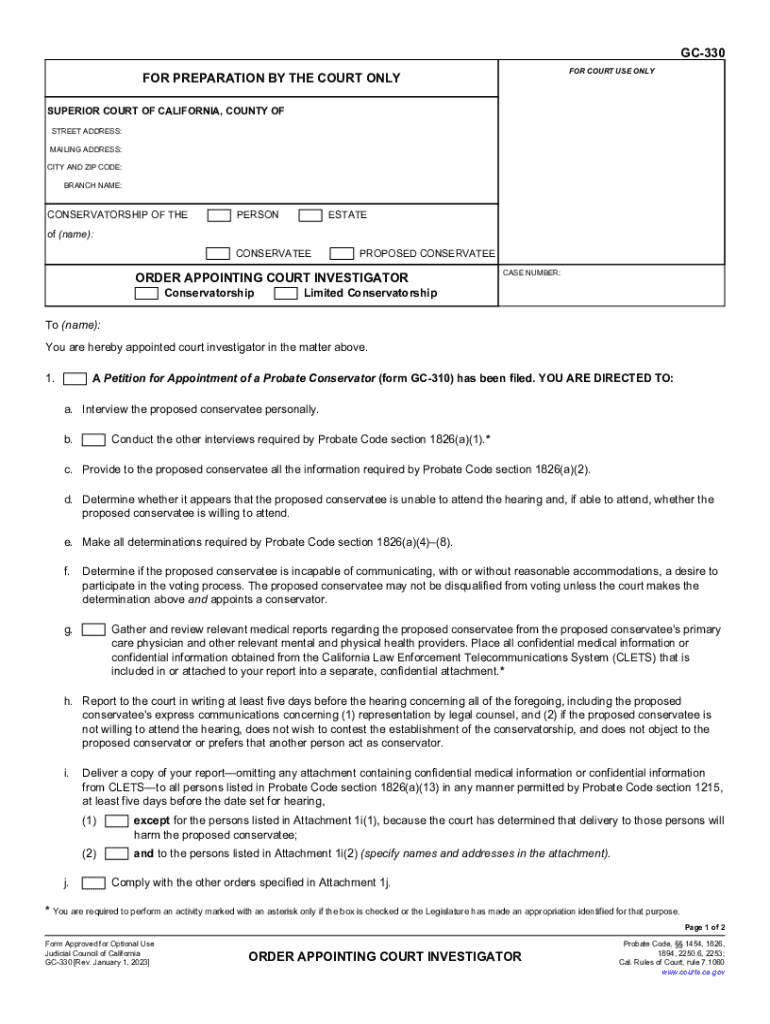
- Court Investigator: An officer responsible for assessing the need for a conservatorship and reporting to the court.
State-Specific Rules for the Conservatorship Care Plan
Different states have varying requirements for establishing a conservatorship and implementing a care plan. In California, for instance, detailed reports and periodic reviews by court investigators are mandatory. It’s essential to consult legal experts familiar with state-specific legislation to navigate these requirements effectively. Failure to comply with state regulations can lead to the plan's invalidation or legal repercussions.
Penalties for Non-Compliance
Non-compliance with the Conservatorship Care Plan can result in several penalties, such as court sanctions, removal from the conservatorship role, or even civil liability for mismanagement of the conservatee’s affairs. The court may also require the reimbursement of misused funds or reverse inappropriate decisions made during the conservatorship. It is crucial for conservators to maintain detailed records and regularly report to the court to avoid potential liabilities.




