




01. Edit your moldreport submittal chain custody online
Type text, add images, blackout confidential details, add comments, highlights and more.

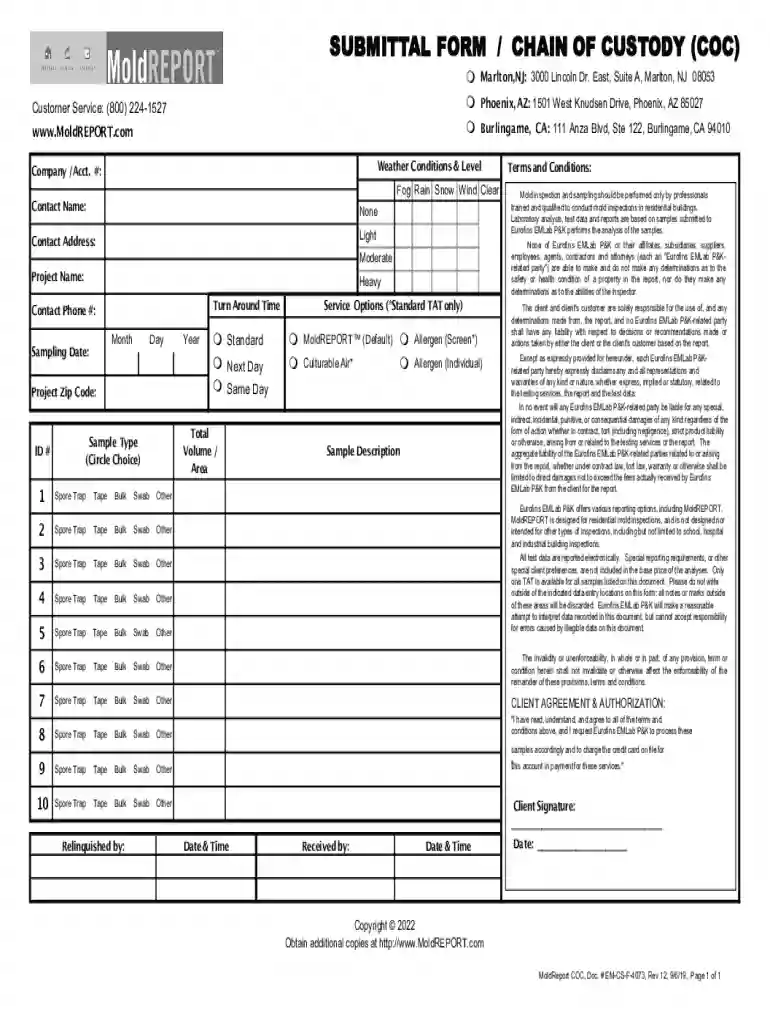
Type text, add images, blackout confidential details, add comments, highlights and more.

Draw your signature, type it, upload its image, or use your mobile device as a signature pad.

Send it via email, link, or fax. You can also download it, export it or print it out.
The Submittal Form Chain of Custody (COC) is an essential document used in environmental testing, particularly in mold inspection services. This form tracks the transfer of samples from the collection point to the laboratory and ultimately to the reporting phase. The primary purpose of the COC is to maintain a clear, documented history of sample handling to ensure integrity and reliability of test results. For example, when Eurofins EMLab P&K conducts mold inspections, the COC form outlines the thorough process for managing samples, detailing every step from acquisition to analysis.
The form also facilitates compliance with regulatory standards, helping laboratories and field personnel adhere to protocols that prevent contamination or tampering with samples. This is crucial in providing accurate assessments, especially when the results influence important safety and health-related decisions.
Understanding the elements contained in the COC form is vital for anyone involved in sample collection or analysis. These elements include:
These components ensure all participants in the chain of custody are fully informed about the sample's journey, reducing the risk of error or dispute.
Utilizing the COC form effectively involves several key steps:
This process ensures that sample integrity is maintained and any deviations from standard procedures are accounted for.
To ensure all necessary details are captured and correctly submitted, follow these steps:
These steps help avoid errors and omissions, which could impact sample validity.
The COC form is crucial because it upholds sample integrity from collection to processing. By offering a transparent record of custody, the form helps prevent sample contamination, misidentification, or disputes. It plays a vital role in litigation or regulatory scenarios where accurate documentation and adherence to protocols are mandatory. Moreover, it enhances trust among all parties, knowing that results are based on rigorously handled samples.
Users of the COC form typically include:
This wide range of users highlights the form's versatility and necessity in maintaining ecological and health standards.


Utilizing the COC form also ensures compliance with legal standards and industry regulations. Legal use of the COC facilitates accurate reporting, necessary for regulatory inspections and environmental certifications. It guarantees due process in the handling of sensitive samples, minimizing the risk of non-compliance penalties.
Non-compliance with COC procedures could lead to legal repercussions or invalidate sample results.
While the COC is vital in its existing framework, there are variations tailored for specific industries or testing types. For instance, some labs might adopt digital COCs, integrating electronic signatures for improved efficiency and record-keeping. Alternatives might include industry-specific forms for pharmaceuticals or chemical testing, designed to capture details relevant to specialized regulatory requirements.
We've got more versions of the moldreport submittal chain custody form. Select the right moldreport submittal chain custody version from the list and start editing it straight away!
At DocHub, your data security is our priority. We follow HIPAA, SOC2, GDPR, and other standards, so you can work on your documents with confidence.
All samples must be submitted with a completed and properly executed Chain-of-Custody/Sample Submission Form (COC/SSF) record. The COC/SSF.Read more
Jun 30, 2020 TITLE AND SUBTITLE U c. Samples were stored in an ice-cooled chest for transport under standard chain-of-custody procedures to Eurofins
DCLS provides a Chain-of-Custody (COC) form to document sequentially those who have accepted custody of legal samples. The COC form may be obtained on the DCLS


