






Definition & Meaning
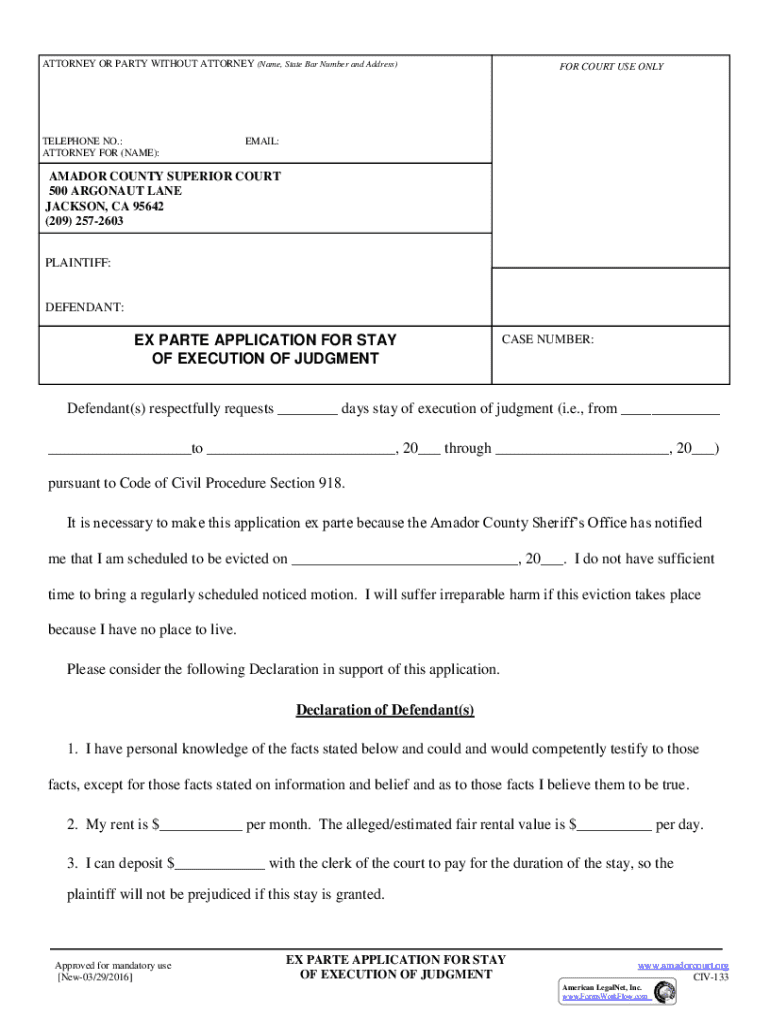
The Civ-133 form is specifically utilized in the context of legal proceedings related to eviction in the Amador County Superior Court. This form is an Ex Parte Application for Stay of Execution of Judgment, typically filed by defendants facing eviction. The purpose of the Civ-133 is to request a temporary halt or delay — known as a stay — to the execution of a court judgment that mandates eviction. By filing this application, the defendant aims to prevent the immediate enforcement of the eviction, providing time to address circumstances that could lead to significant harm if the eviction proceeds. This stay is usually sought to mitigate severe consequences like loss of housing without securing alternative accommodations.
How to Use the Civ-133
To use the Civ-133 form effectively, individuals must accurately complete each section of the form, ensuring all required information is provided. The form requires the filing party to detail reasons for seeking a stay, supported by relevant documentation and declarations, such as financial hardships or medical situations that justify postponing the eviction. It's important for users of the form to adhere to any court-specific guidelines or instructions available with the form. Once completed, the form is submitted to the relevant court for consideration. Ideally, legal advice or assistance from a legal practitioner should be sought to enhance the likelihood of the application being approved.
Steps to Complete the Civ-133
-
Gather Necessary Information: Collect all pertinent details and documents, including court judgment specifics, eviction notices, and any evidence supporting the need for a stay.
-
Fill Out Personal Details: Enter identification information such as names, addresses, and contact details of both the plaintiff and defendant.
-
State Reasons for Stay: Clearly articulate the reasons for seeking a stay, including an explanation of any irreparable harm that may occur, and attach any supporting documentation.
-
Provide Supporting Declarations: Include declarations describing financial situations, attempts to secure new housing, or other hardships.
-
Submit the Form: File the completed Civ-133 with the appropriate county superior court either in person or by mail, adhering to any specific submission protocols.
-
Await Court Decision: After submission, follow up as required and prepare for any hearings or additional requirements set by the court.
Key Elements of the Civ-133
- Personal and Case Information: Includes names, addresses, and case reference numbers.
- Declaration of Hardship: A comprehensive declaration of the hardship faced by the defendant.
- Communication Summary: Documentation of attempts to communicate with the plaintiff about the eviction.
- Supporting Documentation: Any relevant financial documents, correspondence, or evidence that supports the request for a stay.
- Court Specific Details: Information unique to the filing county or court that may influence the form’s application.
Who Typically Uses the Civ-133
The Civ-133 form is predominantly used by defendants in eviction proceedings, often those facing imminent eviction orders. These individuals may be experiencing financial hardship, illness, or other extenuating circumstances that render immediate eviction problematic. Legal representatives or advocates may also file on behalf of a defendant, especially in cases involving vulnerable populations who may not be able to self-represent effectively. Additionally, tenants seeking to negotiate with landlords for more time to vacate premises may use this form as part of their legal strategy to delay eviction.


Required Documents
When completing the Civ-133 form, several supporting documents are commonly required to substantiate the application for a stay. Essential documents include:
- Proof of Income: Pay stubs, tax returns, or other evidence of income to demonstrate financial status.
- Eviction Notices: Copies of all notices received related to the eviction.
- Correspondence Records: Documentation of all communications with the landlord or plaintiff.
- Financial Hardship Evidence: Bills, debts, or proof of financial obligations contributing to inability to relocate.
- Medical Records: If health concerns are cited, relevant medical documentation should be included.
Filing Deadlines / Important Dates
The Civ-133 must be submitted promptly, typically after receiving an eviction judgment but before the execution date set by the sheriff's office for eviction. Filing timelines can vary by jurisdiction; therefore, it is crucial for applicants to check local court rules. Failure to file within the stipulated time frame may result in a denied request and proceed with eviction. Following a submission, applicants should remain aware of hearing dates or deadlines for any additional documentation required by the court.
Legal Use of the Civ-133
The Civ-133 form serves a legal function by providing a mechanism for tenants to seek judicial intervention to temporarily halt eviction proceedings. It is legally binding and requires adherence to court rules and procedures. The form's effectiveness hinges on the validity of the reasons presented for the stay and compliance with all related legal obligations. Such applications are typically grounded in the principles of equity, seeking to prevent unjust outcomes from instantaneous judgment execution, aligning with broader legal standards that protect individuals from undue harm.