
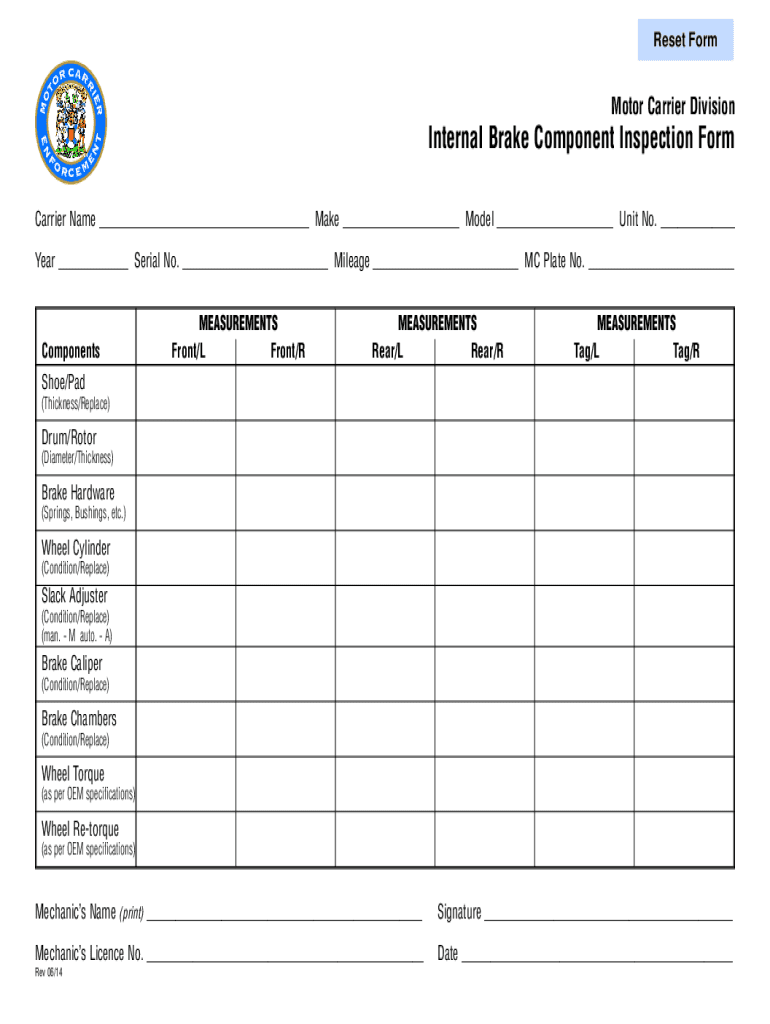







Definition and Purpose of the Brake Inspection Form
The brake inspection form is a critical document used to evaluate the condition of a vehicle's braking system. Its primary purpose is to document a thorough assessment of brake components, including rotors, pads, drums, and lines. The form serves as an official record that a certified technician has performed the inspection, adhering to safety standards and manufacturer specifications.
Key definitions related to the form include:
- Brake System Components: This includes essential parts such as brake pads, rotors, drums, calipers, and brake fluid lines, which must be assessed during inspection.
- OEM Specifications: Refers to the original equipment manufacturer’s requirements, which are necessary for ensuring that the brakes function as intended.
Retention of this document is essential as it may be needed for legal compliance or regulatory inspections. Failure to provide this form during vehicle inspections could result in penalties, including the vehicle being taken out of service until compliance is demonstrated.
How to Complete the Brake Inspection Form
Completing the brake inspection form requires careful attention to detail. Each section must be filled out comprehensively to ensure accurate tracking of the brake system's condition.
Step-by-Step Completion Guide
-
Header Section:
- Include vehicle identification information such as make, model, and year. This helps in tracking inspection history for specific vehicles.
-
Inspector Details:
- The technician performing the inspection should provide their name, certification number, and date of inspection.
-
Component Assessment:
- Document the condition of each brake component using a standardized checklist. This typically includes:
- Visual inspection of brake pads for wear.
- Measurement of rotor thickness.
- Assessment of brake fluid level and clarity.
- Document the condition of each brake component using a standardized checklist. This typically includes:
-
Comments and Recommendations:
- Include observations about any irregularities or necessary repairs. Recommendations for future maintenance should also be documented to maintain safety standards.
-
Signature and Date:
- The technician must sign and date the form, affirming the accuracy of the inspection.
By following these steps, the form remains a reliable resource for the vehicle owner and ensures compliance with safety regulations.
Importance of the Brake Inspection Form
The brake inspection form plays a significant role in promoting vehicle safety and reliability. Regular inspections are mandated in many jurisdictions, making adherence to this process essential for vehicle operation.
Benefits of Utilizing the Form
- Safety Assurance: A properly completed form ensures that all brake components are inspected regularly, reducing the risk of brake failure.
- Legal Compliance: For commercial vehicles, adherence to brake inspection regulations is legally mandated, and having documented forms can safeguard against penalties.
- Maintenance Tracking: The form provides valuable data on the maintenance history of a vehicle, allowing for better decision-making regarding repairs or upgrades.
Regular use and proper filing of the brake inspection form contribute to overall vehicle safety and compliance with state and federal regulations.
Who Uses the Brake Inspection Form
The brake inspection form is utilized across multiple sectors and by a variety of individuals.
Typical Users of the Form
- Commercial Vehicle Operators: Owners and operators of trucks and buses often need this form for regulatory compliance. Frequent inspections ensure that vehicles meet safety standards.
- Automotive Repair Shops: Technicians in repair facilities use the form as part of their quality control processes when inspecting customer vehicles.
- Fleet Management Companies: These companies maintain multiple vehicles and rely on brake inspection forms for tracking the safety and compliance of their fleets.
The widespread use among these groups illustrates the form's importance in maintaining road safety and adhering to legal requirements.
Legal Considerations for the Brake Inspection Form
The brake inspection form is subject to various legal and regulatory requirements at both state and federal levels, making it crucial for compliance.
Legal Obligations
- Compliance with Safety Regulations: Many states mandate brake inspections as part of routine vehicle safety checks, especially for commercial vehicles.
- Record-Keeping Requirements: Retaining completed forms may be required to demonstrate compliance during audits from regulatory agencies.
- Enforcement of Penalties: Failure to complete and maintain accurate brake inspection records can result in penalties, including fines or operational halts during inspections.
Understanding the legal framework surrounding the brake inspection form is vital for vehicle owners and operators to mitigate risks associated with non-compliance.
Key Elements of the Brake Inspection Form
The brake inspection form encompasses several key elements that contribute to its effectiveness and utility.
Essential Components of the Form
- Comprehensive Checklists: Many forms include checklists for various brake components, ensuring no aspect is overlooked during inspections.
- Visual Documentation Sections: Areas designated for comments or pictures allow inspectors to provide a clear visual record of any issues.
- Signature Verification: This includes spaces for both the inspector's and vehicle owner's signatures, verifying that the inspection was conducted and understood.
These elements ensure that the form captures all pertinent information concerning the brake system's condition, making it a valuable tool for maintenance and compliance.
Examples of the Brake Inspection Form in Use
Several scenarios illustrate the importance and utility of the brake inspection form in real-world applications.
Practical Applications
- Routine Maintenance Checks: A commercial fleet manager schedules regular brake inspections. After each inspection, the technician completes the brake inspection form, documenting the vehicle's condition and any necessary repairs. This information is critical for maintaining compliance and safety.
- Pre-Purchase Inspections: An individual considering purchasing a used vehicle might request a comprehensive brake inspection. The completed form provides them with a clear understanding of the vehicle's maintenance history and any potential issues.
- Regulatory Audits: Regulatory agencies may request documentation during vehicle inspections. A well-maintained file of brake inspection forms can serve as proof of compliance, helping to avoid penalties during audits.
These examples highlight the brake inspection form's role as a critical document for vehicle safety and regulatory compliance across various contexts.




