






Definition & Purpose of IRS Form W-4V
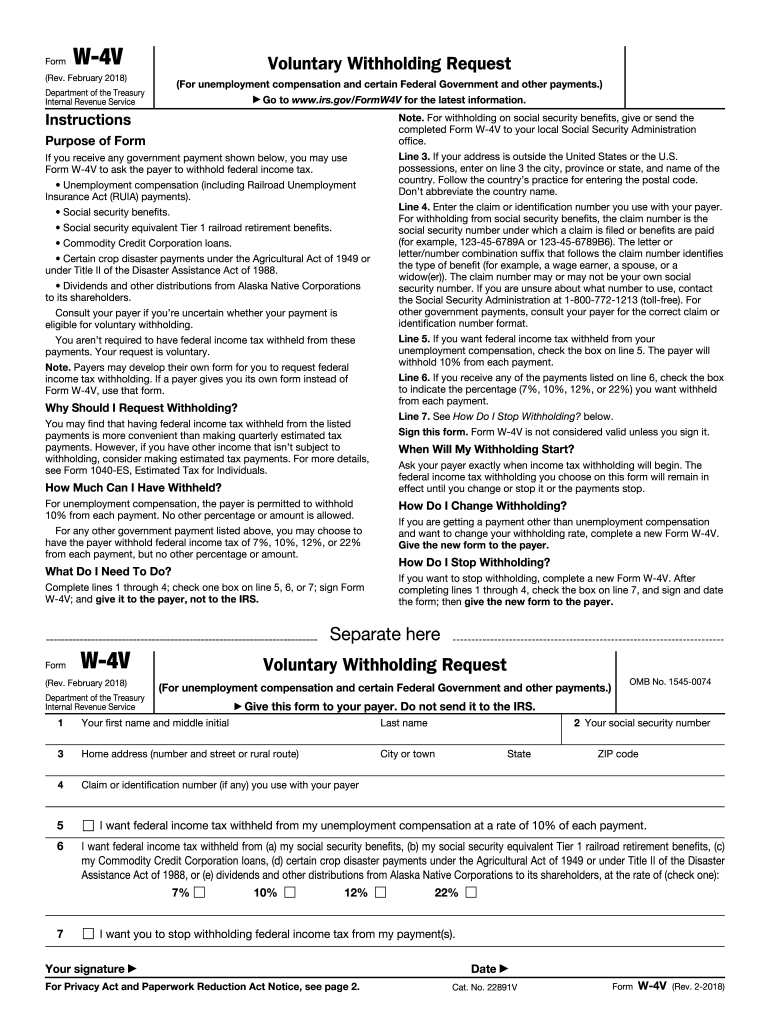
IRS Form W-4V, known as the Voluntary Withholding Request, is a document allowing individuals to request that federal income tax be withheld from certain government payments. These payments typically include unemployment compensation and social security benefits. The form serves the primary purpose of helping taxpayers manage their tax liability by ensuring that taxes are withheld at the source of their income, potentially preventing a large tax bill when they file their annual return.
The flexibility of the form allows individuals to specify a particular withholding rate, aligning their tax payments more closely with their actual liability. This can be especially beneficial for those who receive periodic payments and prefer to manage their tax obligations throughout the year rather than facing a large payment at tax time.
How to Use the IRS Form W-4V Printable
To use the IRS Form W-4V printable effectively, follow these steps:
- Identify Payments: Determine which eligible government payments, such as social security or unemployment benefits, you want tax withheld from.
- Select Withholding Rate: Decide on the withholding rate that best suits your financial situation. Options typically include rates like 7%, 10%, 12%, or 22%, but double-check current rates as they may vary.
- Complete the Form: Fill out the necessary personal information including your full name, social security number, and address. Clearly indicate the withholding choice.
- Submit the Form: Once completed, submit the form to the organization disbursing your benefits—not directly to the IRS. This could be a social security office or the state unemployment office, depending on the payment type.
Using the printable format allows for ease of access and the ability to fill out the form at your convenience, ensuring that you can manage your taxes efficiently and effectively.
Steps to Complete the IRS Form W-4V Printable
To ensure accurate completion of the IRS Form W-4V, adhere to these detailed steps:
- Gather Personal Information: Start with your name, home address, and social security number, which are required to identify you in connection with your tax records.
- Choose Withholding Amount: Indicate the percentage of tax you wish to have withheld from your payments. Consider factors such as your other income and potential deductions.
- Fill Out the Form: Carefully enter the selected withholding percentage in the designated section. Verify that all personal information is correct and legible.
- Review and Sign: Double-check your entries before signing the form. A signature is mandatory to validate your request.
- Submit to Payer: Forward the completed and signed form to the payer of your benefits. Keep a copy for your records in case any discrepancies arise in the future.
Completing these steps meticulously ensures that your form is processed without delays, helping you manage your tax obligations smoothly.
Who Typically Uses the IRS Form W-4V Printable
The IRS Form W-4V is commonly used by individuals receiving government payments who wish to have federal taxes withheld. Typical users include:
- Social Security Beneficiaries: Individuals who want to have taxes withheld from their social security benefits to avoid a large tax bill.
- Unemployment Insurance Recipients: Those receiving unemployment benefits can opt to have taxes withheld to prevent unexpected tax liabilities.
- Self-Employed Individuals: Those who receive taxable government payments can use this form to manage their quarterly estimated tax responsibilities.
Understanding who uses the form is key to recognizing its versatility in managing tax obligations linked to government benefits.


Important Terms Related to IRS Form W-4V
Familiarity with certain terms is essential when dealing with IRS Form W-4V:
- Withholding: The process of deducting tax from income, which is then remitted to the IRS on behalf of the taxpayer.
- Government Payments: Includes specific taxable benefits such as social security, unemployment compensation, and certain other federal payouts.
- Voluntary Request: Indicates that the taxpayer has chosen to have taxes withheld, as opposed to mandatory withholding.
These terms frame the understanding and function of Form W-4V, helping taxpayers communicate efficiently with financial services and tax agencies.
Legal Use of the IRS Form W-4V Printable
The legal utilization of IRS Form W-4V involves:
- Voluntary Action: Form W-4V's use is entirely at the taxpayer's discretion, providing flexibility in tax planning and financial management.
- Compliance with Tax Laws: By designating withholding, taxpayers can stay compliant with federal tax requirements and avoid potential penalties or interest for underpayment.
- Adhering to ESIGN Act: Any digital submission must comply with laws governing electronic records and signatures to ensure legal validity.
This form plays a critical role in financial planning and legal compliance for those navigating the complexities of government payments and federal taxes.
Key Elements of the IRS Form W-4V Printable
Understanding the components of Form W-4V helps in accurately completing it:
- Personal Information Section: Requires full legal name, social security number, and address details.
- Withholding Election: A clear designation of desired withholding rate from available options.
- Signature and Date: Essential for authorizing the withholding request and ensuring legal bindingness.
Each element is vital for form processing and accuracy, ensuring that the requested tax management measures are implemented correctly by the payer.
IRS Guidelines for Form W-4V
IRS guidelines provide clarity on Form W-4V’s application:
- Eligibility: To use this form, individuals must receive qualifying government payments that are subject to taxation.
- Submission: Direct the completed form to the institution responsible for pay disbursement, not the IRS.
- Updates: IRS guidelines specify that taxpayers can adjust or revoke their withholding request at any time in response to financial changes.
Adhering to these guidelines helps taxpayers effectively manage their tax responsibilities using Form W-4V, aligning with IRS rules and expectations.
Filing Deadlines / Important Dates for IRS Form W-4V
While the IRS Form W-4V does not have specific filing deadlines, timeliness is crucial in the context of:
- Processing Time: Allow adequate time for processing by the institution that handles the payments to begin withholding taxes from the next scheduled disbursement.
- Tax Year Planning: Consider tax year timelines when altering withholding preferences to align with personal financial strategies.
Staying informed of these timing considerations helps taxpayers in synchronizing their submissions with their overall tax planning, leading to optimally managed tax obligations.