



01. Edit your form online
Type text, add images, blackout confidential details, add comments, highlights and more.

Type text, add images, blackout confidential details, add comments, highlights and more.

Draw your signature, type it, upload its image, or use your mobile device as a signature pad.

Send it via email, link, or fax. You can also download it, export it or print it out.
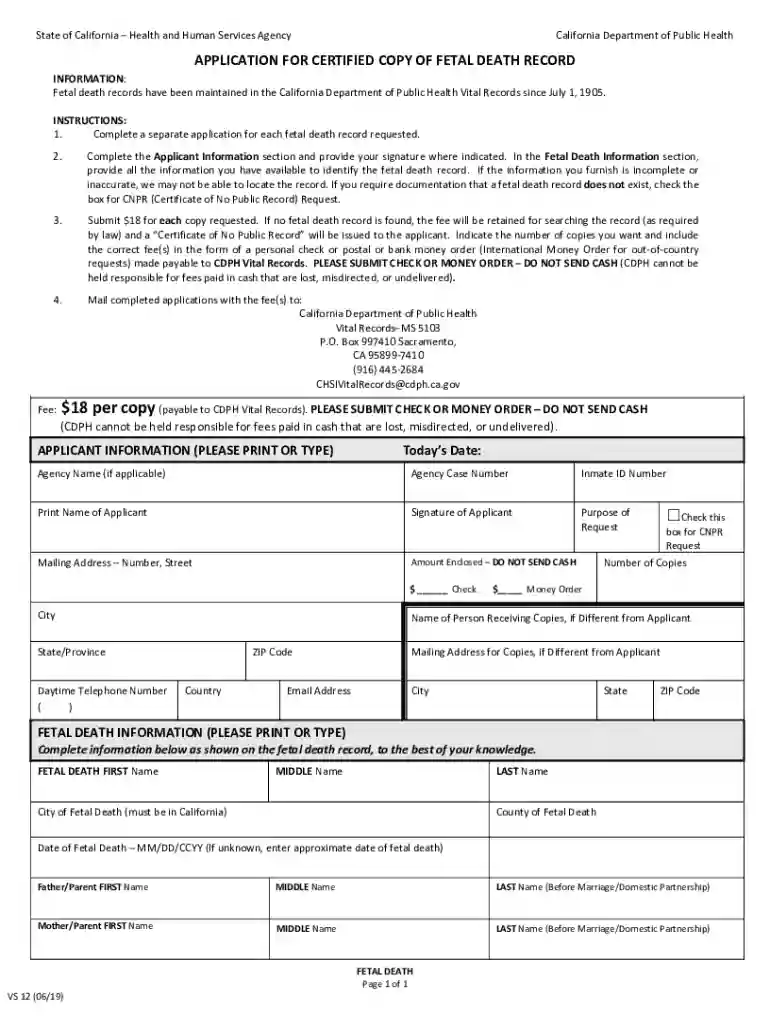
The "Application for Certified Copy of Certificate" is used to formally request an official duplicate of an existing certificate, such as birth or death records. These certified copies are important as they serve as legal documents that are recognized by institutions for various official purposes.
To successfully obtain a certified copy, applicants must follow a structured process, ensuring accuracy and completeness.
Completing the application involves several careful steps to ensure processing without delays.
To start the process, you must acquire the correct application form. The application can typically be obtained through several methods:
Supplying the necessary documentation is crucial to support your application and avoid processing delays.
Various submission options help cater to different applicant needs and preferences.
To apply for a certified copy, ensure you meet any set eligibility criteria which may vary by state.


The form is structured to include specific fields and elements necessary for processing.
Different states may have unique guidelines that affect how the application process is performed.
We've got more versions of the APPLICATION FOR CERTIFIED COPY OF CERTIFICATE form. Select the right APPLICATION FOR CERTIFIED COPY OF CERTIFICATE version from the list and start editing it straight away!
At DocHub, your data security is our priority. We follow HIPAA, SOC2, GDPR, and other standards, so you can work on your documents with confidence.
This form is used to apply for a Certified Copy of Texas Title for a motor vehicle if the original Texas Certificate of Title is lost, stolen, or mutilated.
Clerks of district courts shall only issue certified copies of birth and death certificates to individuals who are authorized by law to receive the documentsRead more


