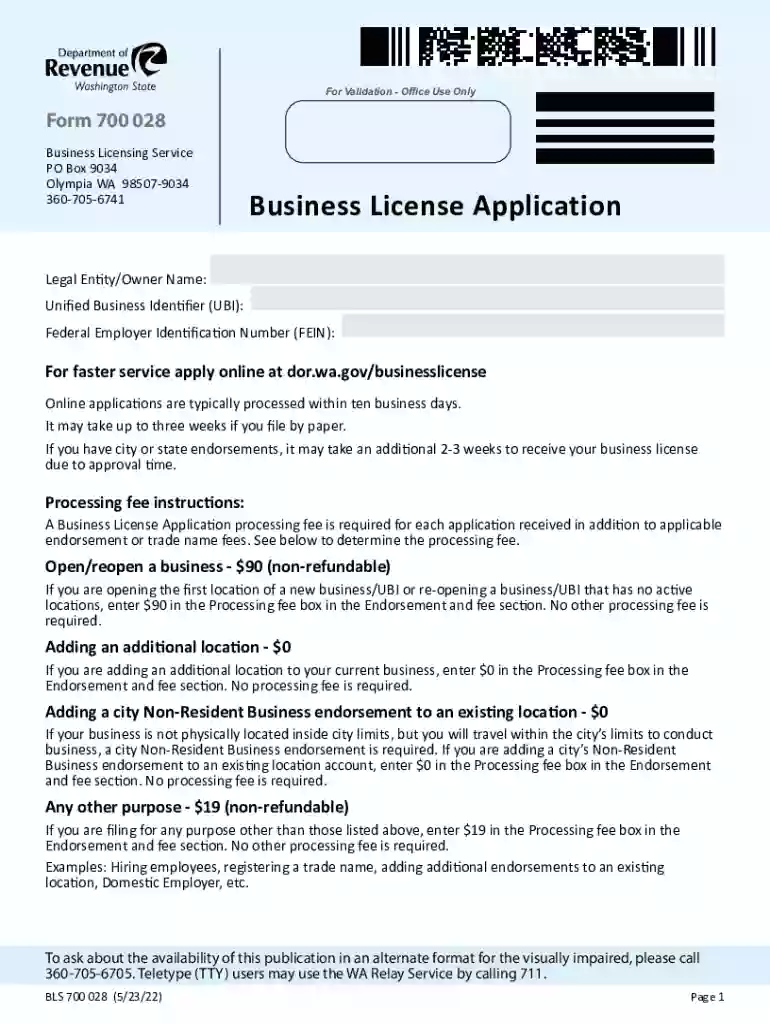
Definition & Meaning of the Business License Application Form
A Business License Application form is a formal document necessary for opening a new business or expanding an existing one within a specific jurisdiction. In this context, it pertains to the state of Washington, focusing on collecting essential details required by regulatory authorities to assess the eligibility of businesses for various endorsements and permits. This application ensures compliance with local government regulations and helps maintain an organized record of businesses operating in the state.
Key Components
- Applicant Information: This section requires inputs such as the legal name of the business, the type of business entity, and contact details.
- Ownership Structure: Details about the ownership, such as sole proprietorship, partnership, LLC, or corporation, are vital.
- Endorsements & Fees: It includes the specific licenses and permits necessary based on the business type, with an outline of associated fees.
- Employment Information: Businesses planning to have employees must provide additional information for tax and legal compliance.
How to Use the Business License Application Form
When utilizing the Business License Application form, clarity and accuracy are paramount for a streamlined approval process. Here's a step-by-step guide to assist you:
Step-by-Step Instructions
- Gather Necessary Information: Compile all required data for the application, including business specifics, ownership details, and endorsements.
- Complete the Form: Use DocHub's editing tools to fill in interactive fields accurately.
- Review for Accuracy: Before submission, double-check all entries to avoid potential delays or rejections.
- Submit and Pay Fees: Once reviewed, submit the form electronically, and ensure all applicable fees are paid.
Practical Examples
- A new restaurant in Seattle will need to include additional health department approvals along with its general business license.
- An online retailer based in Tacoma might be required to provide tax registration numbers pertinent to sales tax collection.
Steps to Complete the Business License Application Form
Completing the Business License Application form involves multiple steps, ensuring that all regulatory requirements are met efficiently.
Detailed Procedure
- Create an Online Account: Register on the relevant state platform if you don't already have an account.
- Select Business License Type: Identify the type of business license needed based on your business activities.
- Fill Out Applicant Details: Enter personal and business information meticulously.
- Specify Ownership and Employees: Mention the business structure and employee numbers.
- Choose Required Endorsements: Select necessary endorsements required for your business activities.
- Review and Confirm Entries: Carefully review all entered information.
- Submit and Await Approval: Submit the form, pay any required fees, and wait for the approval notice.
Edge Cases and Nuances
- If adding additional business locations, include them under a sub-section for multiple locations.
- Ensure that special conditional licenses relevant to specific business types are not overlooked.
Key Elements of the Business License Application Form
Understanding the crucial components of this form can facilitate a faster and more efficient application process.

Critical Sections
- Business Details Section: Focuses on fundamental business information such as establishment name, address, and contact information.
- Tax and Fee Structure: Clearly outlines the specific taxes and fees applicable to the business type.
- Endorsement Categories: Lists various endorsements you may need to apply for based on your business activities and locations.
Who Typically Uses the Business License Application Form
Typical Applicants
- Small Business Owners: Individuals or groups starting a new business or expanding operations in Washington.
- Corporate Entities: Companies looking to establish branch offices or franchise operations within the state.
- Service Providers: Businesses in regulated industries needing specific permits like health, liquor, or tax endorsements.
Case Studies
- A boutique opening in Olympia will need to fill out a basic application but include specifics on product offerings impacting fee assessments.
- A tech startup in Redmond planning to enter manufacturing will have both local and federal compliance aspects to consider.
Important Terms Related to the Business License Application Form
Understanding key vocabulary associated with the Business License Application can demystify the process.
Terminology
- Endorsements: Specific approvals necessary for certain business activities or locations.
- Processing Fees: Charges applicable for the handling and review of the application.
- Ownership Structure: The legal framework within which the business operates, impacting taxes and compliance.
Application Process & Approval Time for the Business License Application
Procedure Overview
- Initial Application Submission: Filling out and submitting the completed form.
- Fee Payment and Acceptance: Payment processing as part of the submission.
- Approval Review: State authorities review the application, checking for completeness and accuracy.
- Notification of Approval: Official communication of the application status, followed by the issuance of the license.
Average Timelines
- Approval timeliness may range from a week to several months based on the complexity and accuracy of the submitted information.
- Fast-tracking options might be available for a fee or during certain times of high application volume.
State-Specific Rules for the Business License Application
Different states have unique compliance stipulations for business licensing. Washington's rules focus on sector-specific requirements.
State-Specific Considerations
- Sector Regulations: Certain sectors may face heightened scrutiny, such as healthcare, education, and legal services.
- Local Jurisdictional Requirements: Cities may have additional local licenses or zoning requirements on top of state mandates.
Practical Tips for Compliance
- Regular consultations with state business development officers can preemptively resolve potential compliance issues.
- Leveraging professional services for complex applications can ensure more thorough and accurate submissions.