




01. Edit your medicare waiver of liability form online
Type text, add images, blackout confidential details, add comments, highlights and more.

Type text, add images, blackout confidential details, add comments, highlights and more.

Draw your signature, type it, upload its image, or use your mobile device as a signature pad.

Send medicare waiver form via email, link, or fax. You can also download it, export it or print it out.
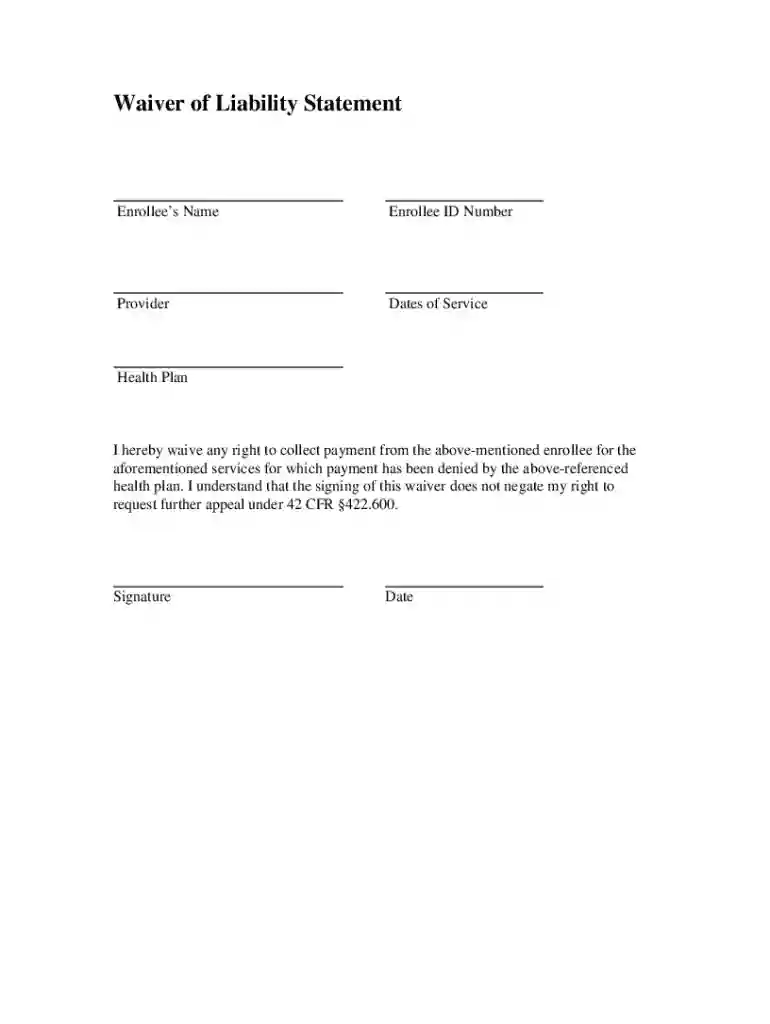
The Medicare Advantage Waiver of Liability Form is an essential document for non-contract providers who seek to appeal denied services. The form serves as a formal agreement where providers ensure they will not collect payment for services denied by a health plan, while still retaining the right to appeal the service denial decisions. This form protects both the provider and the enrollee by outlining responsibilities and facilitating a structured appeal process.
To effectively use this form, providers should firstly ensure they fall under the category of a non-contract provider within a Medicare Advantage plan. The process involves:
Practical scenarios involve cases where services have been denied, and the provider needs clarity or reversal on such decisions.
Completing the form requires attention to detail to ensure all necessary information is provided:
This step-by-step guide ensures that providers can efficiently advocate for their rights and those of their enrollees.
Using this form provides multiple advantages for non-contract providers:
These aspects underline the importance of this document in the healthcare administrative process.
Several critical elements should be accurately filled out:
Each element must be completed to avoid delays or complications in the appeal process.
The form carries legal weight, ensuring:
Following these guidelines minimizes risks of legal complications or disputes.
This form is primarily used by:
Understanding the typical users helps streamline the completion and submission process.


Submitting the waiver form can be done through various channels:
Providers must choose the method that ensures compliance with the health plan’s requirements.
Consider the following scenarios:
These examples showcase real-world applications highlighting the form's utility in addressing specific healthcare challenges.
We've got more versions of the medicare waiver of liability form form. Select the right medicare waiver of liability form version from the list and start editing it straight away!
At DocHub, your data security is our priority. We follow HIPAA, SOC2, GDPR, and other standards, so you can work on your documents with confidence.


