




01. Edit your ct 2 form online
Type text, add images, blackout confidential details, add comments, highlights and more.

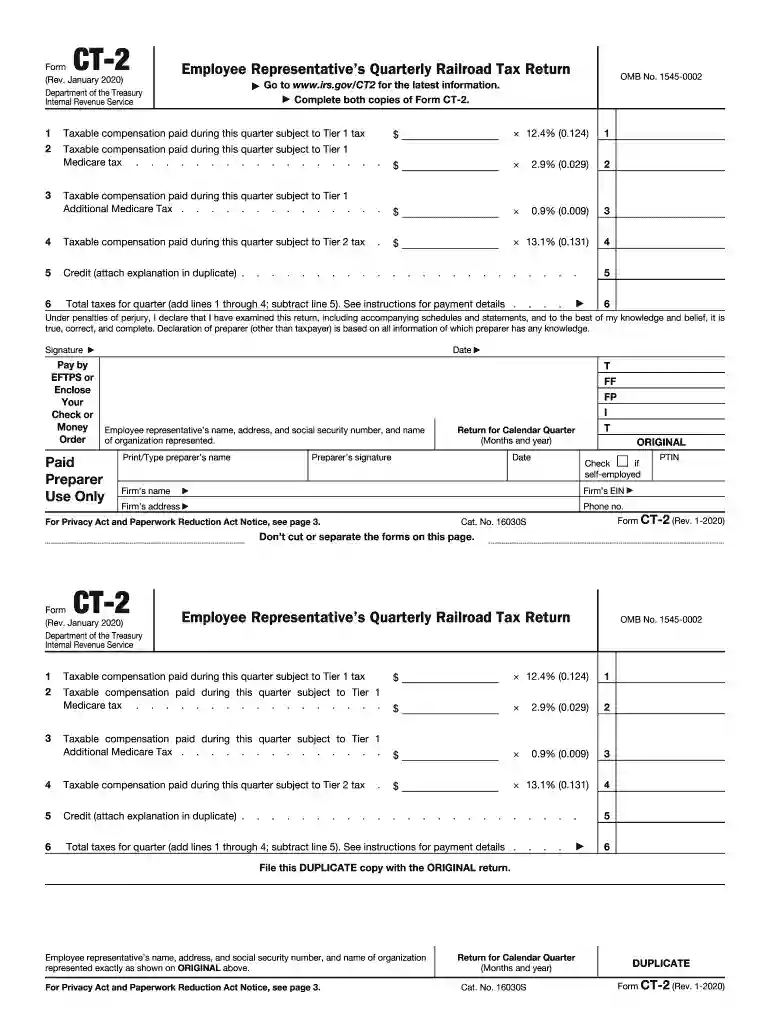
Type text, add images, blackout confidential details, add comments, highlights and more.

Draw your signature, type it, upload its image, or use your mobile device as a signature pad.

Send it via email, link, or fax. You can also download it, export it or print it out.
Form 941, also known as the Employer's Quarterly Federal Tax Return, is used by employers in the United States to report income taxes, Social Security tax, and Medicare tax withheld from employees' paychecks. This form also allows employers to calculate and report their portion of Social Security and Medicare taxes. Form 941 must be filed quarterly, with specific due dates throughout the year to ensure timely compliance with federal tax obligations. The Rev January 2020 version introduced updates to reflect recent tax legislation and changes in tax rates applicable from that year.
Business Information: Start by entering your business name, address, Employer Identification Number (EIN), and contact details accurately to ensure proper identification.
Tax Liability Information: Report the total taxable wages, tips, and other forms of compensation paid to employees. Detailed calculation sections help determine the correct amounts of Social Security and Medicare taxes owed.
Adjustments and Credits: Include any adjustments, such as current quarter's fractions of cents, sick pay, and tips. If applicable, account for tax credits such as the COBRA premium assistance credit.
Deposit Schedule and Tax Liability: If you are a monthly depositor, provide your tax liability for each month. Semi-weekly depositors need to attach Form 941, Schedule B detailing the tax liability for each day.
Signature: Sign and date the form. The person who signs must be authorized to act on behalf of the company.
Late filing can result in penalties, so it is crucial to adhere to these deadlines.
The IRS provides Form 941 on their official website, where it can be downloaded as a PDF. Employers can also order physical copies through the IRS's forms order line. Alternatively, tax software solutions like TurboTax and QuickBooks offer integration with this form, often providing step-by-step guidance for completion and submission.
Understanding these components ensures accurate reporting and minimizes the risk of audits or penalties.
Compliance with Form 941 ensures that employers adhere to legal requirements for reporting payroll taxes and helps prevent misunderstandings or disputes with the IRS. The form is governed by Title 26 of the U.S. Internal Revenue Code, and proper filing is essential for maintaining legal and financial credibility.
Employers, including corporations, partnerships, and sole proprietors, who pay wages subject to income tax withholding, Social Security, and Medicare taxes are required to file Form 941. Even employers with minimal payroll must file to report their tax liabilities accurately.
These terms are crucial for correctly understanding and completing the form accurately.
The IRS provides detailed instructions for Form 941, including line-by-line guidance. It is important to thoroughly review these guidelines to ensure compliance and accuracy. They include directions on how to report various types of compensation, handle adjustments, and apply for credits and are updated regularly to reflect changes in tax law.
These examples illustrate the form's versatility and importance across different business contexts.
We've got more versions of the ct 2 form form. Select the right ct 2 form version from the list and start editing it straight away!
At DocHub, your data security is our priority. We follow HIPAA, SOC2, GDPR, and other standards, so you can work on your documents with confidence.
Complete Schedule B (Form 941),. Report of Tax Liability for Semiweekly Schedule Depositors, and attach it to Form 941. Go to Part 3. ▷ You MUST complete allRead more
Form 941 (Rev. 10-2000). ○ Monthly schedule depositors: Complete line 17 or Form 940-EZ (January 31). If it is $100 or less, you can either make aRead more
Apr 15, 1976 Increased section 179 deduction dollar limits. The maximum amount you can elect to deduct for most sec- tion 179 property you placedRead more


