
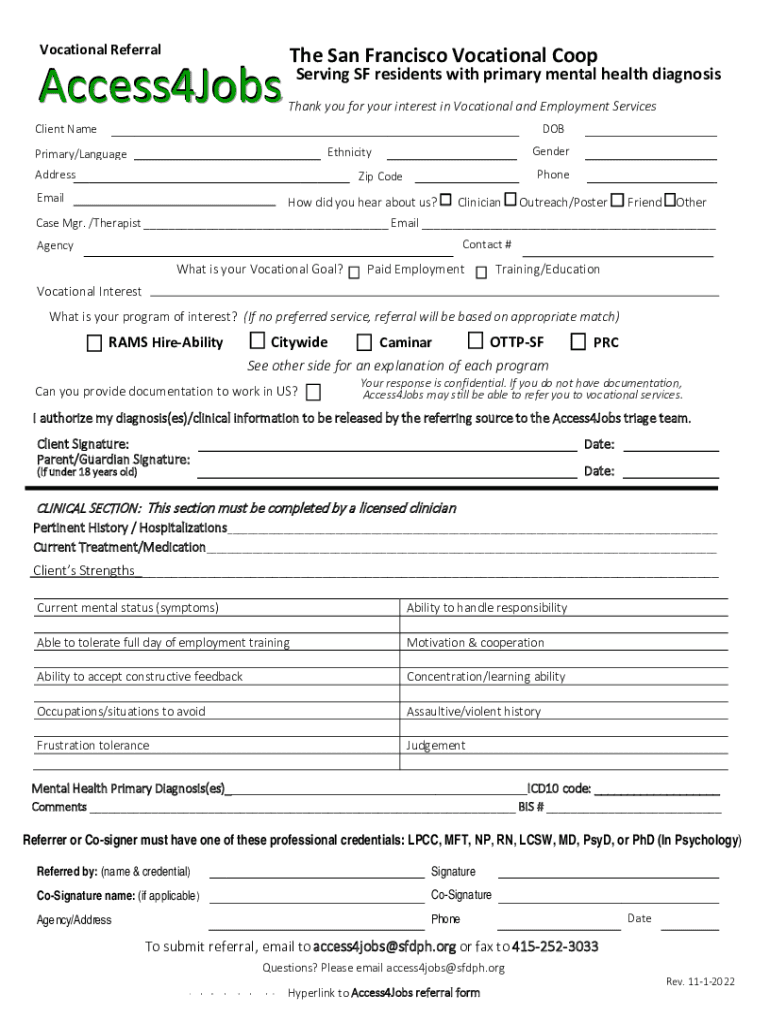







Definition and Meaning
The term "Client Name" refers to the section of a form or document where the name of the person or entity involved in the transaction or agreement is entered. This section is critical as it identifies the individual or business and links them to the document's contents. In many contexts, accurately completing this part of a form ensures that the document is legally valid and can be processed correctly.
How to Use the Client Name Section
Using the "Client Name" section involves entering the full legal name of the individual or entity under question. It's important to use the precise spelling and format used in official documents to avoid any discrepancies that may lead to processing issues or legal complications. Always verify the name before submitting any documentation to ensure accuracy.
Steps to Complete the Client Name Section
-
Identify the Client: Ensure you have the correct legal name of the client. This can often be found in government-issued identification or business registration documents.
-
Enter Full Name: Input the name as it appears officially, including middle names or initials if applicable.
-
Check for Errors: Double-check for typos or omissions, which could delay processing or invalidate the document.
-
Format Consistently: Use the same name format across all sections of the document where the client's name is required.
Important Terms Related to Client Name
-
Legal Name: The name recognized by legal documentation and authorities.
-
Alias/Nickname: Any alternate names or nicknames that might be used informally.
-
Business Name: For companies, the officially registered business name rather than trading names or abbreviations.
Legal Use of the Client Name
The legal use of the "Client Name" section ensures that the document remains binding and enforceable. It is crucial in contexts such as contracts, tax forms, and legal disputes where the accuracy of a client's identity associates them with rights and responsibilities. Errors in this section could lead to legal challenges or invalidate an agreement.
Key Elements of the Client Name Section
-
Accuracy: Correct spelling, legal names without abbreviations unless specified.
-
Completeness: Inclusion of full names, titles, and suffixes as necessary.
-
Consistency: Names should match across all related documents and identifiers.
State-Specific Rules for the Client Name
While the basic premise of using a client's name remains consistent, some states may have additional rules regarding the formats or required documentation. Always check state-specific guidelines, especially in legal documents or forms where variations may apply.
Examples of Using the Client Name
-
Business Contracts: Clearly state the names of all parties involved to ensure legal enforceability.
-
Tax Documents: Use the legal name as it appears on tax registers to avoid discrepancies with the IRS.
-
Legal Filings: In documents such as wills or deeds, using the correct name assures clarity in executing the individual's wishes or transferring ownership.
Digital vs. Paper Versions
In digital forms, the "Client Name" may auto-fill from previous entries or profiles, whereas paper documents require manual input. Regardless of format, assure the name's accuracy is reviewed and corrected as necessary to prevent any errors. Always maintain consistency between digital and paper records, as mismatches can lead to processing difficulties.




