




01. Edit your form online
Type text, add images, blackout confidential details, add comments, highlights and more.

Type text, add images, blackout confidential details, add comments, highlights and more.

Draw your signature, type it, upload its image, or use your mobile device as a signature pad.

Send it via email, link, or fax. You can also download it, export it or print it out.
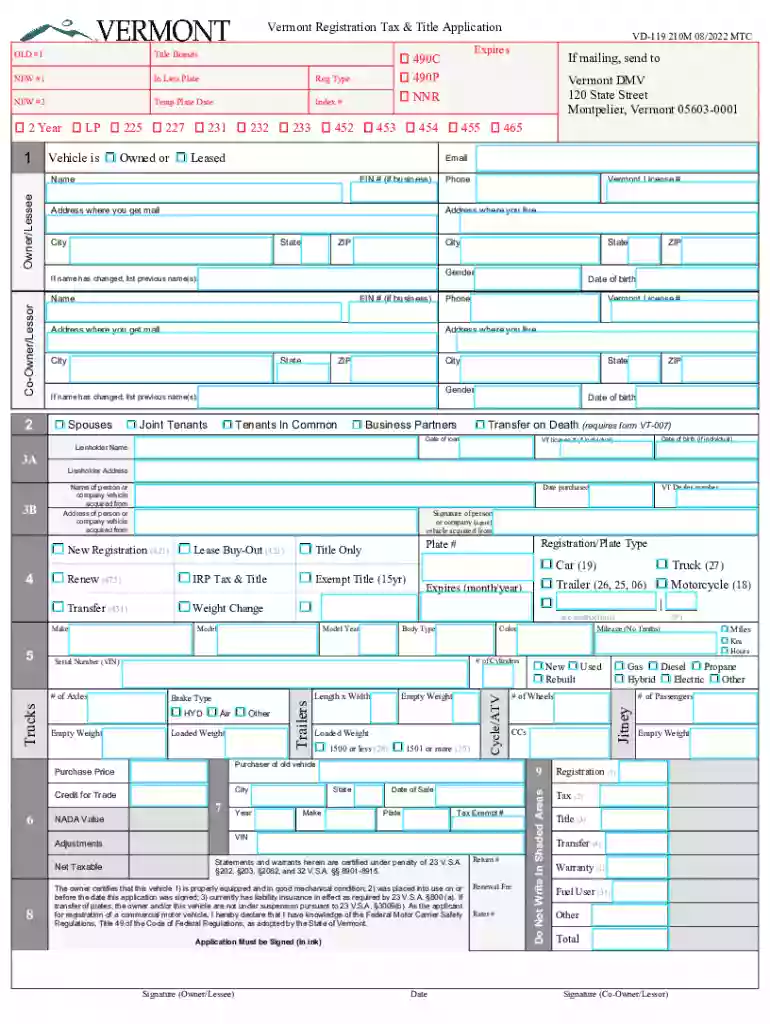
The Registration, NewDepartment of Motor Vehicles form is a crucial document used to officially register vehicles with the Department of Motor Vehicles in your state. This process legally acknowledges the vehicle's ownership under your name and allows you to obtain vehicle identification elements, such as a license plate and registration card. Registration is mandatory for operating vehicles on public roads and involves providing personal identification, vehicle information, and payment of associated fees.
Gather Required Information and Documentation: Have all pertinent personal identification, vehicle details, proof of ownership, and insurance documentation ready. This includes documents such as a bill of sale, vehicle title, or lease agreement.
Complete the Form: Fill in your personal information, vehicle details, accurately providing all required fields about the vehicle model, make, year, VIN (Vehicle Identification Number), and current odometer reading.
Submission: Submit the completed form along with the required documents to the local DMV office or online portal if available. Ensure you include payment for any applicable registration fees.
Receive Registration and Plates: Upon acceptance, you'll receive your vehicle's registration card and license plates. Retain the registration document in the vehicle at all times as proof of registration.
Visit your local DMV office or their online system to access the registration form. If available online, download and print the form, or request a physical copy from the DMV. Make sure to check state-specific guidelines to ensure compliance with all registration requirements.
The form is used by individuals who have purchased new or used vehicles, relocated to a new state, or made significant modifications to their vehicle that require re-registration. Businesses that operate fleets of vehicles must also complete this form for each unit to comply with transportation regulations.


Registration requirements can vary by state. For example, some states require emissions testing, while others do not. The fees, documentation requirements, and specific procedures can also differ significantly. Always refer to your state’s DMV website or office for the most current information and requirements.
Failure to register your vehicle or renew the registration can result in penalties, including fines, ticketing, or even impounding the vehicle. Operating an unregistered vehicle is illegal in most states and can have significant legal repercussions. Always ensure compliance with local laws by registering timely and maintaining current registration status.
We've got more versions of the Registration, NewDepartment of Motor Vehicles form. Select the right Registration, NewDepartment of Motor Vehicles version from the list and start editing it straight away!
At DocHub, your data security is our priority. We follow HIPAA, SOC2, GDPR, and other standards, so you can work on your documents with confidence.
An ID card is not required for a registration renewal transaction except as prescribed herein. Certification by the applicant that financial security is inRead more
Department of Motor Vehicles. DC DMV Logo. Office Hours Varies by location. Please see All DC DMV Locations under About DMV in the menu. Phone: (202) 737-4404Read more
A government agency that administers motor vehicle registration and driver licensing. The Department of Motor Vehicles is always slow and takes a whole day toRead more


