
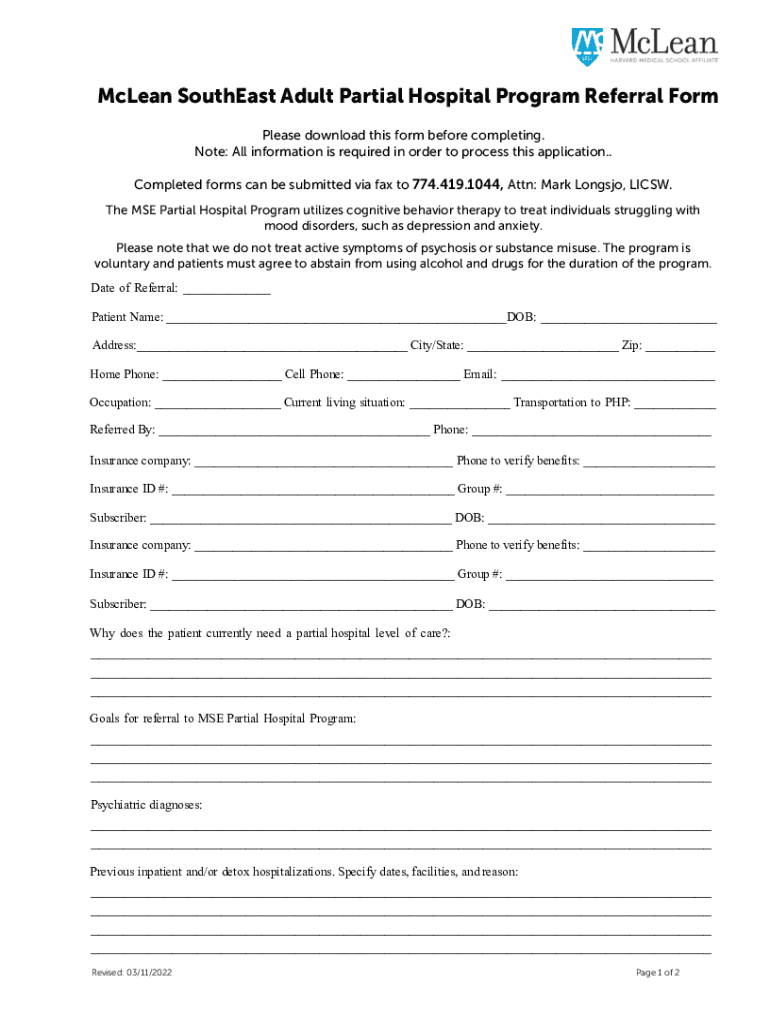







Definition and Purpose of Assessment and Treatment of Patients With Suicidal
The form titled "Assessment and Treatment of Patients With Suicidal" is a specialized document used primarily in clinical settings. It serves multiple roles, such as documenting a patient's suicidal ideations, history, and current mental health status. By systematically capturing this information, mental health professionals can better understand the patient's risks and formulate an appropriate treatment plan. This document is crucial in guiding interventions aimed at reducing the risk of suicide through comprehensive evaluation and targeted therapies.
Steps to Complete the Assessment and Treatment of Patients With Suicidal
-
Gather Patient Information:
- Begin by collecting basic patient data such as name, date of birth, and contact details. Ensure accuracy to facilitate proper identification and follow-up.
-
Document Psychiatric History:
- Record previous mental health diagnoses, hospitalizations, and any past interventions. This includes noting any prior suicide attempts or self-harm behaviors.
-
Assess Current Mental State:
- Evaluate the patient's current mood, thoughts of self-harm, and details about any specific suicidal plans. Use psychometric scales if available for precise measurement.
-
Identify Triggers and Stressors:
- Document potential environmental, social, or personal factors contributing to the patient's current state, such as recent life changes or losses.
-
Plan Treatment Interventions:
- Outline proposed therapeutic modalities, ranging from medication adjustments to psychotherapy sessions, tailored to the patient's unique needs and circumstances.
-
Risk Evaluation and Crisis Planning:
- Assess the immediacy of the risk and develop a crisis plan, including emergency contacts and steps to take if the patient feels overwhelmed.
Key Elements of the Assessment and Treatment of Patients With Suicidal
-
Patient Identification:
- Crucial for maintaining accurate records and ensuring the continuity of care.
-
Mental Health History:
- Provides context for the patient's current mental state and potential predispositions to suicidal ideations.
-
Current Suicidal Thoughts:
- Detailed documentation of current thoughts and any developed plans, which is essential for risk assessment.
-
Treatment Strategies:
- A comprehensive plan encompassing both immediate interventions and long-term therapeutic goals.
-
Crisis Intervention Plan:
- A protocol to follow in case of escalating risk, including emergency contacts and safety measures.
Legal Considerations and Compliance
In the U.S., the use of this form must comply with legal standards, including but not limited to confidentiality and ethical considerations. It must adhere to federal regulations such as HIPAA to protect patient information. Additionally, state-specific laws may dictate certain procedural aspects, ensuring that evaluations and interventions are aligned with local legal requirements.
Important Terms in the Assessment and Treatment of Patients With Suicidal
-
Suicidal Ideation:
- Refers to thoughts about self-harm or taking one's own life, whether fleeting or persistent.
-
Risk Factors:
- Variables that may increase the likelihood of suicide, such as a history of depression, substance abuse, or traumatic experiences.
-
Protective Factors:
- Elements that decrease the likelihood of suicide, such as positive social support networks and access to mental health resources.
Who Typically Uses the Assessment and Treatment of Patients With Suicidal
This form is primarily used by mental health professionals including psychologists, psychiatrists, and licensed counselors. It helps in evaluating patients in various settings such as clinics, hospitals, or community mental health centers. Emergency responders and crisis intervention teams might also use it in acute situations to provide essential documentation of a patient's state and guide immediate care decisions.


Obtaining the Assessment and Treatment of Patients With Suicidal Form
This form can typically be obtained through medical institutions, mental health clinics, or online health portals that offer resources for mental health professionals. Institutions may have their own version adapted to their specific protocols, but templates can also be found through professional associations that focus on mental health and suicide prevention.
Variants and Alternatives
Some medical institutions may use different types of assessment forms that vary slightly in format but serve the same purpose. Alternative tools such as the Columbia-Suicide Severity Rating Scale (C-SSRS) or the Beck Scale for Suicidal Ideation might also be employed alongside or in place of this form, depending on specific clinical needs and preferences.




