Definition and Purpose of a Printable Medication Disposal Log
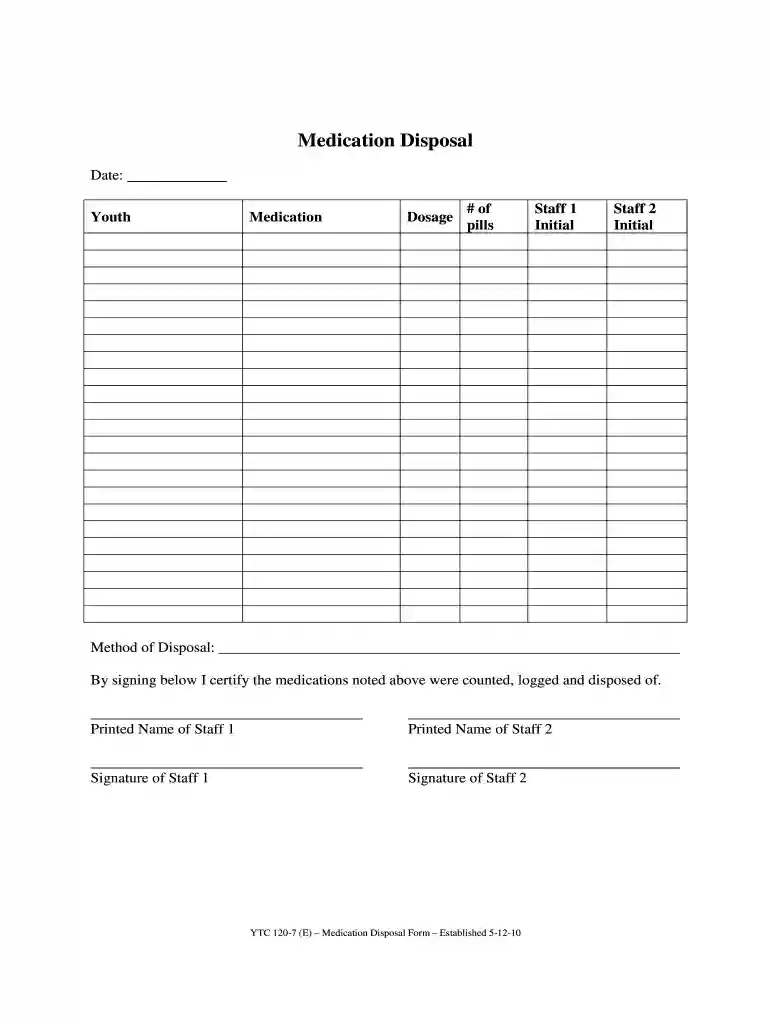
A printable medication disposal log is a crucial document that records the details of medications being disposed of in a secure and compliant manner. This log is especially important in healthcare settings, where the proper handling of controlled substances is subject to stringent regulations.
- Primary Use: The log serves not only as a record of medication disposal but also establishes accountability among personnel involved in the disposal process. It helps prevent misuse and diversion of medications.
- Legal Compliance: Keeping an accurate log is essential for compliance with federal and state regulations regarding the disposal of pharmaceuticals, particularly controlled substances.
- Utility Across Settings: This document is utilized across various settings, including hospitals, pharmacies, and residential care facilities, ensuring consistent tracking of medications that are no longer needed or have expired.
Components of a Medication Disposal Log
A well-structured medication disposal log contains several key components that provide comprehensive details on the disposal process. Each element plays a vital role in ensuring clarity and regulatory compliance.
- Date of Disposal: Indicates when the disposal took place, providing a timeline of medication management.
- Medication Details: Includes the name, dosage, and form of the medication (e.g., tablet, liquid), which ensures accurate record-keeping.
- Quantity Disposed: Captures the amount of medication being disposed of, allowing for monitoring of inventory and potential discrepancies.
- Signature of Personnel: Requires signatures from two staff members who oversee the disposal process. This adds an additional layer of accountability.
- Method of Disposal: Describes the method used for disposal, whether through incineration or other compliant methods, aligning with best practices.
Steps to Complete a Medication Disposal Log
Completing a medication disposal log involves several systematic steps to ensure all necessary information is accurately recorded. Following a structured approach facilitates effective management and compliance.
- Identify Medications for Disposal: Review the inventory and select medications that are expired, damaged, or no longer needed.
- Fill Out Log Details: Enter the date, medication information, quantities, and signatures of both responsible staff members.
- Confirm Disposal Method: Record the method of disposal used, ensuring that it aligns with legal and safety requirements.
- Maintain Confidentiality: Store the log securely to protect sensitive information while ensuring it is accessible for audits and reviews.
- Periodic Review: Regularly assess the logs to ensure compliance and make necessary adjustments to disposal procedures.
Importance of a Medication Disposal Log in Compliance
Maintaining a medication disposal log is not just a best practice; it is often a legal requirement within healthcare systems. Understanding its significance can guide organizations in meeting regulatory standards.
- Audit Preparedness: Logs serve as a crucial resource during inspections by regulatory bodies, demonstrating adherence to safety norms.
- Reducing Liability: Proper documentation limits liability risks arising from improper disposal practices, which could lead to unauthorized access to medications.
- Enhancing Patient Safety: By accurately tracking disposed medications, healthcare facilities can prevent prescription errors and safeguard patient health.
Examples of Properly Documented Medication Disposal
Utilizing examples of medication disposal logs can provide clarity on effective documentation practices.
- Case Study in a Pharmacy: A pharmacy disposes of ten bottles of expired antibiotics. The log records the date, medication details, quantity, and signatures of two pharmacists. Disposal method noted as incineration, complying with local waste management protocols.
- Example from a Hospital Setting: A hospital disposes of controlled narcotics. The log details the patient care unit from which the medications originated, reinforcing accountability. It captures disposal along with both nurses’ signatures verifying the transaction.
- Home Healthcare Scenario: A home health aide disposes of unused opioids from a patient’s care plan. A printable medication disposal log is filled out, indicating the quantity disposed of and the reason, thereby ensuring compliance from a residential care perspective.
Security Considerations for Medication Disposal Logs
Security measures are critical in protecting the integrity and confidentiality of medication disposal logs.
- Access Control: Only authorized personnel should have access to the logs, ensuring that sensitive information remains protected.
- Digital Storage: Consider utilizing encrypted digital formats to store logs securely, making them retrievable along with audit trails.
- Regular Backups: Establish regular backup protocols for any digital logs to prevent data loss due to technical failures or breaches.
Conclusion on Best Practices for Medication Disposal
Implementing best practices for maintaining a medication disposal log can enhance overall operational efficiency and compliance:
- Training: Regular training for personnel on logging procedures ensures consistency and reduces errors.
- Standard Operating Procedures: Establish clear guidelines and processes for medication disposal to facilitate adherence and ease in logging.
- Continuous Improvement: Encourage feedback from staff involved in the disposal process to continuously refine practices and address any challenges.
By focusing on these aspects, organizations can ensure their medication disposal practices are responsible, compliant, and secure.