




01. Edit your form online
Type text, add images, blackout confidential details, add comments, highlights and more.

Type text, add images, blackout confidential details, add comments, highlights and more.

Draw your signature, type it, upload its image, or use your mobile device as a signature pad.

Send it via email, link, or fax. You can also download it, export it or print it out.
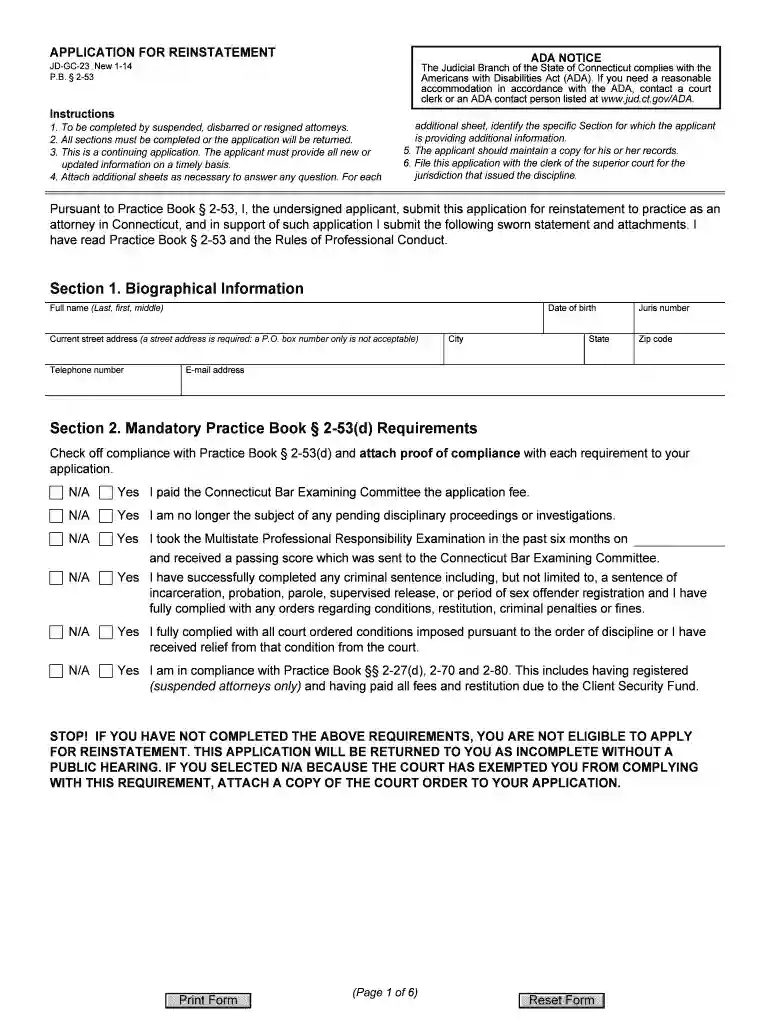
The "CT Reinstatement" form is designed for attorneys in Connecticut who seek to be reinstated to practice law after suspension, disbarment, or resignation. This form outlines the detailed information and documentation necessary for the reinstatement process, ensuring compliance with state requirements. The application serves as a comprehensive record of the attorney's biographical data, professional history, and personal conduct, aimed at evaluating their readiness to resume legal practice.
To acquire the CT reinstatement form, attorneys can visit the official Connecticut Judicial Branch website or contact the appropriate licensing body in their jurisdiction. The form may also be available through professional legal organizations within the state. Upon obtaining the form, it is crucial to thoroughly review all instructions and sections to fully understand the information required for submission.
The use of this form is strictly legal; it is devised to ensure that attorneys meet Connecticut's statutory requirements for returning to legal practice. The document allows the relevant judicial body to assess whether the applicant has addressed past issues and is suitable for reinstatement. It serves as a legal instrument to preserve the integrity of the state's legal profession.
Connecticut imposes distinct rules governing the reinstatement of attorneys, including fulfilling prior disciplinary conditions, proving rehabilitation, and sometimes undergoing additional bar examinations or legal education. These state-specific requirements ensure that reinstated attorneys are fully equipped to uphold the standards expected within the legal community.
Consider an attorney who was suspended due to misconduct but has since completed rehabilitation programs. To rejoin the legal profession, they would fill out the CT reinstatement form, detailing the completed conditions. Another example is an attorney who resigned due to personal reasons and now seeks to return, showcasing their current readiness to practice law through extensive documentation and references.
Attorneys must pay close attention to any deadlines associated with the reinstatement process, which may include submission cutoffs aligned with specific court terms or additional criteria mandated by the Connecticut Bar. Missing these deadlines can result in significant delays or denial of reinstatement.
We've got more versions of the ct reinstatement form. Select the right ct reinstatement version from the list and start editing it straight away!
At DocHub, your data security is our priority. We follow HIPAA, SOC2, GDPR, and other standards, so you can work on your documents with confidence.
A students financial aid eligibility will be automatically reinstated at such time as the student meets the minimum satisfactory academic progress standard.Read more
Heres what youll need to pay online: Name of the individual who owes the fee(s) Date of birth License, ID, or case number Current mailing address. ARead more


