
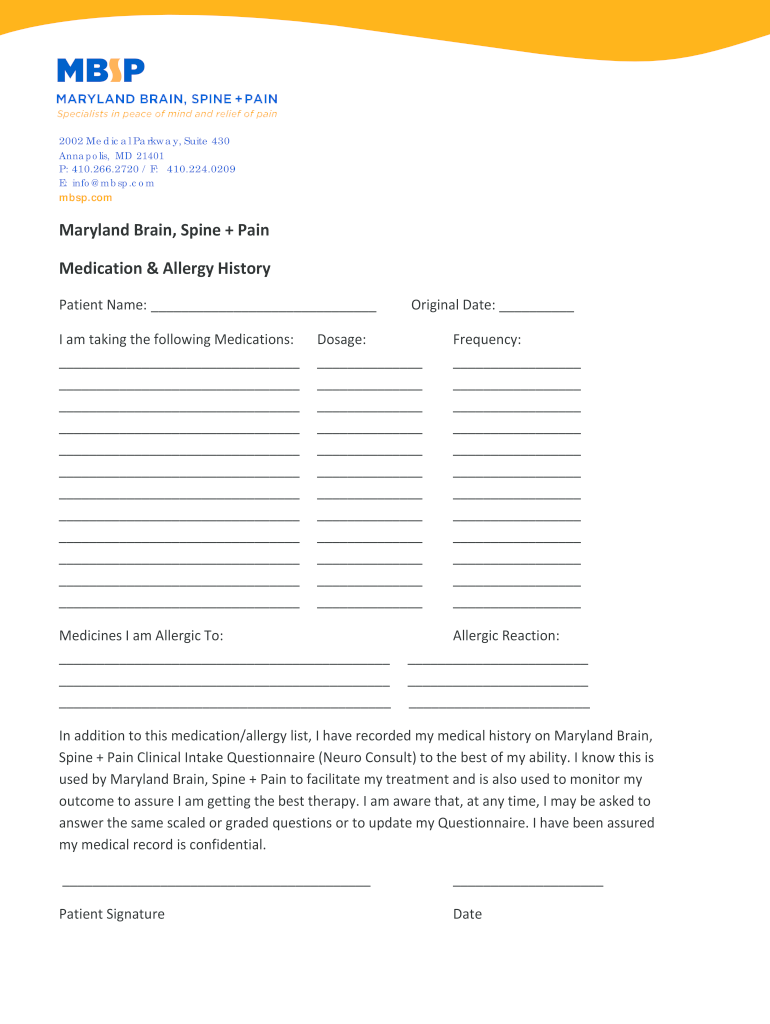







Definition and Purpose of the Form
The Maryland Brain, Spine + Pain Medication & Allergy History is a specialized health documentation tool designed for patients receiving treatment at Maryland Brain, Spine + Pain clinics. It plays a crucial role in outlining a patient's current and past medication regimens and detailing allergy information. This form serves multiple purposes:
- Medication Documentation: Patients list all medications, including dosages and frequency, ensuring healthcare providers have accurate and up-to-date information.
- Allergy Tracking: All known allergies and corresponding reactions are documented to prevent adverse reactions during treatment.
- Treatment Optimization: With comprehensive medication and allergy histories, treatment plans can be tailored to individual patient needs, enhancing safety and efficacy.
Through this form, healthcare professionals are better equipped to manage patient safety, avoid drug interactions, and customize pain management treatments.
How to Use the Form
Completing the Maryland Brain, Spine + Pain Medication & Allergy History involves a systematic approach to ensure accuracy and comprehensiveness. Here is a breakdown of the procedure:
- Current Medications: List all ongoing medications, including prescription drugs, over-the-counter medications, supplements, and herbal remedies. Specify dosages and how often each is taken.
- Previous Medications: Include any significant medications previously used that may affect current treatment plans.
- Allergy Information: Document each known allergy with detailed descriptions of allergic reactions. Cover food, drug, and environmental allergies.
- Sign and Date: After filling out the form, review the information for accuracy and completeness. Sign and date the form to confirm the validity of the provided data.
Patients benefit from preparing this information before their appointment, allowing them to provide precise and current health information that aids in their medical evaluation.
Key Elements of the Form
When engaging with the Maryland Brain, Spine + Pain Medication & Allergy History, particular components are critical to its completion and usefulness:
- Medication Names: Ensure that the full name of each medication is provided. Generic and brand names are often necessary.
- Dosage and Frequency: Include specific dosage amounts and detailed frequency schedules to offer a clear picture of medication consumption.
- Allergy Details: The form should encompass not only the name but also a description of allergic reactions, which aids providers in identifying patterns.
- Prescribing Physician Information: For each listed medication, the prescribing doctor's name and contact information are valuable for cross-reference.
These key elements are central to creating a comprehensive history that assists medical teams in formulating an effective and safe treatment plan.
Steps to Complete the Form
Filling out the Maryland Brain, Spine + Pain Medication & Allergy History requires attention to detail and a structured approach. Follow these steps for effective completion:
- Gather Information: Before starting, collect all necessary medication and allergy information. This includes prescription labels and allergy certificates if available.
- Complete Medication Section: Begin with listing current medications, their dosages, and usage timelines.
- Detail Allergy Section: Fully outline all allergies and associated symptoms or known reactions.
- Review: Cross-check for accuracy, ensuring every entry is complete and legible.
- Finalize: Sign and date where required, affirming the accuracy of the information.
This streamlined sequence assists in organizing and ensuring all critical data is documented.
Importance of Accurate Medication and Allergy History
Providing a thorough Maryland Brain, Spine + Pain Medication & Allergy History is vital for several reasons:
- Patient Safety: Preventing adverse reactions and harmful drug interactions is paramount.
- Effective Treatment Plans: Accurate histories enable more precise and personalized medical care strategies.
- Legal and Compliance Requirements: Maintaining a detailed medical history can be crucial for compliance with medical standards and legal protections.
These elements highlight why patients and providers alike should prioritize accurate and detailed history documentation.
Who Typically Uses the Form
The Maryland Brain, Spine + Pain Medication & Allergy History is typically completed by:
- Patients: Those receiving care for chronic or acute conditions affecting the brain, spine, or requiring pain management.
- Healthcare Providers: Doctors, nurses, and specialists using the form to understand patients’ health backgrounds.
By necessitating input from these groups, the form becomes a vital tool in the patient care process.


Common Scenarios of Form Use
Real-world applications of the Maryland Brain, Spine + Pain Medication & Allergy History illustrate its versatility:
- New Patient Intakes: Often used during the initial consultation to gather a foundational health profile.
- Emergency Situations: Helps in rapidly sharing crucial medication and allergy information when time is critical.
- Treatment Adjustments: Used regularly to update medication changes or new allergy discoveries during ongoing treatments.
These scenarios underline the form’s integral role in various medical settings.
Digital vs. Paper Version
In today's digitized world, the Maryland Brain, Spine + Pain Medication & Allergy History form can be processed both on paper and digitally, each having its advantages:
- Digital Form: Offers easy sharing and updating capabilities, with the potential for integration into electronic health records. Facilitates remote access for telehealth services.
- Paper Form: Provides a tangible record that patients can directly fill out in the clinic setting, often preferred by individuals less comfortable with digital tools.
Both forms ensure that vital health information is accurately captured and easily accessible, regardless of the format chosen.
Required Documents
To complete the Maryland Brain, Spine + Pain Medication & Allergy History form effectively, patients might need to reference or include additional documents such as:
- Prescription Bottles: Offering direct reference for medication names and dosages.
- Allergy Reports: Previous allergy testing results or certificates, which aid in detailing specific allergy reactions.
- Doctor’s Notes: Past medical records or doctor evaluations that offer additional context to the recorded information.
Inclusion of these documents helps solidify the historical accuracy and utility of the form.




