
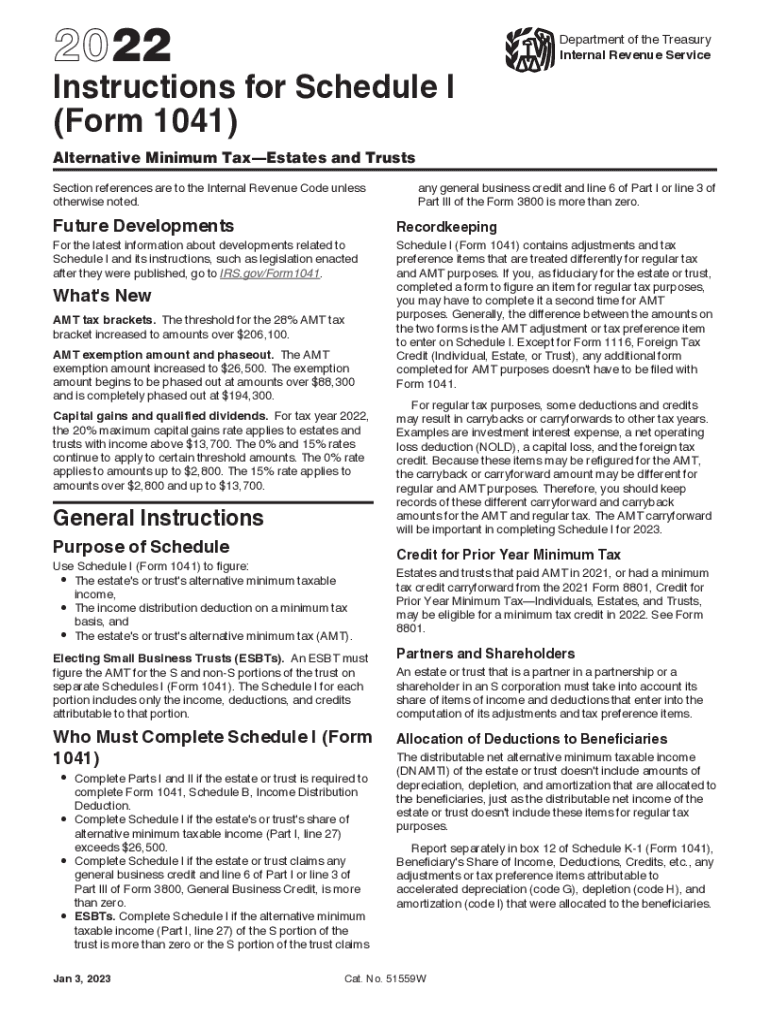







Definition and Purpose of Schedule K-1 (Form 1041)
Schedule K-1 (Form 1041) provides essential information about the income, deductions, and credits allocated to beneficiaries from an estate or trust. It serves as a key instrument for preparing individual tax returns in the U.S., detailing the share of the estate or trust’s financial outcomes that each beneficiary must report. This form ensures transparent distribution of tax responsibilities among beneficiaries based on their entitlement under the trust or estate arrangements.
Key Elements
- Income Allocation: Breakdown of the types of income distributed to beneficiaries, such as interest, dividends, and any other income categories.
- Deductions and Credits: Details on the tax deductions and credits that beneficiaries can claim, aligned with their share of the estate or trust.
- Beneficiary Information: Identifies each beneficiary, including their participation within the trust or estate, ensuring accurate reporting and tax compliance.
- Fiduciary Data: Outlines the fiduciary's responsibility in managing and distributing the trust or estate finances.
Who Typically Uses Schedule K-1 (Form 1041)?
Schedule K-1 (Form 1041) is primarily used by beneficiaries of estates and trusts. This includes individuals and organizations designated to receive income or assets from estates and trusts. Fiduciaries also engage with this form to assure proper allotment of financial information for tax purposes.
Common Users
- Individual Beneficiaries: Those receiving income or assets from an estate or trust.
- Charitable Organizations: Entities designated as beneficiaries for certain trusts or estates.
- Tax Advisers and Accountants: Professionals assisting clients in preparing accurate tax returns concerning trust or estate income.


How to Obtain Schedule K-1 (Form 1041)
Beneficiaries typically receive Schedule K-1 (Form 1041) directly from the fiduciary managing the estate or trust. Alternatively, fiduciaries can download the form from the IRS website for distribution.
Obtaining the Form
- Direct Receipt: The fiduciary sends the form directly to designated beneficiaries.
- Download from IRS: Available online, for both download and print purposes, from the IRS website to ensure compliance and accessibility for the fiduciary.
Steps to Complete Schedule K-1 (Form 1041)
Completing Schedule K-1 requires careful attention to detail to reflect the accurate distribution of income and deductions.
- Collect Information: Gather details on all forms of income, deductions, and credits related to the trust or estate.
- Complete Allocation: Apportion income and deductions accurately among the beneficiaries as per trust or estate regulations.
- Verify and Distribute: Ensure accuracy in the filled form before distributing to beneficiaries for their tax reporting purposes.
Important Considerations
- Accuracy in Reporting: Double-check figures and apportionments to prevent errors.
- Communication with Beneficiaries: Inform beneficiaries regarding their K-1 details and any necessary actions on their part.
IRS Guidelines for Schedule K-1 (Form 1041)
The IRS mandates specific instructions for completing and filing Schedule K-1 to facilitate accurate income reporting.
Compliance Measures
- Consistent Form Updates: Follow the latest IRS guidelines and rule changes annually.
- Tax Year Alignment: Ensure the form relates to the correct tax year for each beneficiary.
- Deadline Adherence: Submit forms within IRS-specified timeframes to avoid penalties.
Filing Deadlines and Important Dates
Timely submission of Schedule K-1 is critical for both fiduciaries and beneficiaries to avoid tax penalties.
Key Deadlines
- 15th Day of the Fourth Month: Following the fiscal year-end of the estate or trust, aligning closely with individual tax return deadlines.
- Extensions: Fiduciaries must file for extensions if unable to meet standard deadlines, providing enough time for beneficiaries to file their returns.
Legal Use and Compliance
Legal compliance is necessary in administering Schedule K-1 (Form 1041) to ensure trust or estate governance adheres to federal tax obligations.
Key Compliance Factors
- Fiduciary Responsibility: Accurate representation of the financial distribution is mandatory.
- Beneficiary Obligations: Beneficiaries must report their portions as indicated in their personal tax filings.
Penalties for Non-Compliance
Failing to comply with IRS Schedule K-1 requirements can result in penalties for both fiduciaries and beneficiaries.
Potential Penalties
- Late Filing Fines: Financial repercussions for untimely submission by fiduciaries.
- Reporting Errors: Penalties incurred by beneficiaries for inaccurate or incomplete income reporting based on their received K-1.
Each section provides deep insights into the comprehensive understanding and handling of Schedule K-1 (Form 1041), ensuring all legal, financial, and procedural aspects are addressed effectively.




