




Here's how it works
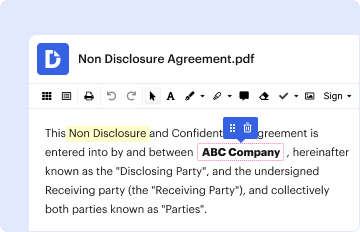
01. Edit your form online
Type text, add images, blackout confidential details, add comments, highlights and more.
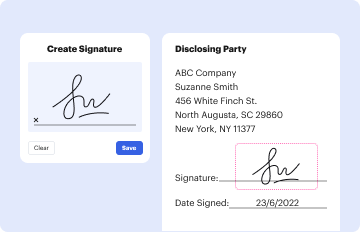
02. Sign it in a few clicks
Draw your signature, type it, upload its image, or use your mobile device as a signature pad.

03. Share your form with others
Send it via email, link, or fax. You can also download it, export it or print it out.
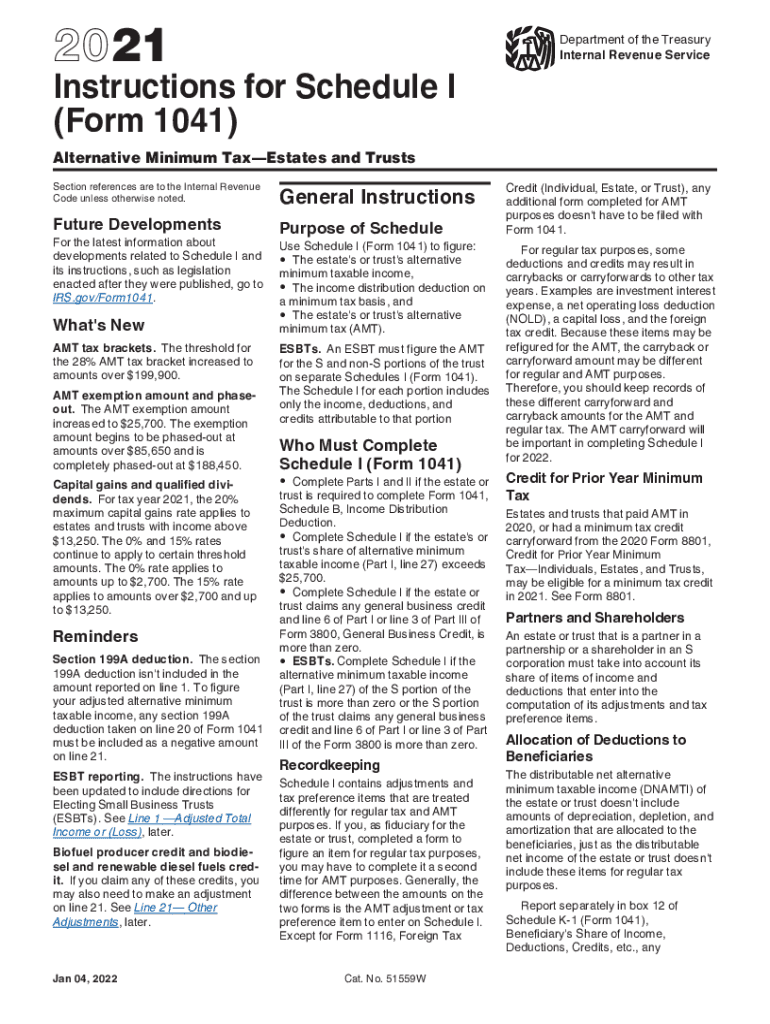
How to use or fill out instructions schedule i with our platform

- Click 'Get Form' to open the Instructions Schedule I in the editor.
- Begin by reviewing the purpose of Schedule I, which is to calculate the estate's or trust's alternative minimum taxable income. Familiarize yourself with the sections outlined in the document.
- Fill out Part I by entering the Adjusted Total Income or (Loss) from Form 1041. Ensure you accurately report any interest and taxes as specified in lines 2 and 3.
- Continue through each line, making necessary adjustments for depreciation, depletion, and other items as indicated. Use our platform’s features to easily modify entries and ensure accuracy.
- Complete Part II if applicable, focusing on the Income Distribution Deduction on a minimum tax basis. Follow the instructions carefully to allocate deductions among beneficiaries.
- Finally, review all entries for completeness before saving your work. Utilize our platform’s export feature to download or share your completed form seamlessly.
Start using our platform today for free to simplify your document editing and form completion!
Fill out instructions schedule i online
It's free
It's free
See more instructions schedule i versions
We've got more versions of the instructions schedule i form. Select the right instructions schedule i version from the list and start editing it straight away!
Got questions?
We have answers to the most popular questions from our customers. If you can't find an answer to your question, please contact us.
Contact us
What is the difference between Schedule 1 and Schedule C?
While Schedule C focuses solely on business income, Schedule 1 summarizes various forms of business and non-business income and certain business and non-business deductions. In short, if you are self-employed, youll file Schedule C to calculate your net profit or loss from your business.
What is the difference between a 1099 and a Schedule k1?
The payer sends the 1099s, which must be sent by January 31 and, in some cases, February 15. A K-1 Form is generated from a pass-through entity (i.e., generally a business). It identifies income or losses for partners or owners of the pass-through entity.
What is a K-1 schedule?
Schedule K-1 is an IRS form used by partnerships, S corporations, and estates and trusts to declare the income, deductions, and credits that partners, shareholders, and beneficiaries have received in the tax year. Individual taxpayers transfer the financial information on their K-1s to their tax returns.
What does schedule 1 mean?
Schedule I drugs, substances, or chemicals are defined as drugs with no currently accepted medical use and a high potential for abuse.
What is a Schedule K 1 instructions?
General Instructions Purpose of Form. Use Schedule K-1 to report a beneficiarys share of the estates or trusts income, credits, deductions, etc., on your Form 1040 or 1040-SR. Keep it for your records. Dont file it with your tax return, unless backup withholding was reported in box 13, code B.
Security and compliance
At DocHub, your data security is our priority. We follow HIPAA, SOC2, GDPR, and other standards, so you can work on your documents with confidence.
Learn more


People also ask
What are the instructions for line 17 of Schedule 1?
Line 17 is for the self-employed health insurance deduction. Self-employed individuals may be able to deduct 100% of health, dental, and long-term care insurance premiums that they paid for themselves, their spouses, their dependents, and any nondependent children aged 26 or younger at the end of 2022.
What happens if you dont file a K1?
Consequences of Not Filing K-1 Tax Forms The IRS doesnt expect individuals to file a K-1. However, they will compare your tax return to the information filed by your partnership. Partnerships that dont meet their Schedule K-1 responsibilities can also face expensive filing penalties.
How does a K1 affect my personal taxes?
In general, a K-1 can affect personal taxes in two ways: either by increasing a partners tax liability or by providing them with a tax deduction. It will likely increase their total tax liability for the year if the K-1 is associated with an income.