







Definition & Meaning
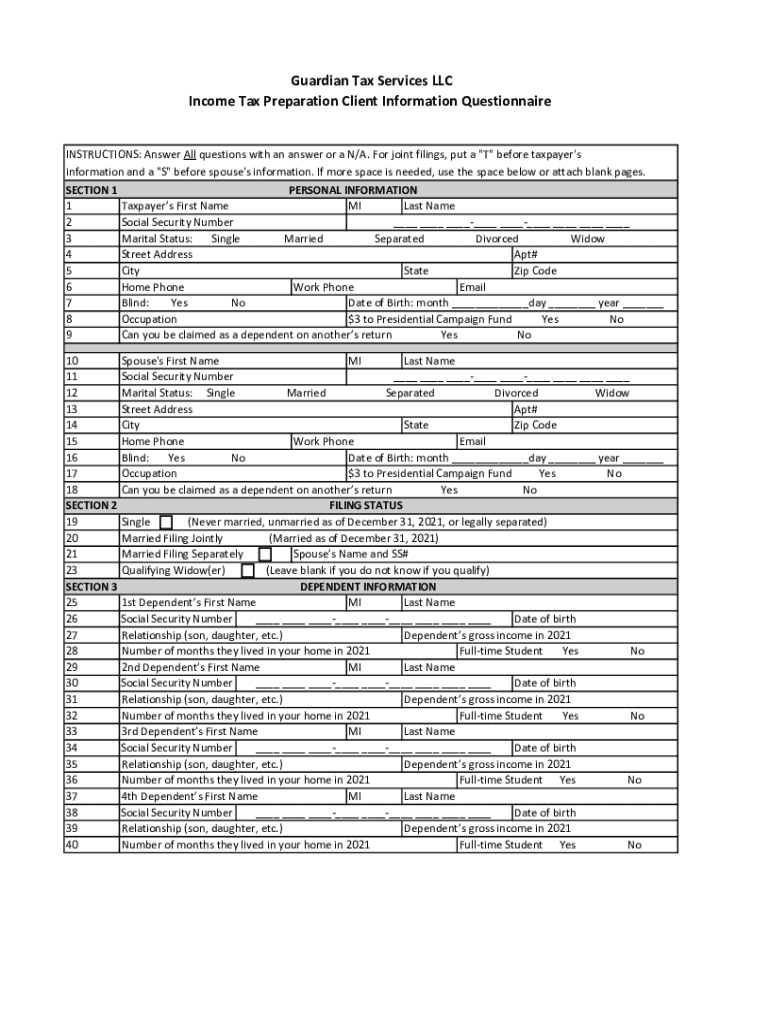
The Personal Income Tax Preparation Guide provides taxpayers with a structured approach to organizing and preparing their tax information for filing purposes. This guide encompasses key areas such as income declarations, deduction eligibility, and requisite documentation, ensuring that users understand how to accurately portray their financial situation to the Internal Revenue Service (IRS). It often includes sections for reporting various income streams, specifying deductions, and answering general tax-related questions to streamline the tax preparation process. The guide is essential for preventing errors and omissions that could lead to audits or penalties.
How to Use the Personal Income Tax Preparation Guide
Using the Personal Income Tax Preparation Guide begins with collecting necessary documents, such as W-2s, 1099s, and receipts for deductible expenses. Next, review each section of the guide closely. The document is typically divided into categories, such as personal details, income, deductions, and credits. As you complete each section, cross-reference your entries with supporting documentation. For instance, verify income figures against your pay stubs or employer-provided documents. Ensure all calculations adhere to current IRS rules. Utilizing financial software alongside the guide can automate calculations and reduce the chance of human error, making the process more efficient.
Steps to Complete the Personal Income Tax Preparation Guide
-
Gather Financial Documents: Collect all relevant documents, including income statements, investment reports, and receipts for deductible expenses.
-
Review Personal Information: Ensure that personal details, such as your name, Social Security number, and address, are correctly filled out.
-
Input Income Data: Enter information from W-2s, 1099s, and other income-related documents into the relevant sections of the guide.
-
List Deductions and Credits: Identify all eligible deductions and credits, including educational and medical expenses. Accurately complete these sections to minimize tax liability.
-
Complete the Filing Status Section: Choose the correct filing status based on your marital situation and family structure to leverage potential benefits.
-
Review and Finalize: Double-check entries for accuracy. Cross-reference sections if needed to ensure all information aligns correctly.
-
Sign and Submit: Complete any necessary signature fields and prepare the form for submission in the chosen format (digital or paper).
Each step is crucial for ensuring the accuracy and completeness of your tax return, mitigating the risk of errors that could trigger audits or penalties.
IRS Guidelines
The IRS provides specific guidelines for completing tax documents, including the Personal Income Tax Preparation Guide. These guidelines are intended to standardize financial reporting and ensure adherence to tax laws. Taxpayers must be aware of changes in tax code that affect income reporting, deduction limitations, and eligibility for credits. IRS publications offer detailed instructions on calculating taxable income, the treatment of various deduction types, and the application process for earned income tax credits. Familiarity with these guidelines helps maintain compliance and optimize tax outcomes.
Important Terms Related to Personal Income Tax Preparation Guide
Understanding pivotal terms is essential for accurately navigating the Personal Income Tax Preparation Guide:
- Adjusted Gross Income (AGI): Total income after specific deductions, setting the basis for calculating taxable income.
- Standard Deduction: A set deduction amount to reduce taxable income, available regardless of actual expenses incurred.
- Itemized Deductions: Specific deductions that can exceed the standard deduction, such as mortgage interest, medical expenses, and charitable contributions.
- Tax Credit: A direct reduction of tax liability, which could be refundable or non-refundable, based on eligibility criteria like child care or education expenses.
- Withholding: The amount of income tax already paid during the year, often deducted directly from paychecks or made through estimated tax payments.
Understanding these terms ensures that the preparation of taxes is both precise and compliant with federal regulations.
Filing Deadlines / Important Dates
Adhering to filing deadlines is critical to avoid penalties. For most taxpayers, tax returns are due by mid-April. Extensions may be requested, allowing an extension of the filing deadline but not on tax payment. Taxpayers should also note quarterly estimated tax payment deadlines, relevant to those who owe more than $1,000 in taxes beyond withholdings. Keeping track of these deadlines is vital for managing financial obligations effectively and avoiding late filing penalties.
Required Documents
The completion of the Personal Income Tax Preparation Guide requires several key documents:
- W-2 Forms: To report wages and salary income.
- 1099 Forms: To capture income from self-employment, investments, or freelance work.
- Receipts for Deductible Expenses: Needed to substantiate itemized deductions, including charitable donations, medical expenses, and state and local taxes.
- Investment Statements: To report dividends, interest, and capital gains or losses.
Having each document on hand prior to beginning work on the guide can save time and help prevent errors.
Form Submission Methods (Online / Mail / In-Person)
Various methods are available for submitting tax returns using the completed guide. Electronic filing (e-file) is often recommended for its speed and efficiency, giving users real-time feedback and quicker refunds. For those who prefer or need to submit paper forms, mailing addressed returns to the correct IRS location is necessary. In-person submission is possible at local IRS offices by appointment. Choosing a method depends on individual preferences, urgency for processing, and comfort with technology.


