




01. Edit your medication disposal form template online
Type text, add images, blackout confidential details, add comments, highlights and more.

Type text, add images, blackout confidential details, add comments, highlights and more.

Draw your signature, type it, upload its image, or use your mobile device as a signature pad.

Send medication disposal log via email, link, or fax. You can also download it, export it or print it out.
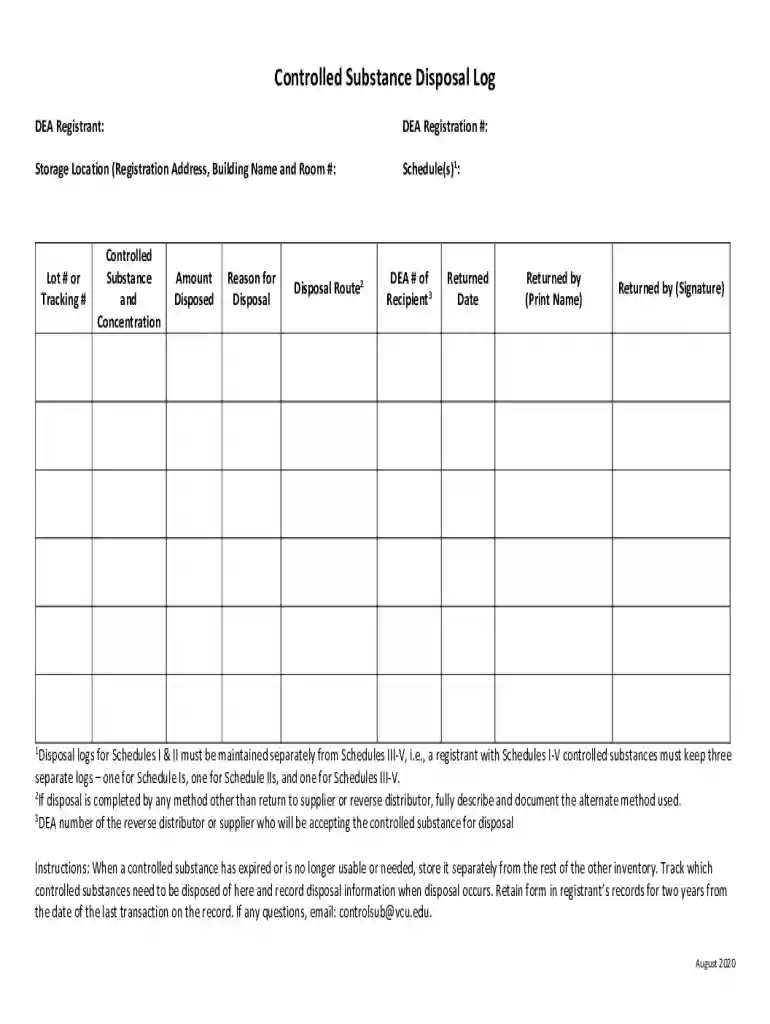
A Controlled Substance Disposal Log is a crucial document used by DEA registrants to meticulously record the disposal of controlled substances. It serves to ensure compliance with federal regulations by providing a clear and organized method for documenting these actions. The log is essential in preventing substance misuse, tracking the disposal process, and ensuring that all drug disposals are conducted appropriately.
Key components typically included in the log are:
This structured approach not only enhances accountability but also demonstrates adherence to regulatory requirements during audits or inspections.
Understanding the key elements of the Controlled Substance Disposal Log is essential to ensure accurate and comprehensive documentation. Each element plays a significant role in maintaining compliance with the DEA's regulations.
DEA Registration Number: This unique identifier connects the log to the responsible entity. Proper documentation begins with this number to validate the registrant’s authority to handle controlled substances.
Date of Disposal: Recording the precise date ensures that the timeline of disposal actions is well documented, which can be critical during inspections.
Storage Location Details: Indicating where the substances were held before disposal is vital for tracking and accountability, particularly in facilities handling large quantities of controlled substances.
Controlled Substance Schedules: This element categorizes substances as per the Controlled Substances Act, identifying them as Schedule I through V, each with varying degrees of regulation.
Disposal Amounts: Precise recording of each amount disposed of supports accurate inventory management and compliance validation.
Method of Disposal: Documenting the method used, such as incineration or another Safe Disposal Act compliant process, is critical for proving compliance with environmental and safety regulations.
Witness Signatures: Requiring signatures from personnel who observed the disposal adds a layer of verification to the process, ensuring integrity and accountability.
These key elements combine to create a comprehensive record that not only supports compliance but also aids in inventory accuracy and risk management.
Completing the Controlled Substance Disposal Log requires a systematic approach to ensure accuracy and compliance. Follow these steps for effective documentation:
Prepare the Log: Start with a blank Controlled Substance Disposal Log and ensure all necessary sections are ready to be filled.
Enter DEA Registration Number: Begin by filling in the DEA registration number to identify the responsible entity.
Document Date of Disposal: Clearly indicate the date on which the disposal took place. This is pivotal for creating a chronological record.
Specify the Storage Location: Write down the specific location where the controlled substances were stored prior to disposal. Accurate tracking is crucial.
Classify Controlled Substances: Enter details regarding the schedule of each controlled substance. For example, note whether the substances are classified as Schedule II or Schedule III, etc.
Log Disposal Amounts: Record the exact quantity of each substance disposed of, ensuring that this aligns with your inventory records.
State the Reason for Disposal: Provide a clear rationale for the disposal, such as expiration, loss, or insufficient potency.
Document Method of Disposal: Clearly define how the substances were disposed of, citing methods compliant with federal and state regulations.
Sign and Witness: Ensure that the log is signed by the individual responsible for the disposal and witnessed by another qualified individual. This step adds an additional layer of accountability.
Following these steps ensures proper documentation, which is crucial not only for legal compliance but also for maintaining internal records and accountability.
The Controlled Substance Disposal Log is utilized across various settings, primarily within healthcare and pharmaceutical environments. Here are practical scenarios illustrating its use:
Pharmacies: A pharmacy deals with the disposal of expired medications weekly. The pharmacist uses the log to document drug disposal, including inventory adjustments due to expired products.
Hospitals: During a routine inspection, a hospital's pharmaceutical department must demonstrate compliance with regulation. The Controlled Substance Disposal Log provides evidence of proper disposal processes, including details of witness signatures and disposal methods.
Research Facilities: Laboratories that handle controlled substances for research must dispose of chemicals that are no longer required. The log ensures they maintain compliance while documenting every disposal action.
Veterinary Clinics: In veterinary practices, controlled substances may need to be disposed of due to either expiration or changes in treatment protocols. The Controlled Substance Disposal Log helps maintain accurate records for regulatory inspections.
Understanding these various scenarios highlights the importance of thorough documentation and the benefit of utilizing the Controlled Substance Disposal Log across different environments.
Maintaining a Controlled Substance Disposal Log is not just a recommended practice but a legal requirement under the DEA regulations. Here are the vital legal aspects:
Compliance with Federal Regulations: The log ensures adherence to the Controlled Substances Act and DEA regulations, which mandate strict documentation of disposal processes. Non-compliance can lead to severe penalties.
Audit Preparedness: Regularly maintaining the log positions organizations to present clear and comprehensive documentation during audits. This preparedness helps demonstrate compliance effectively to regulatory authorities.
Risk Mitigation: Accurate records protect organizations from potential misuse allegations, ensuring there is a documented history of all disposals.
Environmental Protection: The log supports adherence to environmental laws by ensuring that controlled substances are disposed of safely and legally, thus preventing environmental contamination.
Understanding and adhering to these legal aspects of maintaining a Controlled Substance Disposal Log is crucial for any organization handling controlled substances.
We've got more versions of the medication disposal form template form. Select the right medication disposal form template version from the list and start editing it straight away!
At DocHub, your data security is our priority. We follow HIPAA, SOC2, GDPR, and other standards, so you can work on your documents with confidence.
In each row, indicate the name, strength, and form of the controlled substance destroyed, and the number of capsules, tablets, etc., that are in a full packageRead more
A record of all controlled substances used shall include the name of the person authorized to control and use such drugs, the date, type and quantity of drug


