







Definition & Meaning
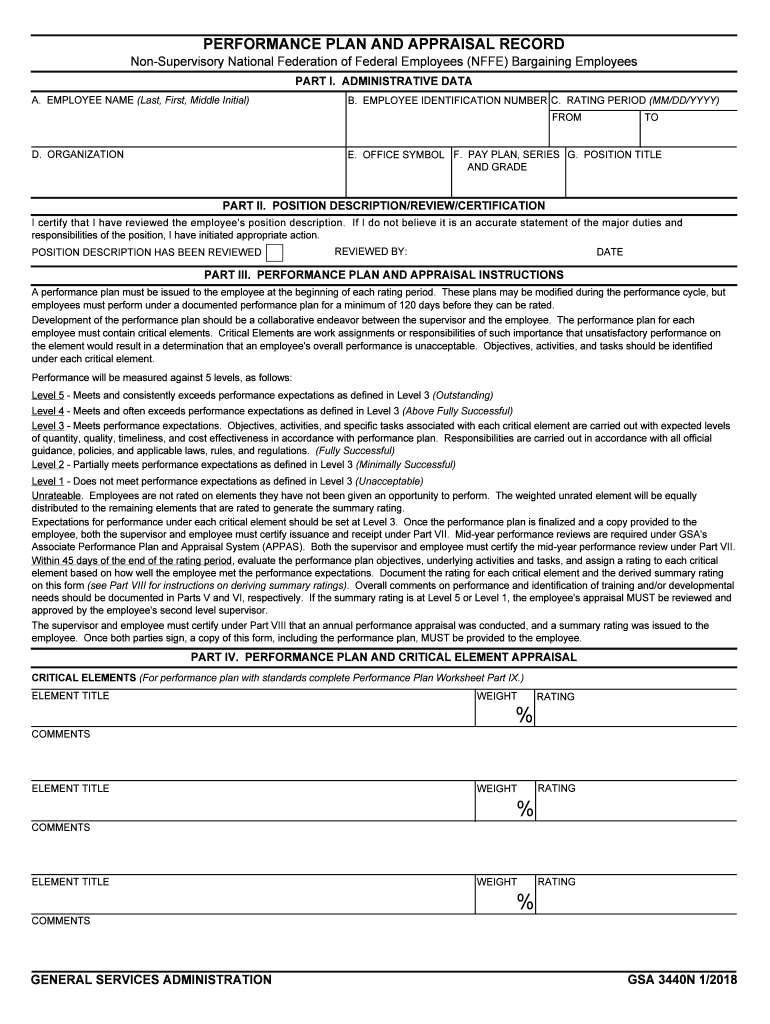
The "Performance Plan and Appraisal Record - Non-Supervisory" is a structured document used to evaluate and record the performance of non-supervisory employees within an organization. This form is essential for formalizing employee feedback, setting performance expectations, and recognizing areas for improvement. It typically involves collaboration between employees and their supervisors to ensure that performance goals are clear and attainable. The document provides a framework for consistent evaluation across different roles within a company, facilitating a transparent and fair appraisal process.
Key Elements of the Performance Plan and Appraisal Record - Non-Supervisory
The performance plan includes several critical elements that guide the evaluation process:
- Administrative Data: This includes information such as the employee's name, position, department, and the period being evaluated.
- Performance Goals and Objectives: Clearly defined goals set the standard for expectations during the appraisal period.
- Rating Criteria: Evaluation criteria are based on specific objectives and competencies, often spanning levels from "unsatisfactory" to "outstanding."
- Mid-Year Review: An interim review to assess progress, adjust goals if necessary, and address any performance issues.
- Final Appraisal Ratings: Conclusive evaluation based on year-long performance against the established criteria.
- Training Needs: Identification of areas where additional training would enhance performance, facilitating professional growth.
Steps to Complete the Performance Plan and Appraisal Record - Non-Supervisory
-
Pre-Assessment Preparation:
- Collect documentation on goals, achievements, and any previously noted performance challenges.
- Review any mid-year feedback and notes from supervisors.
-
Initial Self-Assessment:
- Employees conduct a self-evaluation, aligning their achievements against pre-set objectives. This allows employees to communicate their perspective on their performance and initiate dialogue.
-
Supervisor Assessment:
- Supervisors independently assess the employee, using the same criteria to ensure fairness and consistency.
-
Mid-Year Check-In:
- An opportunity for a structured conversation between the employee and supervisor to address any discrepancies and update goals as required.
-
Final Review Meeting:
- Joint discussion to compare self and supervisor evaluations, culminating in a finalized rating and setting new goals for the next cycle.
-
Feedback and Signature:
- Feedback from both parties is documented and the form is signed to acknowledge the discussion and agreed-upon outcomes.
Who Typically Uses the Performance Plan and Appraisal Record - Non-Supervisory
Primarily utilized by:
- HR Personnel: To standardize and facilitate the appraisal process.
- Supervisors and Line Managers: To guide discussions on employee performance and development.
- Non-Supervisory Employees: As a tool for understanding expectations and obtaining constructive feedback for career development.
This form is pivotal for departments where roles do not entail supervisory duties but require structured review cycles to align individual and organizational goals.


Why Use the Performance Plan and Appraisal Record - Non-Supervisory
Utilizing this document offers numerous benefits:
- Consistency: Ensures standardized evaluations across diverse non-supervisory roles, irrespective of department or function.
- Transparency: Enhances trust between employees and management by maintaining open channels of communication regarding performance standards.
- Development: Identifies training requirements and future opportunities, enabling employees to upskill and contribute more effectively.
- Motivation: By recognizing achievements and providing constructive feedback, employees remain engaged and motivated to meet and exceed expectations.
Legal Use of the Performance Plan and Appraisal Record - Non-Supervisory
From a legal perspective:
- Performance appraisals must adhere to anti-discrimination laws to prevent bias based on race, gender, age, and other protected characteristics.
- Documentation must be kept secure and confidential as part of an employee’s record.
- The form supports compliance with legal standards by documenting performance issues and subsequent actions taken.
This documentation is crucial during disputes or when justifying employment decisions.
Examples of Using the Performance Plan and Appraisal Record - Non-Supervisory
Practical scenarios include:
- Promotion Considerations: Using the appraisal record to guide discussions about promotions by demonstrating readiness and suitability.
- Performance Improvement Plans: When needing to establish documented expectations for underperforming employees to aid them in meeting required standards.
- Annual Reviews: Facilitating structured year-end performance discussions that recap achievements and set new objectives.
State-Specific Rules for the Performance Plan and Appraisal Record - Non-Supervisory
While the federal structure of the document remains consistent, certain states have additional requirements:
- California: Emphasizes more stringent anti-discrimination measures in performance evaluations.
- New York: Requires documented evidence of feedback discussions for any performance-related employment decisions.
- Texas: Encourages digital record-keeping through preferred methods and software compatibility.
Understanding these variations ensures compliance with state-specific employment laws.




