







Definition and Meaning
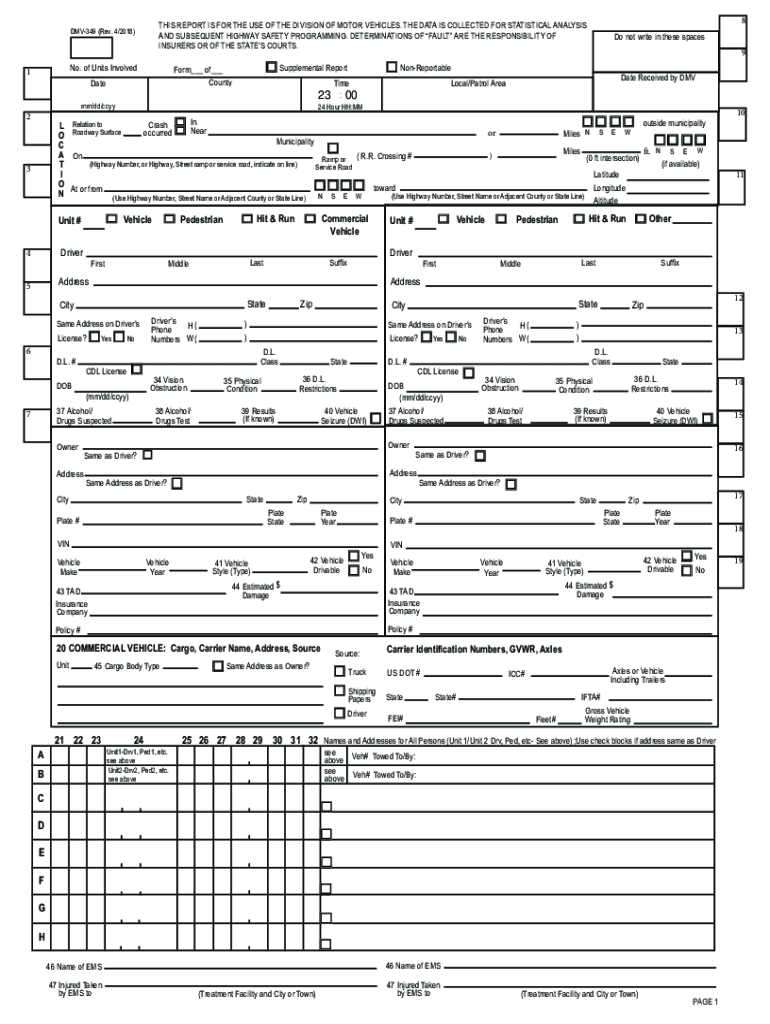
The "Unit # Vehicle Pedestrian Hit & Run Commercial Unit # Vehicle" form is a specialized document for gathering detailed information related to incidents involving vehicles, pedestrians, and commercial units, particularly in hit-and-run scenarios. This form is designed to capture crucial data that assists in traffic incident reports and statistical analysis within motor vehicle divisions. Such information may include the identification of vehicles involved, driver details, accident location, the sequence of events leading up to the crash, and any resultant injuries or property damage. This level of detail is essential for legal documentation and safety programming initiatives aimed at improving highway safety.
How to Use the Form
To use the "Unit # Vehicle Pedestrian Hit & Run Commercial Unit # Vehicle" form effectively, individuals or authorities dealing with a hit-and-run scenario must ensure all relevant sections of the form are fully completed. The following broad steps outline the usage:
- Identify all parties involved: Accurately document the vehicle and pedestrian details, including license numbers, descriptions, and other identifiers.
- Chronicle the incident sequence: Clearly outline the order of events and specifics about how the hit-and-run occurred.
- Record injury and damage: Detailed notes on personal injuries and property damage should be included.
- Ensure data accuracy: Recheck all entries for correctness before submission, often verified by corresponding police or witness statements.
The form serves as a comprehensive tool for investigators and insurers to process claims and understand incident circumstances.
Steps to Complete the Form
Fulfilling the "Unit # Vehicle Pedestrian Hit & Run Commercial Unit # Vehicle" form requires attention to detail and precision:
- Gather Necessary Information: Collect initial details such as location, time, and weather conditions at the incident site.
- Fill in Vehicle and Pedestrian Details: Include make, model, color, and license number of involved vehicles, alongside pedestrian information if applicable.
- Document Witness Accounts: Capture statements from witnesses to corroborate the event details.
- Specify Injuries or Damages: Record specific injuries sustained by individuals and note any property damage.
- Use Clear Language: Describe events in simple, precise terms to avoid ambiguity.
- Review: Ensure all sections are completed and verified for accuracy before final submission.
Completing this form accurately is crucial for legal and insurance processes.
Who Typically Uses the Form
The primary users of the "Unit # Vehicle Pedestrian Hit & Run Commercial Unit # Vehicle" form include:
- Law Enforcement Agencies: For documenting and investigating accidents.
- Insurance Companies: To assess claims and determine liability.
- Legal Practitioners: To prepare for legal proceedings and provide client counsel.
- Government Bodies: For data collection and analysis to enhance traffic safety measures.
- Victims and Witnesses: To provide firsthand accounts and support ongoing investigations.
By understanding the scope of this form, these parties can better contribute to the incident resolution process.


Key Elements of the Form
Critical sections of the "Unit # Vehicle Pedestrian Hit & Run Commercial Unit # Vehicle" form address:
- Incident Identification: Covers location, time, and environmental conditions.
- Participant Details: Information on drivers, passengers, pedestrians, vehicles, and ownership.
- Narrative Descriptions: Statements providing detailed accounts of the incident.
- Legal Information: Details regarding potential violations of traffic laws.
- Injury and Damage Reports: Initial diagnoses and estimates of property impact.
Each of these elements plays a pivotal role in understanding and resolving vehicular accidents effectively.
State-specific Rules
Regulations regarding the "Unit # Vehicle Pedestrian Hit & Run Commercial Unit # Vehicle" form may vary by state, affecting how the form is filled, submitted, and processed:
- Documentation Requirements: Some states might require additional legal documents and evidence attachments.
- Submission Timelines: Timeframes for submitting the form can differ, impacting the urgency of completion.
- Penalties for Inaccuracy: Incorrect or misleading information may incur varying penalties depending on state laws.
- Witness Statements: Some jurisdictions may have specific requirements for corroborating witness accounts.
Understanding these state-specific nuances ensures compliance with local legal standards.
Form Submission Methods
The "Unit # Vehicle Pedestrian Hit & Run Commercial Unit # Vehicle" form can be submitted through various methods:
- Online Platforms: Many states allow electronic submissions through official government portals.
- Mail: Traditional postal services are often accepted, with the form physically sent to the designated address.
- In-Person Submission: Forms can be handed over directly at designated state motor vehicle offices.
Each submission method requires its own set of instructions and processing times, which must be adhered to for the form to be validly processed.
Penalties for Non-Compliance
Failing to complete and submit the "Unit # Vehicle Pedestrian Hit & Run Commercial Unit # Vehicle" form can lead to significant consequences:
- Fines and Penalties: Monetary charges can accrue for delays or failure to provide accurate information.
- Legal Consequences: Omission can lead to charges of negligence or obstruction of justice concerning traffic law violations.
- Insurance Implications: Processing of insurance claims can be delayed or denied, affecting compensations.
- Tracking Issues: Incomplete reports hinder authorities' ability to accurately track and analyze accident trends.
Adhering to compliance requirements mitigates these risks and supports efficient incident management.
Legal Use of the Form
The "Unit # Vehicle Pedestrian Hit & Run Commercial Unit # Vehicle" form is a crucial legal document within the U.S. legal framework:
- Serves as Official Record: Used as part of official records in courts and by law enforcement.
- Provides Legal Proof: Acts as documented proof in insurance assessments and claims.
- Integral for Investigation: Aids in thorough investigations and legal resolutions of traffic accidents.
- Supports Safety Programs: Contributes to policy formulation for road safety improvements.
Understanding its legal use helps ensure adherence to appropriate traffic laws and regulations.




