




01. Edit your form online
Type text, add images, blackout confidential details, add comments, highlights and more.

Type text, add images, blackout confidential details, add comments, highlights and more.

Draw your signature, type it, upload its image, or use your mobile device as a signature pad.

Send it via email, link, or fax. You can also download it, export it or print it out.
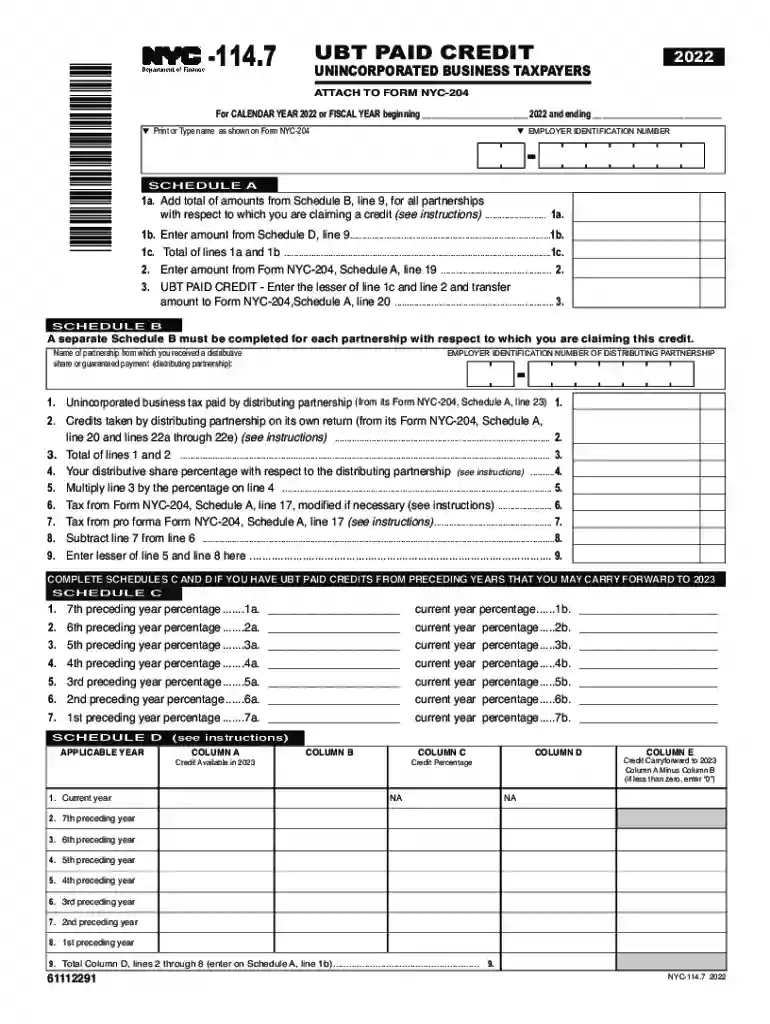
The form "For CALENDAR YEAR 2022 or FISCAL YEAR beginning 2022 and ending" is a filing document often used to report financial activities for entities operating on either a calendar or fiscal year basis. A calendar year represents transactions from January 1 to December 31, while a fiscal year reflects any twelve-month period ending in 2022 that does not align with the calendar year. Businesses opt for fiscal years to match their natural business cycles, offering flexibility in financial reporting and planning.
Understanding the critical elements included in this form ensures accurate and compliant financial reporting. These elements can include:
Entity Information: Identifies the business or individual filing the form, including name, address, and identification numbers.
Reporting Period: Specifies the exact period covered, establishing the type of year used—calendar or fiscal.
Income and Deductions: Details on income generated and eligible deductions, directly affecting taxable income.
Compliance and Regulatory Sections: Align with specific IRS guidelines, ensuring accurate and lawful filing.
Completing the form requires careful attention to detail and thorough documentation of financial activities. Here's a step-by-step guide:
Identify the Reporting Year: Determine whether you are reporting for the calendar year or selecting a fiscal year.
Gather Necessary Documents: Include financial statements, income records, and deduction claims.
Fill Out Entity Details: Accurately input business or individual entity information at the beginning of the form.
Report Financial Activities: Carefully document all income sources and deductions claimed within the reporting period.
Review and Double-Check Entries: Ensure all figures are accurate and compliant with IRS standards before submission.
The form is typically available through government portals, or you may access it using document management tools like DocHub. Here's how to obtain it:
Adhering to IRS guidelines is critical for both legal compliance and the accuracy of financial reporting. Relevant guidelines include:
Filing Deadlines: Generally aligns with tax return deadlines. For fiscal years, refer to IRS instructions for specific dates.
Documentation Accuracy: The IRS requires exactness in reported figures, demanding corroborating documents.
Respond Promptly: Address any IRS communication quickly to avoid penalties.
Provide Complete Information: Ensure all requested data during audits or inquiries is submitted.
Modern document filling often involves software that simplifies form management and ensures compliance. Popular tools compatible with this form include:
TurboTax: Offers comprehensive support for both calendar and fiscal year filings.
QuickBooks: Facilitates expense tracking and income documentation that can be directly integrated for form completion.
Familiarity with essential terminology aids in better understanding and completion of the form. Key terms include:
Taxable Income: The portion of income subject to tax after deductions.
Deduction: Eligible expenses subtracted from total income to determine taxable income.
Entity: The individual or business completing the form, classified as a taxpayer by the IRS.
Failure to adhere to filing deadlines can result in penalties. Key dates typically include:
April 15: Commonly the deadline for calendar year filings.
15th Day of Fourth Month after Fiscal Year-End: For fiscal year filings, align with fiscal year-end specifics.
Requesting Extensions: File IRS Form 4868 for a six-month automatic extension on filing.
State-Specific Deadlines: Check with local tax authorities for additional deadlines applicable to your state.
Failing to timely file or accurately report can lead to severe consequences:
Late Filing Penalties: Charged at a percentage of unpaid taxes from the due date.
Accuracy-Related Penalties: Imposed for misstated income or deductions, calculated at 20% of the underpayment.
By carefully following these guidelines and utilizing software tools for efficient document management, individuals and businesses can ensure thorough completion of "For CALENDAR YEAR 2022 or FISCAL YEAR beginning 2022 and ending," maintaining compliance and optimizing their financial management processes.
We've got more versions of the For CALENDAR YEAR 2022 or FISCAL YEAR beginning 2022 and ending form. Select the right For CALENDAR YEAR 2022 or FISCAL YEAR beginning 2022 and ending version from the list and start editing it straight away!
| Versions | Form popularity | Fillable & printable |
|---|---|---|
| 2025 | 4.5 Satisfied (41 Votes) | |
| 2024 | 4.4 Satisfied (26 Votes) | |
| 2023 | 4.2 Satisfied (53 Votes) | |
| 2022 | 4.9 Satisfied (39 Votes) | |
| 2021 | 4.8 Satisfied (51 Votes) | |
| 2020 | 4.4 Satisfied (215 Votes) | |
| 2019 | 4 Satisfied (42 Votes) | |
| 2018 | 4.4 Satisfied (135 Votes) | |
| 2017 | 4.2 Satisfied (56 Votes) | |
| 2016 | 4.3 Satisfied (98 Votes) | |
| 2015 | 4.4 Satisfied (195 Votes) | |
| 2012 | 4.4 Satisfied (234 Votes) |
At DocHub, your data security is our priority. We follow HIPAA, SOC2, GDPR, and other standards, so you can work on your documents with confidence.
At UC Irvine, the fiscal year begins on July 1 and ends on June 30. Because the fiscal year straddles two different calendar years, the calendar year andRead more
Apr 15, 1976 You use the calendar year as your tax year. You use GDS for all the vehicle in a tax year beginning in 2015 and ending in. 2016, andRead more
Jan 27, 2026 Calendar year 12 consecutive months beginning January 1 and ending December 31. Fiscal year 12 consecutive months ending on the last day ofRead more


