






Definition & Meaning
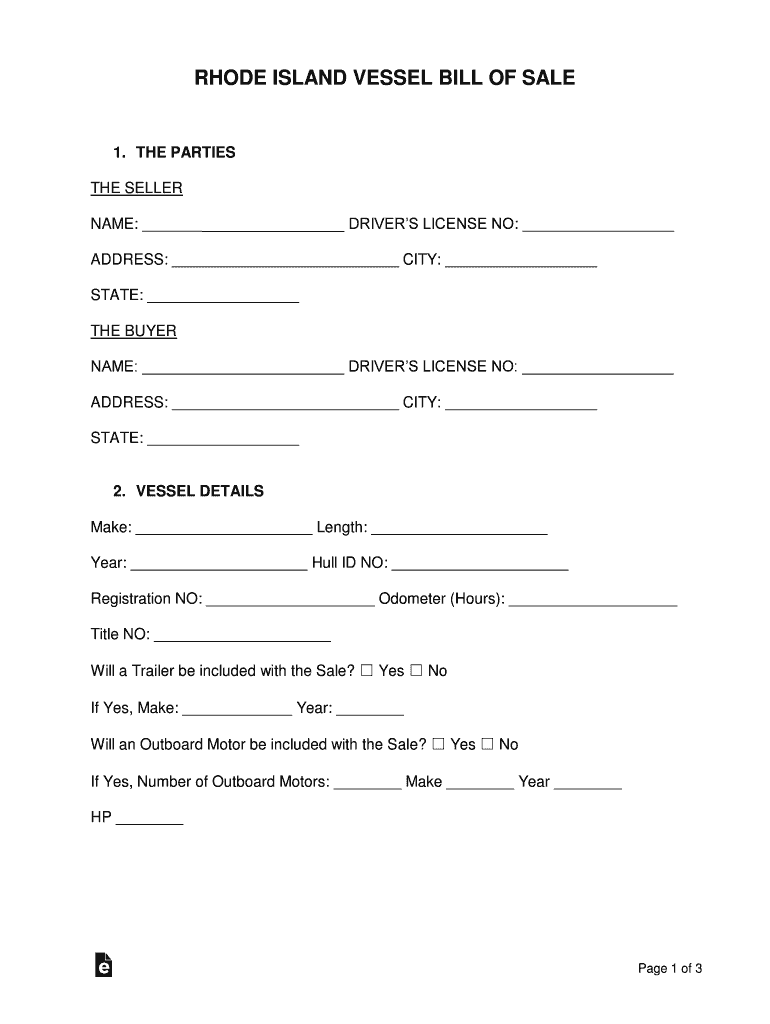
The Rhode Island Vessel Bill of Sale is a legal document used in the transfer of ownership of a vessel from a seller to a buyer within the state of Rhode Island. It records essential transaction details, such as the identities of the parties involved, specifications of the vessel, and financial terms, ensuring transparency and legal compliance. This document also serves as evidence of the agreed terms and conditions, including any warranties or disclosures made by the seller. It is crucial to both parties as it facilitates a clear, binding contract that outlines the responsibilities and rights of each involved party.
Key Elements of the Rhode Island Vessel Bill of Sale
A well-prepared Rhode Island Vessel Bill of Sale includes several key elements that ensure its legality and effectiveness:
-
Party Details: Clearly identifies the buyer and seller, including full names, addresses, and contact information.
-
Vessel Specifications: Lists details of the vessel, including make, model, year, hull identification number, and registration number.
-
Transaction Details: Specifies the purchase price or any trade conditions agreed upon by both parties.
-
Seller's Disclosures: May include any known issues with the vessel, ensuring full transparency about its condition.
-
Signatures: Requires signatures from the buyer and seller. A notary public's acknowledgment may also be necessary to validate the document.
Steps to Complete the Rhode Island Vessel Bill of Sale
-
Gather Information: Begin by collecting all necessary information regarding the vessel and the buyer and seller’s personal details.
-
Complete the Form: Fill out the form with accurate details, including the transaction terms and any disclosures from the seller.
-
Review and Validate: Both parties should carefully review the completed document to ensure all information is correct and complete.
-
Sign the Document: Both the buyer and seller must sign the bill of sale. For extra security, it’s advisable to have the document notarized.
-
Distribute Copies: Provide copies to both parties and submit any necessary copies to state agencies for registration purposes.
Legal Use of the Rhode Island Vessel Bill of Sale
The legal use of a Rhode Island Vessel Bill of Sale is crucial for:
-
Ownership Transfer: It serves as legal proof of transfer from one party to another, critical for updating registration and title records.
-
Protection Against Fraud: Provides a record that verifies the terms agreed upon by both parties, protecting each from potential disputes or misunderstandings.
-
Compliance with State Laws: Ensures compliance with Rhode Island's regulations governing the sale and purchase of vessels, aiding in smooth registration and ownership transition.
How to Obtain the Rhode Island Vessel Bill of Sale
Obtaining a Rhode Island Vessel Bill of Sale involves a few potential methods:
-
Online Download: Many legal document websites offer downloadable templates for a Rhode Island Vessel Bill of Sale.
-
Legal Professionals: Consulting with an attorney or legal document preparer who specializes in vessel transactions can provide a custom bill of sale.
-
State Resources: The Rhode Island state government’s website may offer guidelines or templates for vessel transactions.
State-Specific Rules for the Rhode Island Vessel Bill of Sale
Rhode Island has specific rules that govern the execution and utility of a Vessel Bill of Sale:
-
Notarization: While not always required, it is strongly advised to have the bill of sale notarized to prevent any legal disputes.
-
Registration Requirements: Following the completion of the bill of sale, the new owner must register the vessel with the Rhode Island Department of Environmental Management (RIDEM).
-
Sales Tax: A sales tax may apply to the transaction, which needs to be settled with the appropriate state tax authority.
Examples of Using the Rhode Island Vessel Bill of Sale
Consider these scenarios to understand how a Rhode Island Vessel Bill of Sale functions:
-
Private Purchase: John buys a second-hand fishing boat from Sarah; both utilize the Rhode Island Vessel Bill of Sale to legalize the transaction and protect their interests.
-
Trade-in Transactions: Mary wants to upgrade her sailing boat and agrees with a dealer to trade in her current boat as part of the purchase deal. The bill of sale records the transaction details and facilitates ownership transfer.
-
Estate Settlement: When distributing assets after a relative's passing, using a bill of sale ensures the vessel’s ownership transfer complies with the will’s directives and state laws.
Important Terms Related to Rhode Island Vessel Bill of Sale
Understanding specific terminologies is essential when dealing with a Rhode Island Vessel Bill of Sale:
-
Hull Identification Number (HIN): A unique identifier used to track the vessel’s manufacturing details and ownership history.
-
Registration Number: Required for all vessels, this number is assigned by the state and must be noted in any ownership transfer.
-
Notary Public Acknowledgment: An official verification by a notary that authenticates the identities of the parties signing the document.
-
As-is Condition: A term indicating the buyer accepts the vessel in its current state, with no warranties of condition from the seller.
Disclosure Requirements
The Rhode Island Vessel Bill of Sale necessitates transparency through disclosure requirements:
-
Known Defects: Sellers must disclose known defects or issues with the vessel that may affect its value or functionality.
-
Outstanding Liens: Any liens on the vessel must be disclosed, as they can affect the buyer's legal ownership rights.
-
Vehicle History Reports: It's often advisable to provide a history report, detailing past ownership transfers and any recorded incidents.
Digital vs. Paper Version
The growing trend towards digital transactions also affects how the Rhode Island Vessel Bill of Sale can be executed:
-
Digital Format: Allows for electronic signatures and easier sharing, suitable for remote transactions and ensuring environmental sustainability.
-
Paper Version: Still widely used for traditional purchases, especially where digital access may be limited or when notarization is necessary.
-
Storage and Access: Digital versions can be stored securely online, while paper copies should be preserved in a safe location for legal reference.
Eligibility Criteria
To use the Rhode Island Vessel Bill of Sale, certain eligibility criteria apply:
-
Seller Eligibility: Must possess legal ownership of the vessel and the capacity to transfer that ownership legally.
-
Buyer Considerations: The buyer needs to meet any legal purchasing requirements, such as age, and be prepared to fulfill state registration obligations post-purchase.
-
Vessel Qualifications: Only vessels that are legally owned and free from undisclosed liens or encumbrances can be legally sold using the bill of sale.
These comprehensive insights into the Rhode Island Vessel Bill of Sale equip individuals engaging in vessel transactions with the knowledge needed to navigate and complete their transfer of ownership effectively.