




Here's how it works
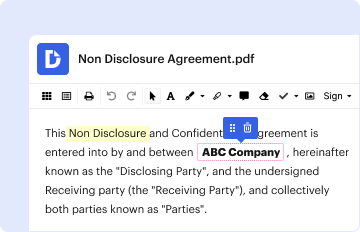
01. Edit your e 536 online
Type text, add images, blackout confidential details, add comments, highlights and more.
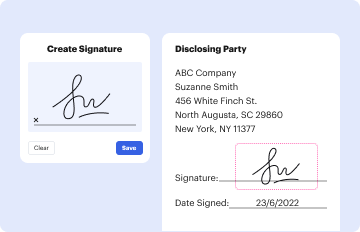
02. Sign it in a few clicks
Draw your signature, type it, upload its image, or use your mobile device as a signature pad.

03. Share your form with others
Send nc e536r via email, link, or fax. You can also download it, export it or print it out.
How to use or fill out Form E-536R Fillable Schedule of County Sales and Use Taxes for Claims with Our Platform

- Click ‘Get Form’ to open the Form E-536R in our editor.
- Begin by entering your Account ID at the top of the form. This is essential for identifying your claim.
- Fill in the 'Period Ending' date in MM-DD-YY format, indicating the end date for which you are claiming a refund.
- In the 'Legal Name' field, enter your business or personal name as it appears on official documents.
- Select your county from the provided list. Each county has specific tax rates that will apply to your claim.
- Input the relevant tax amounts under each category: County 2.00% Tax, County 2.25% Tax, and Transit 0.50% Tax based on your transactions.
- Ensure that the total amounts entered match those specified in the general instructions section of the form.
- Once completed, review all entries for accuracy before submitting your claim through our platform.
Start filling out your Form E-536R today for free using our platform!
Fill out Form E-536R Fillable Schedule of County Sales and Use Taxes for Claims ... online
It's free
It's free
See more Form E-536R Fillable Schedule of County Sales and Use Taxes for Claims ... versions
We've got more versions of the Form E-536R Fillable Schedule of County Sales and Use Taxes for Claims ... form. Select the right Form E-536R Fillable Schedule of County Sales and Use Taxes for Claims ... version from the list and start editing it straight away!
Got questions?
We have answers to the most popular questions from our customers. If you can't find an answer to your question, please contact us.
Contact us
How to file sales and use tax in California?
Filing sales tax online is generally recommended, but businesses may also submit the State, Local, and District Sales and Use Tax Return paper form (CDTFA-401-A). This form replaces the CABOE-401-A2. Taxpayers can file and pay returns online through the California Taxpayers Services Portal.
Is potassium ferrocyanide toxic?
But the answer to whether it is toxic is no! Firstly, while potassium cyanide is a toxic substance and releases the cyanide anion when consumed by a person, potassium ferrocyanide is not. In potassium ferrocyanide, the cyanide anion is strongly bonded to ferrous ion and hence does not get hydrolysed.
What is a schedule on tax forms?
Tax schedules are forms you fill out with your tax return to calculate specific types of income, credits or deductions, providing additional details beyond what is on your Form 1040. You use Schedule A to itemize deductions on your tax return when your itemized deductions exceed the Standard Deduction.
What is the E number 536?
Potassium ferrocyanide Names E number E536 (acidity regulators, ) PubChem CID 161067 UNII GTP1P30292 (anhydrous) 961WP42S65 (trihydrate) CompTox Dashboard ( EPA ) DTXSID6089242335 more rows
How do I file sales and use tax?
Sellers have two options for filing their California sales tax: File online through the California Department of Tax and Fee Administration. File by mail using Californias Short FormSales and Use Tax Return. You must pay online if your estimated monthly tax liability is $10,000 or more.
Security and compliance
At DocHub, your data security is our priority. We follow HIPAA, SOC2, GDPR, and other standards, so you can work on your documents with confidence.
Learn more


People also ask
Is e535 food additive safe?
So far, there are no known harmful effects of ferrocyanides as additives. Although cyanides are extremely toxic as a pure substance, ferrocyanides are considered harmless. In addition, the permissible amount used as a release agent in table salt is very low (20 milligrams per kilogram of table salt).
What is E 536 food additive?
Potassium Ferrocyanide is employed in food production to prevent salt particles from clumping together. Reducing the solubility of sodium chloride in water, it effectively inhibits the agglomeration of salt. This prevents recrystallization and caking, preserving the granular texture and usability of the product.
What is E 536?
E536 Potassium ferrocyanide (yellow prussiate of potash)