
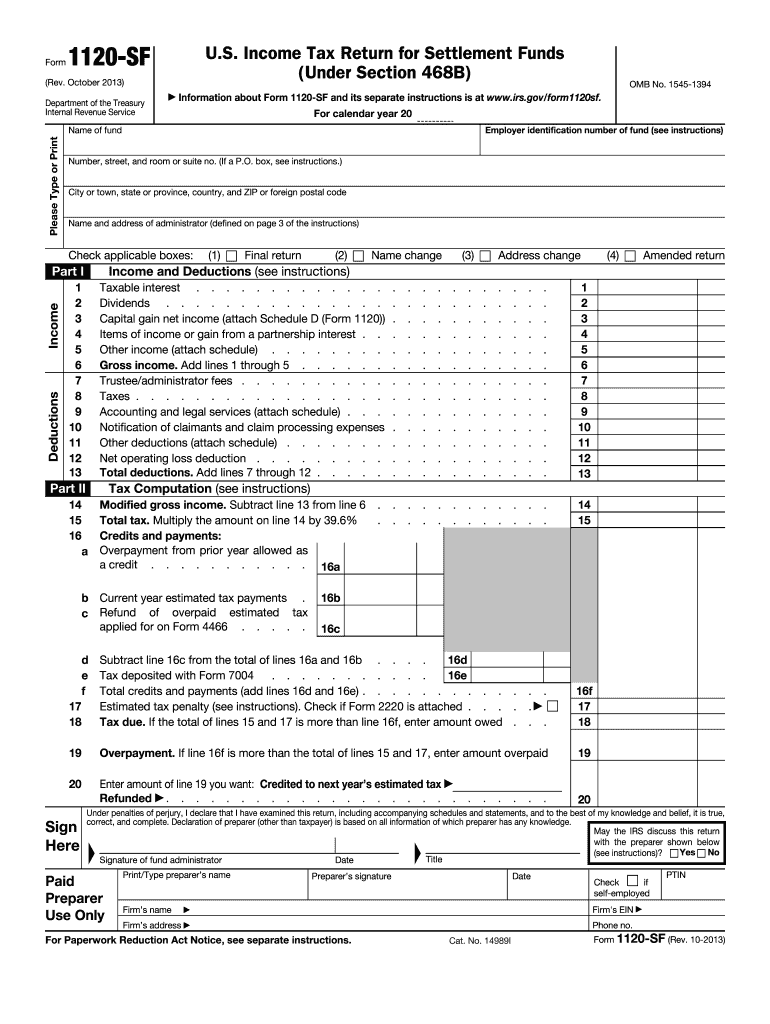







Definition and Purpose of Form 1120-SF
Form 1120-SF is officially recognized as the U.S. Income Tax Return for Settlement Funds, utilized under Section 468B. This form is specifically designed for settlement funds, commonly established in legal contexts to manage funds reserved for settlements or judgments. It is essential for reporting income, deductions, and any associated tax liabilities. Settlement funds will detail financial activities such as documenting taxable interest and deductions, administration costs, and distributions made to claimants. Understanding this form's definitions and requirements is crucial for accurate filings.
How to Obtain Form 1120-SF
The Form 1120-SF can be accessed through several channels to ensure ease of acquisition:
- IRS Website: Available for download in PDF format, offering users convenience.
- Physical IRS Offices: Copies can be obtained by visiting an office for those who prefer a physical form.
- Tax Preparation Software: Some platforms, like TurboTax or QuickBooks, may integrate the form within their systems if they support business tax returns.
Steps to Complete Form 1120-SF
Completing Form 1120-SF requires careful attention to detail, involving multiple steps:
- Identify the Fund: Enter the settlement fund’s name, address, and employer identification number.
- Report Financial Information:
- List all taxable income, including interest.
- Document allowable deductions related to fund administration.
- Calculate Taxes: Use the form's instructions to compute taxes owed or potential refunds.
- Detail Administrations and Distributions:
- Provide details about fund administration expenses.
- Report distributions made to claimants and beneficiaries.
Each section comes with specific instructions that need to be followed to ensure compliance.
Key Elements of Form 1120-SF
Some significant elements featured on the Form 1120-SF include:
- Financial Summary: An overview of income, deductions, and net taxable amounts.
- Administrative Details: Important for transparency in fund management and operations.
- Tax Liability Computation: Specific calculations for determining the owed tax amount or refunds due.
Legal Use of Form 1120-SF
The legal use of Form 1120-SF involves compliance with IRS regulations for settlement funds under Section 468B. Its primary purpose is to track tax obligations related to the income produced within such funds. Legal correctness ensures no detrimental legal issues arise from misreporting or underestimating liabilities.
IRS Guidelines for Form 1120-SF
These guidelines cover the proper handling of the form from a regulatory perspective:
- Accuracy: Accurate reporting of financial figures to avoid penalties.
- Deadlines: Adhering to prescribed deadlines to ensure compliance.
Failure to align with these guidelines may result in audits or fines.
Filing Deadlines and Important Dates
Filing timelines are critical:
- Annual Deadline: Generally due on the 15th day of the 4th month following the end of the fund’s tax year.
- Extension Available: While extensions are possible, they must be applied for before the filing deadline, using the appropriate IRS forms.
Understanding these dates is essential to avoid late filing penalties.
Form Submission Methods
Form 1120-SF can be filed through:
- Mail: A traditional method involving sending paper copies to the IRS.
- Online: Some platforms may facilitate electronic submission, offering a quicker, more efficient process.
Choosing the appropriate submission method ensures the timely processing of tax returns.
Penalties for Non-Compliance
Non-compliance with Form 1120-SF obligations can lead to significant penalties:
- Late Filing Penalties: Charges for submitting the form past the deadline.
- Accuracy Penalties: Levy applied due to inaccuracies or deliberate misreporting.
Awareness of these potential consequences emphasizes the importance of thorough and precise completion and submission.
Software Compatibility with Form 1120-SF
Various software solutions can aid in the preparation and filing of Form 1120-SF:
- TurboTax: While primarily for individual taxes, it may offer business options that include Form 1120-SF.
- QuickBooks: Integrates accounting data directly into tax form preparation, streamlining the process.
Understanding compatible software enhances efficiency, enabling digital handling of tax tasks.
Business Entity Types Using Form 1120-SF
This form is specifically applicable to business entities managing settlement funds, such as:
- Trusts: Holding settlement monies for later distribution.
- Corporations: Acting as administrating agents responsible for allocation and reporting.
Entities utilizing this form should ensure they align their reporting practices with the stipulated requirements.
Conclusion
The extensive knowledge necessary for dealing with Form 1120-SF emphasizes informed participation in tax processes for settlement funds. Detailed comprehension of each topic supports accurate, timely, and compliant filings and fosters trust within legal and financial frameworks.




