







Understanding Sales & Excise FormsRI Division of Taxation - Rhode Island
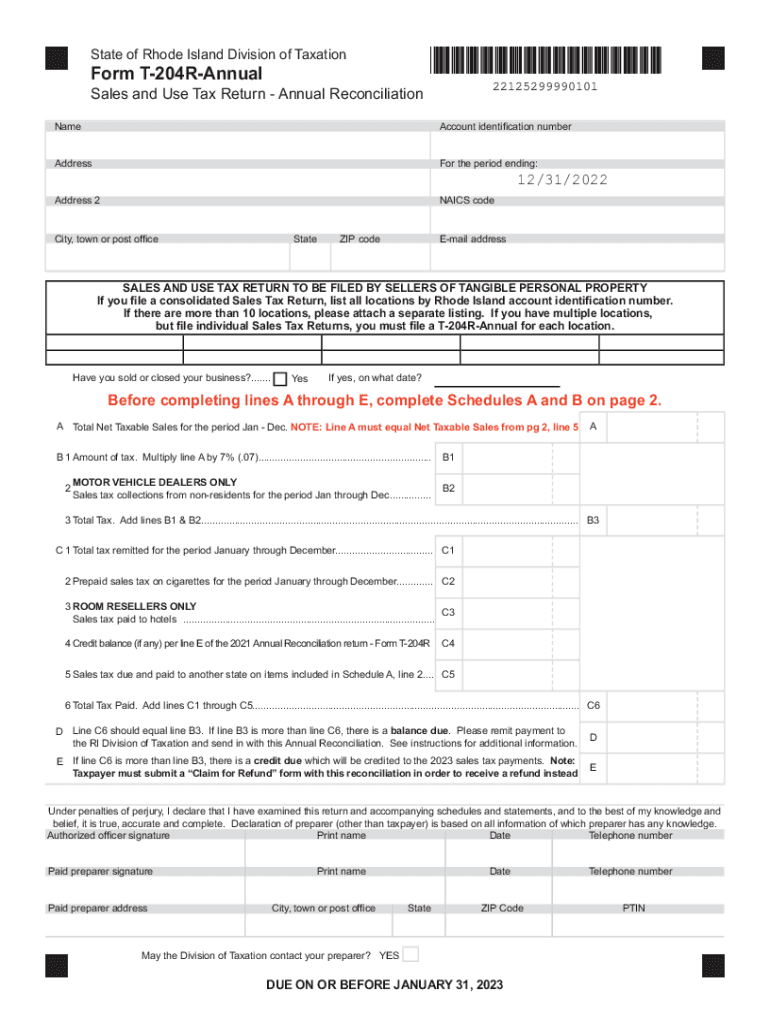
The Sales & Excise FormsRI Division of Taxation - Rhode Island are crucial for businesses and individuals managing sales and use taxes in the state. These forms are designed to ensure that businesses comply with state tax laws, particularly concerning the collection and remittance of sales tax on tangible personal property. This section covers the essential components and purposes of these forms, helping users understand their significance in the tax submission process.
How to Use the Sales & Excise FormsRI Division of Taxation - Rhode Island
To effectively use the Sales & Excise FormsRI Division of Taxation, begin by familiarizing yourself with the specific fields and sections of the form relevant to your business activities. The form typically includes sections for reporting total net taxable sales, deductions, and credits. Additionally, ensure that all required information, such as account numbers and tax identification, is accurately filled out. Utilize digital platforms like DocHub to streamline the process with features such as fillable fields and electronic signatures.
Obtaining the Sales & Excise FormsRI Division of Taxation - Rhode Island
Sales & Excise Forms can be obtained directly from the Rhode Island Division of Taxation’s website. For added convenience, digital copies are often available, which can be imported into platforms like DocHub for electronic completion and submission. Businesses can also request physical copies by contacting the Division of Taxation directly, ensuring they have the necessary documentation for tax compliance.
Completing the Sales & Excise Forms: Step-by-Step
- Gather Required Documents: Before starting, gather all necessary documents, such as sales records and receipts, to ensure accurate reporting.
- Fill Out Business Information: Enter your business identification details, including the name, address, and tax ID number.
- Report Taxable Sales: Accurately report all net taxable sales during the specified period, utilizing records for verification.
- Calculate Deductions and Credits: Input any applicable deductions and credits; ensure these are documented and compliant with state regulations.
- Submit the Form: Once completed, submit the form via the preferred method—either electronically through DocHub or by mailing a hard copy to the Division of Taxation.
- Keep Records: Maintain copies of the completed form and all associated documents for your records, in case of future audits or queries.
Key Elements of the Sales & Excise Forms
- Business Details: Accurate business identification details are critical.
- Tax Computation: The section for computing net taxable sales and the resultant tax dues.
- Deductions and Credits: Sections dedicated to permissible deductions and credits.
- Submission Details: Instructions for submission, including deadlines and methods.
Important Terms Related to the Forms
- Net Taxable Sales: Total sales subjected to tax after deductions.
- Deductions: Allowances that reduce taxable income.
- Credits: Amounts that can offset tax liability directly.
- Due Date: The specified deadline by which the completed form must be submitted, usually January 31 following the tax period.
Filing Deadlines and Important Dates
The primary filing deadline for the Annual Sales and Use Tax Return is January 31 of each year. Missing this deadline can result in penalties and interest charges. Businesses should mark this date on their calendars and plan accordingly to ensure timely submission and avoid any complications.
Legal Use and Compliance
Compliance with Rhode Island’s tax laws requires accurate and timely submission of the Sales & Excise Forms. This form is a legal document, and providing false information can lead to severe penalties, including fines and potential audits. Electronic submission through platforms like DocHub can improve compliance by reducing errors and tracking submission statuses.
State-Specific Rules for Sales & Excise Forms
Rhode Island has specific tax codes and regulations that govern sales and use taxes. Businesses must ensure that they are aware of state-specific rules, such as tax rates applicable to their products or services and any exemptions that might apply. These rules ensure that businesses remit the correct amount of tax and abide by state requirements to avoid any legal issues.
Examples of Using the Forms
A retail business in Rhode Island uses the Annual Sales and Use Tax Return form to report its total sales and calculate the tax owed after deductions for items sold tax-free or at a reduced rate. By accurately completing this form, the business complies with state regulations and avoids potential audit penalties. Another example includes a service provider utilizing the form to report sales of taxable materials and services, ensuring all tax liabilities are covered.
By understanding and effectively using the Sales & Excise FormsRI Division of Taxation - Rhode Island, businesses can ensure compliance, reduce the risk of penalties, and streamline their tax obligations within the state.




