
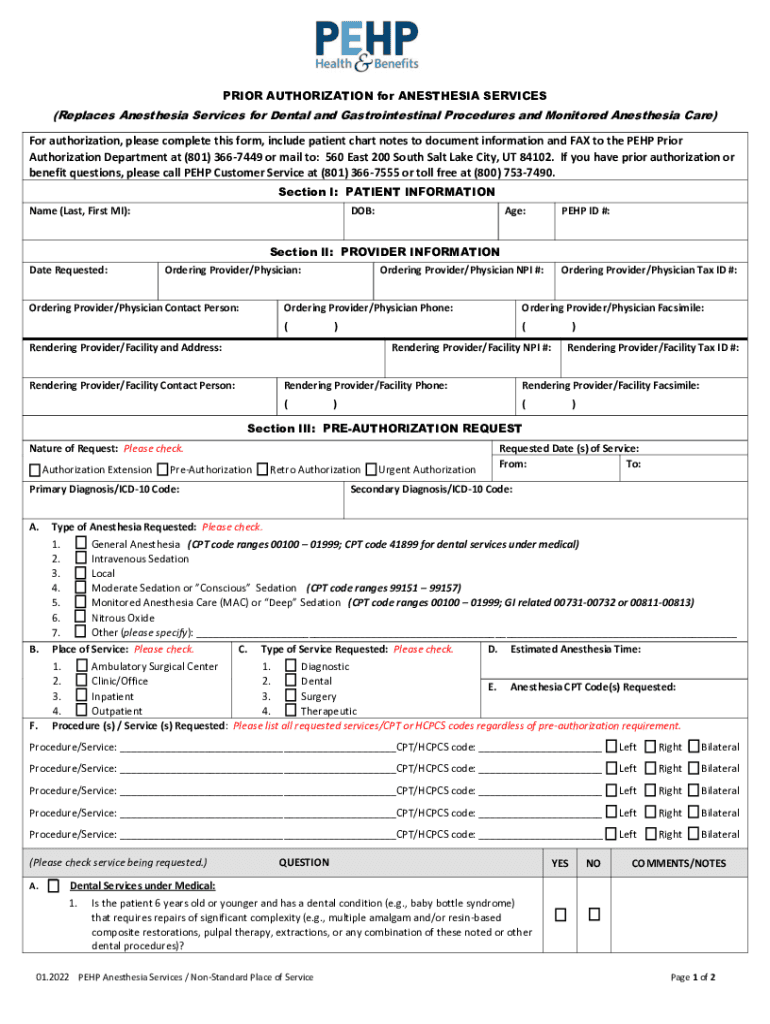







Definition & Meaning of Prior Authorization for Anesthesia Services for Dental Procedures
Prior authorization is a pre-approval process required by healthcare insurers to determine coverage eligibility for certain medical services, including anesthesia for dental procedures. This process involves submitting detailed information about the patient and the specific anesthesia services requested to ensure that the procedure meets criteria established by the insurance provider. The role of prior authorization is to control healthcare costs and ensure that medical services are necessary and appropriately priced.
- Purpose: The main goal is to verify medical necessity and to manage healthcare expenses effectively.
- Scope: Includes anesthesia for dental procedures, especially technically complicated ones or involving significant sedation levels.
- Impact: Helps to avoid unexpected costs for patients by confirming insurance coverage before the procedure.
Key Elements of the Prior Authorization Process
A complete and accurate prior authorization request includes several key components, which may vary slightly by insurance provider but generally include:
- Patient Information: Full name, insurance details, medical history relevant to the procedure.
- Provider Details: Information about the dentist or anesthesiologist handling the case, including credentials.
- Procedure Specifics: Description of the dental procedure and type of anesthesia requested.
- Criteria for Approval: Meets specific guidelines set by the insurance provider for these services.
Steps to Complete Prior Authorization for Dental Anesthesia Services
- Gather Necessary Information: This includes patient and provider details, along with procedural specifics.
- Complete the Authorization Form: Typically provided by the insurer or accessible through platforms like signNow.
- Submit the Form and Documentation: Include any supporting medical records or chart notes that justify the necessity of anesthesia.
- Await Insurer's Decision: This can take several days to weeks. Ensure all details are complete to avoid delays.
- Receive Notification: You will be informed of the approval or denial. In case of denial, you may need to provide additional information or appeal the decision.
How to Use DocHub for Prior Authorization Forms
DocHub simplifies the process of managing and submitting prior authorization forms through its document workflow tools:
- Importation Options: Upload forms directly from your device or cloud storage services like Google Drive.
- Editing Features: Add necessary text, annotations, and highlights directly onto the form.
- Collaboration Tools: Share the document with other healthcare providers or administrative staff for input and finalization.
- e-Signature Capability: Easily add legally binding electronic signatures to your document and send out for signing.
Who Typically Uses Prior Authorization Forms for Dental Anesthesia?
This form is often used by:
- Dentists and Dental Practitioners: Who perform procedures requiring anesthesia.
- Anesthesiologists: Who provide specialized sedation services in dental settings.
- Healthcare Administrators: Who manage patient insurance and billing processes.
- Patients: Who need to understand their insurance coverage for proposed dental procedures.
Legal Use and Compliance
Using the prior authorization form legally requires adherence to the insurer's guidelines and federal regulations, such as the Health Insurance Portability and Accountability Act (HIPAA) for handling patient data.
- Documentation: Ensure that all patient information is accurate and submitted confidentially.
- Compliance: Adhere to any state-specific regulations and provider contracts with insurers.
- Audit Trails: Maintain records of submissions and approvals for compliance audits.
State-Specific Rules and Variations
The requirements for prior authorizations can vary significantly from state to state due to differing regulations and insurance rules:
- State Mandates: Some states have specific time frames within which insurers must respond to authorization requests.
- Variation in Coverage: The coverage for anesthesia in dental procedures can differ based on the state-managed insurance programs.
Practical Examples and Case Studies
Consider the case of a pediatric dentist who regularly uses anesthesia for complex procedures. By utilizing DocHub, the dentist can:
- Smoothly Communicate: Collaborate with other professionals for input on each case, ensuring that all documentation is comprehensive.
- Track Progress: Use the platform to keep track of all authorization requests and responses from insurers.
- Improve Efficiency: Reduce the time taken to complete and submit forms, benefiting both the practitioner and patients.
By understanding the intricacies and nuances of the prior authorization process for dental anesthesia services, practitioners can effectively manage their administrative duties while ensuring compliance and optimal patient care.




