







Definition & Meaning
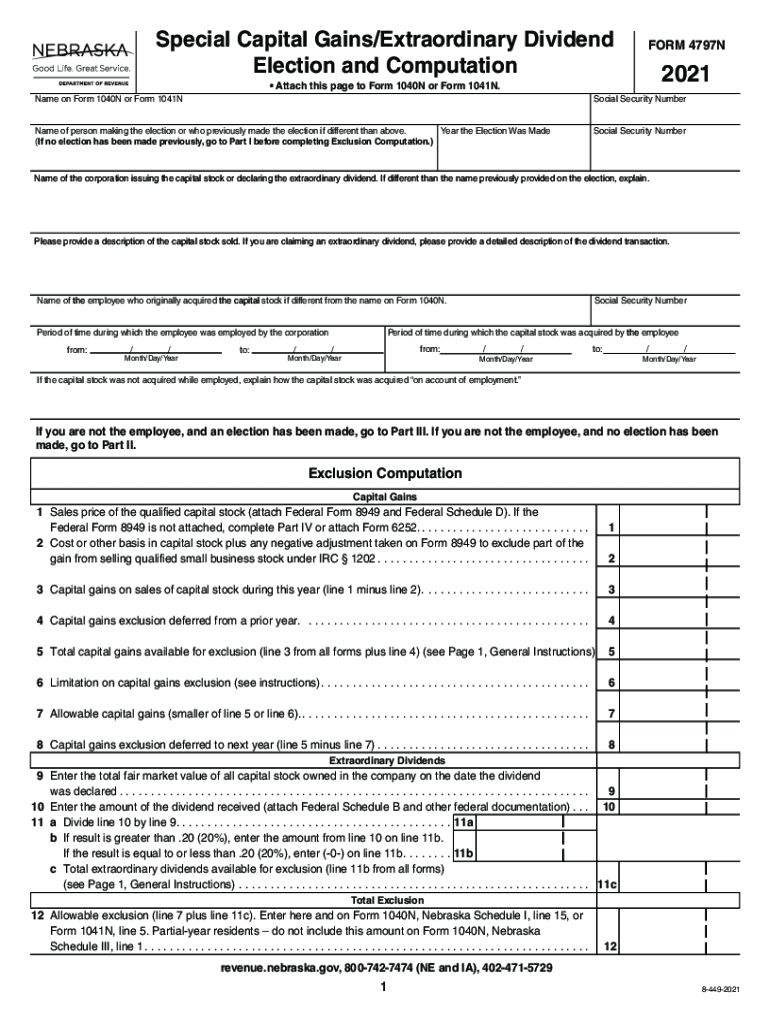
Form 4797N is a document used in Nebraska for making a Special Capital Gains/Extraordinary Dividend Election. This form allows individuals to elect to exclude specific capital gains and extraordinary dividends from their taxable income, reducing their tax liability. It is essential for individuals dealing with capital stocks or dividends and seeking tax relief under Nebraska's state regulations.
Key Elements of the 4797N
The form comprises several critical sections and elements that ensure all necessary information is captured:
- Personal Information: This includes the details of the individual making the election, such as name, address, and social security number.
- Capital Stock or Dividend Details: Specifics about the capital stock or extraordinary dividend that are being elected for exclusion, including type and amount.
- Computation Section: Calculations related to the capital gains exclusions, determining the amount to be excluded from taxable income.
- Signatures: Signatures from the individual and any other authorized persons involved in filing the form.
Each section must be filled out accurately to ensure compliance and eligibility for the tax exclusion.
Eligibility Criteria
Eligibility for filing Form 4797N is contingent upon:
- Residency: The filer must be a resident of Nebraska.
- Type of Income: The form applies to specific types of capital gains and extraordinary dividends.
- Compliance: The taxpayer must adhere to the eligibility requirements specified by the Nebraska Department of Revenue.
These criteria are instrumental in determining whether an individual can utilize this form for their tax filing needs.


Steps to Complete the 4797N
Completing the 4797N form involves a series of steps, requiring careful attention to detail:
- Gather Required Documents: Ensure all pertinent documents related to capital gains and dividends are collected.
- Fill Personal Details: Input personal and contact information accurately.
- Detail Income Sources: Clearly outline the capital stock or extraordinary dividend details.
- Perform Required Calculations: Utilize the computation section to determine the exclusion amount.
- Review for Accuracy: Double-check all entries to avoid errors.
- Sign and Date: Ensure all necessary parties have signed the form.
- Submit: File the form through appropriate channels, either electronically or via mail.
Each step must be followed meticulously to ensure successful filing and approval.
Examples of Using the 4797N
Several scenarios illustrate the practical use of Form 4797N:
- Individual Investor: A Nebraska resident who has sold eligible stock for a profit and wants to exclude this gain from state taxes.
- Dividend Recipient: A person receiving extraordinary dividends opts to exclude these dividends from their taxable income.
- Small Business Owner: An entrepreneur who benefits from the exclusion to reduce overall taxable income, potentially reinvesting the savings back into their business.
Each example showcases how different taxpayers can benefit from using this form in specific contexts.
Who Typically Uses the 4797N
Form 4797N is generally used by:
- Individual Taxpayers: Residents with eligible capital gains looking for tax relief.
- Small Business Owners: Those who hold investments potentially subject to these exclusions.
- Tax Advisors: Professionals aiding clients in tax preparation focusing on capital gains exclusions.
These users represent a cross-section of Nebraska's taxpaying community who stand to benefit from completing this form.

Filing Deadlines / Important Dates
Keeping track of deadlines is vital for timely filing:
- Annual Filing: The form must be filed annually, typically aligning with tax season deadlines.
- Specific Dates: Adherence to Nebraska’s state tax filing deadline ensures compliance and avoids penalties.
- Extensions: Possible extensions might be available, depending on circumstance and approval from tax authorities.
Proper attention to deadlines aids in avoiding any last-minute rush or penalties.
Penalties for Non-Compliance
Failure to comply with filing requirements can lead to:
- Monetary Penalties: Fines imposed for late or inaccurate filings.
- Audits: Increased scrutiny from state tax authorities.
- Loss of Exclusion: Denial of the capital gains tax exclusion can lead to higher taxable income.
Understanding these penalties underscores the importance of accurate and timely filing of the 4797N.




