Definition & Meaning
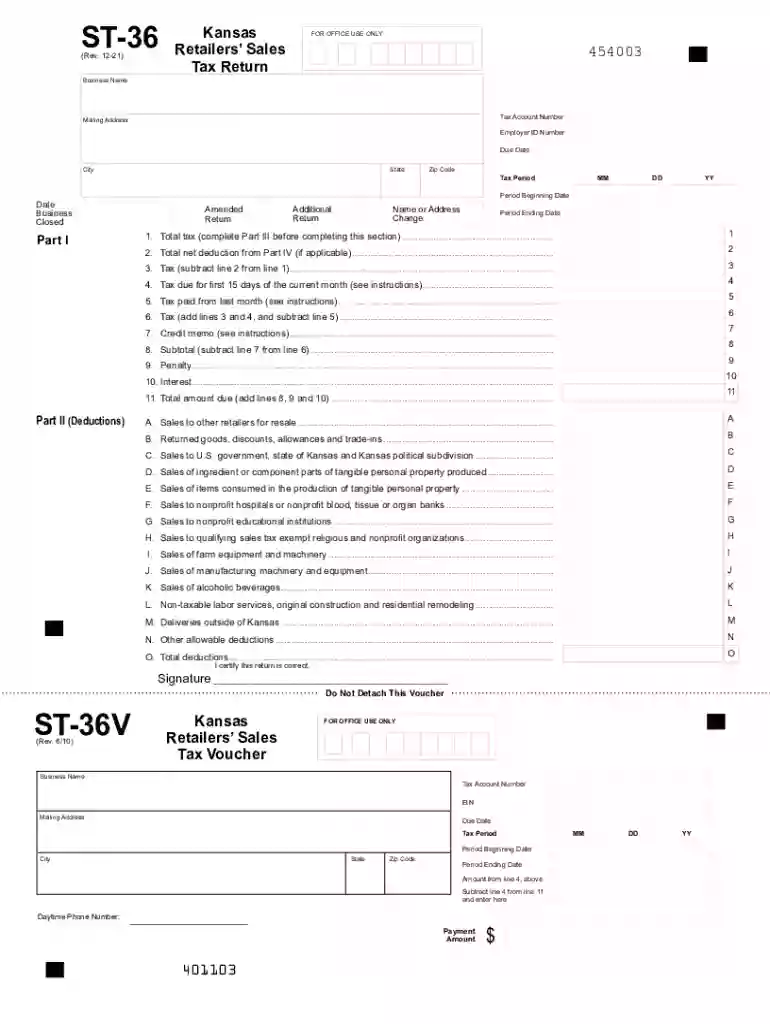
The Kansas Sales Return form, officially known as the Kansas Retailers' Sales Tax Return (Form ST-36), is a critical document used by retailers to report sales tax collected from customers within the state of Kansas. It ensures that businesses remit the appropriate sales tax amounts to the Kansas Department of Revenue. Understanding this form is essential for compliance with state tax laws and avoiding penalties for incorrect filing.
Purpose and Functionality
- Sales Reporting: Businesses use this form to accurately report total sales and taxable sales for a given period.
- Tax Liability Calculation: It helps compute the exact sales tax liability that a business owes to the state.
- Legal Compliance: Filing this form is a legal requirement for retailers, ensuring compliance with state tax regulations.
Typical Users
- Retailers who conduct business and collect sales taxes in Kansas.
- New businesses setting up operations in Kansas should be acquainted with this form.
Steps to Complete the Kansas Sales Return
Completing the Kansas Sales Return form involves several detailed steps to ensure accuracy and compliance. Each step must be executed with precision to avoid errors and potential legal issues.
Gathering Necessary Information
- Collect Sales Data: Gather all relevant data on total gross sales, including non-taxable and taxable sales.
- Tax Deductions: Identify and document any permissible deductions, such as returns or exemptions, that may apply.
Calculating Tax Obligations
- Calculate Taxable Sales: Subtract deductible non-taxable sales from total sales to derive taxable sales.
- Apply Local Tax Rates: Utilize Kansas's specific local sales tax rates to compute the appropriate tax amount.
Completing the Form
- Fill Required Sections: Enter all necessary information accurately in the specified sections of Form ST-36.
- Review for Accuracy: Thoroughly check the completed form for any discrepancies or errors before submission.
How to Use the Kansas Sales Return
Utilizing the Kansas Sales Return form effectively involves understanding its structure and requirements. The process differs slightly depending on the nature of the business operations and the specific tax details.
Understanding the Form Structure
- Section Analysis: Understand each section of the Kansas Sales Return form, including spaces for reporting sales, tax rates, and computations.
- Instructions: Familiarize yourself with the official instructions provided by the Kansas Department of Revenue to guide accurate completion.
Submission and Follow-up
- Filing Options: Choose the appropriate submission method – online via the Kansas Department of Revenue portal, mail, or in-person delivery.
- Record Keeping: Retain copies of submitted forms and supporting documents for future reference.
How to Obtain the Kansas Sales Return
The Kansas Sales Return form can be accessed through several official channels, making it easy for businesses to secure the document when needed.
Direct Acquisition
- Online Access: The form is available for download on the Kansas Department of Revenue’s official website, ensuring ease of access.
- Request by Mail: Businesses can also request a physical copy of Form ST-36 to be sent via postal service.
Online Business Center Utilization
- Digital Platform: Users can access the online business center, which offers guidance on obtaining and filing the form digitally, streamlining the process.
Filing Deadlines / Important Dates
Timely filing of the Kansas Sales Return is essential to avoid potential penalties. Knowing the specific deadlines and key dates is crucial for compliance.
Mandatory Filing Dates
- Due Dates: Typically, the form must be filed by the 25th of the month for monthly filers. Quarterly and annual filers need to adhere to different schedules as prescribed.
- Grace Periods: Check for any available grace periods or extensions that Kansas may offer in certain circumstances.
Consequences of Late Filing
- Penalties: Late submissions can lead to significant financial penalties and interest on unpaid taxes, emphasizing the importance of meeting filing deadlines.
Important Terms Related to Kansas Sales Return
Understanding key terminology associated with the Kansas Sales Return form ensures clarity and precision in filing.
Key Definitions
- Gross Sales: The total revenue from goods sold before deductions or exemptions.
- Taxable Sales: Portion of gross sales subject to sales tax after excluding applicable deductions.
- Deductions: Allowable subtractions from gross sales, such as returns or exempt transactions.
Common Misunderstandings
- Exempt Sales: Clarify what constitutes an exempt sale to avoid reporting errors.
- Use Tax: Differentiate between sales tax and use tax contributions.
Legal Use of the Kansas Sales Return
The Kansas Sales Return form must be used within the framework of legal and tax regulations established by the state.
Compliance Requirements
- Filing Necessity: Even if no taxable sales occur, businesses are often required to file regularly.
- Legal Obligations: Adhering strictly to reporting requirements and deadlines to preempt legal and financial repercussions.
Protecting Sensitive Information
- Confidentiality: Ensuring that all disclosed information is accurate and does not breach privacy or confidentiality regulations.
Digital vs. Paper Version
The Kansas Sales Return can be filed in both digital and paper formats, each with unique advantages.
Pros and Cons of Each Format
- Digital Filing:
- Advantages: Fast submission, immediate confirmation, and streamlined access through the online portal.
- Drawbacks: May require technical competence or familiarity with online systems.
- Paper Submission:
- Advantages: Suitable for those more comfortable with traditional methods.
- Drawbacks: May involve slower processing times and potentially higher risk of errors during manual entry.
Selecting the Right Option
- Business Needs: Decide based on business size, volume of transactions, and preferred documentation methods.
Form Submission Methods
The Kansas Sales Return form can be submitted using multiple methods, offering flexibility to businesses of diverse operational types.
Online Submission
- e-Filing: Utilize the Kansas Department of Revenue’s e-filing system for quick, efficient submissions.
- Confirmation: Receive immediate confirmation upon digital submission.
Manual Submission
- Mail-In Options: Fill out a paper form and mail it to the appropriate Kansas Department of Revenue address.
- In-Person Delivery: Drop off the completed form at a local revenue office if personal confirmation is preferred.
Penalties for Non-Compliance
Non-compliance with Kansas Sales Return filing requirements can result in serious financial and legal consequences.
Types of Penalties
- Late Fees: Imposed for failing to meet established deadlines.
- Additional Interest: Accumulated on unpaid taxes due to delayed submission or payment.
- Legal Action: Persistent non-compliance may lead to enforcement measures by state authorities.
Mitigating Penalty Risks
- Timely Filing: Prioritize meeting all deadlines and addressing any discrepancies promptly.
- Accurate Reporting: Ensure all data provided is correct and complete to prevent issues with the Kansas Department of Revenue.