
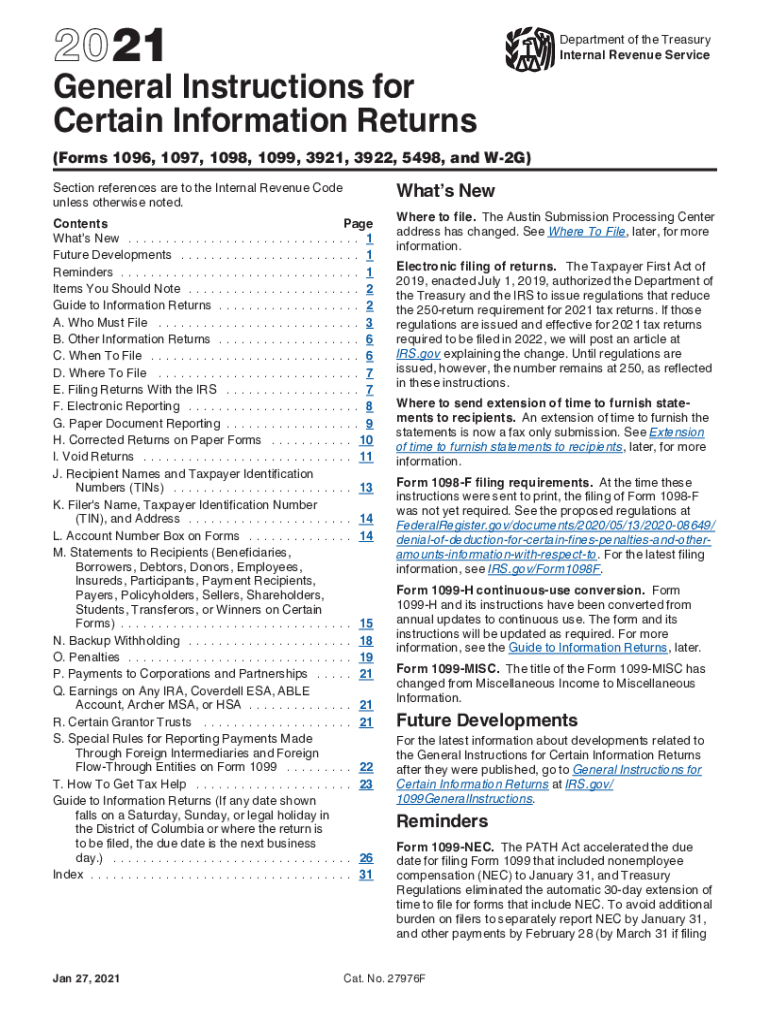







Definition and Meaning
A "return" typically refers to the process of reporting income, expenditures, and other pertinent tax-related details to a governmental body, such as the IRS, using a specific set of forms. Commonly known as tax returns, these documents ensure individuals and businesses comply with tax laws by accurately documenting their financial activities over a period. Returns come in various forms depending on the nature of the transactions and the parties involved, such as W-2s for employees and 1099s for independent contractors.
How to Use the Returns
Understanding how to use returns is crucial for ensuring compliance with tax obligations. Each form corresponds to a specific type of income or transaction. For instance, a 1099-MISC is used for miscellaneous income, while a W-2 reports wages and salaries. When completing these forms, it is important to accurately report data to avoid errors leading to potential audits or penalties. Users should complete each section of the form based on their financial transactions during the year and submit it to the IRS by the specified deadline.
Steps to Complete the Returns
- Gather Information: Begin by collecting all necessary financial documents, including income statements, expense receipts, and previous tax returns.
- Select the Appropriate Form: Determine the correct form based on your income type and source.
- Complete the Form: Fill out the required sections with accurate information. Use the IRS instructions, which provide detailed guidance on each part of the form.
- Double-Check for Errors: Review each entry for accuracy to prevent discrepancies.
- Submit the Form: File the return using the appropriate method, whether online, by mail, or in person, before the deadline.
Key Elements of the Returns
Tax returns consist of several critical elements, including:
- Personal Information: Name, Social Security number, and address.
- Income Details: Sources and amounts of all income received during the year.
- Deductions and Credits: Eligible claims to reduce taxable income, such as business expenses and education credits.
- Tax Payments: Total taxes paid throughout the year via withholding or estimated payments.
- Refunds or Payments Due: Calculations to determine any refund owed or payment required.
IRS Guidelines
The IRS issues guidelines to help taxpayers prepare and file their returns correctly. These guidelines include:
- Comprehensive instructions specific to each form.
- Updates on tax laws and changes affecting the tax year.
- Information on electronic filing options and tools.
- Details on the consequences of inaccurate information or late submissions.
Filing Deadlines / Important Dates
Taxpayers must adhere to several key deadlines to avoid penalties:
- April 15: The standard due date for individual tax returns.
- October 15: Extended deadline for those who filed for an extension.
- January 31: Due date for employers and financial institutions to furnish forms like W-2 and 1099 to individuals.
Required Documents
Accurate completion of tax returns involves gathering several types of documentation:
- Income Statements: W-2s, 1099s, and other forms reporting income.
- Expense Documentation: Receipts, invoices, and records supporting deductions.
- Previous Year's Tax Returns: Reference for consistency and comparison.
- Payment Records: Proof of any estimated tax payments made throughout the year.
Penalties for Non-Compliance
Failing to file returns correctly or on time can result in penalties such as:
- Failure-to-File Penalty: Calculated based on the percentage of taxes owed and the duration of delay.
- Accuracy-Related Penalty: Imposed for underpayment due to negligence or substantial underreporting.
- Fraud Penalty: Severe penalty applied in cases of intentional evasion of taxes.
Keeping abreast of tax obligations and deadlines is essential for avoiding these penalties and ensuring compliance with tax laws.


