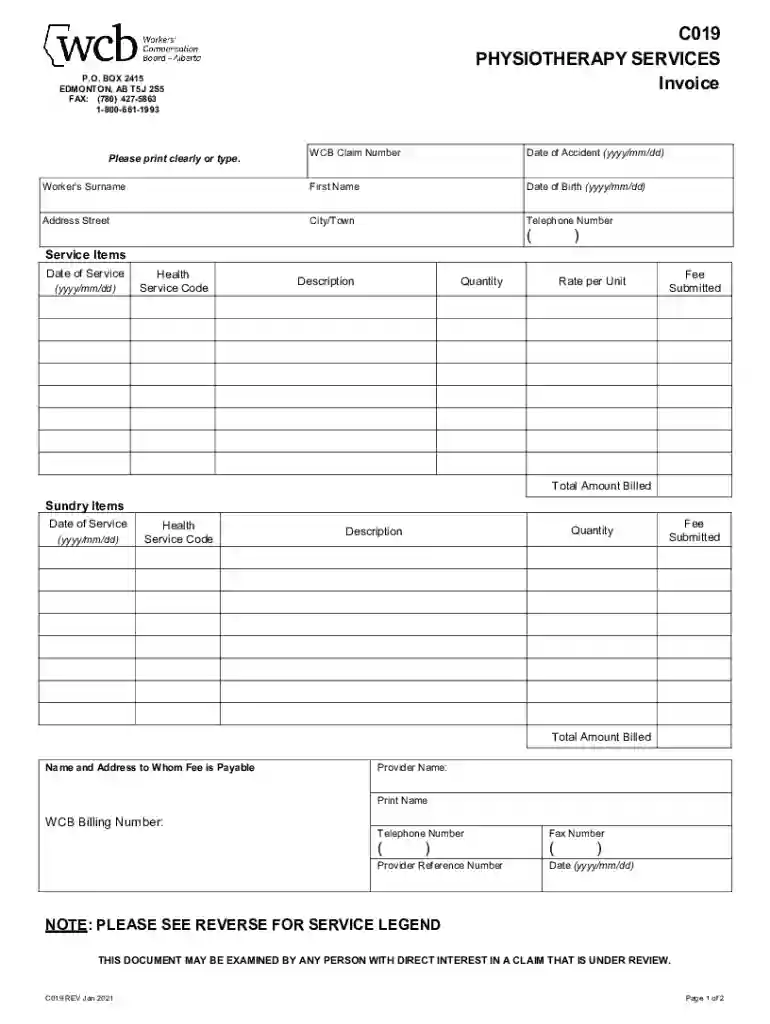
Definition and Purpose of the Physiotherapy Bill Book
The physiotherapy bill book is a structured document used by physiotherapists to record financial transactions related to services rendered. It serves as an official receipt or invoice detailing the billing information for physiotherapy sessions and related services. By clearly stipulating service codes, fees, and treatment descriptions, this document is crucial for both practitioners and patients, especially in the context of insurance claims and financial record-keeping.
Key Benefits of Using a Physiotherapy Bill Book
- Record Keeping: It helps practitioners maintain a comprehensive record of services provided, which is essential for financial management and tax purposes.
- Insurance Claims: The physiotherapy bill book format is often necessary for patients seeking reimbursement from insurance companies or for workers' compensation claims.
- Transparency: Clear itemization of treatments and associated costs builds trust between practitioners and patients, making it easier to discuss financial matters.
How to Use the Physiotherapy Bill Book
Utilizing a physiotherapy bill book involves several steps to ensure accurate billing and record-keeping.
- Gather Patient Information: Before starting, collect complete information about the patient, including their name, address, contact details, and insurance information, if applicable.
- Document Services Rendered: For each session, accurately log the date of service, the specific treatments provided, their respective codes, and the fees associated with each service.
- Include Additional Costs: Record any sundry items or materials used during treatment that may incur extra charges.
- Sign and Date: Both practitioner and patient should sign and date the bill book upon completion of the transaction, serving as proof of services provided.
- Retain Copies: Ensure both the patient and the practice have copies for their records, creating a clear trail of document retention for future reference.
Special Considerations in Billing
- Itemized Billing: It's important to include itemized descriptions of treatments to facilitate insurance processing.
- Payment Methods: Clearly indicate accepted payment methods (e.g., credit card, cash, insurance).
- Follow-up on Claims: Monitor claim statuses to ensure timely reimbursements.
Steps to Complete the Physiotherapy Bill Book
Completing the physiotherapy bill book requires attention to detail and adherence to specific procedures.
Entry of Basic Information:
- Input patient demographics such as name and contact information.
- Populate relevant insurance details if applicable.
Detail Services Provided:
- For each treatment, include the date, description, health service code, and cost.
- Be thorough to avoid ambiguity.
Calculating Total Costs:
- Sum the fees for all services and materials.
- Additionally, include any applicable taxes or discounts.
Review and Verification:
- Verify all entries for accuracy.
- Cross-check with patient records to ensure consistency in billing.
Finalization and Distribution:
- Finalize the document with signatures.
- Provide copies to the patient and retain one for the practice's records.
Important Terms Related to the Physiotherapy Bill Book
Familiarity with key terminology will enhance understanding and usage of the physiotherapy bill book.
- Healthcare Common Procedure Coding System (HCPCS): This code system provides a standardized set of codes for services and procedures.
- Invoice: A detailed bill provided to the patient, outlining charges for services rendered.
- Sundry Items: Additional materials or items used during treatment not included in standard service charges.
- Therapeutic Procedure Codes: Specific codes assigned to various types of physiotherapy treatments for insurance reimbursement purposes.
Legal Use of the Physiotherapy Bill Book
The use of a physiotherapy bill book is governed by relevant legal frameworks, particularly in relation to billing practices and patient rights.
- Regulatory Compliance: Physiotherapists must adhere to local and federal regulations regarding billing, including accuracy and confidentiality considerations.
- Audit Trails: Maintaining a clear and legally compliant billing record can safeguard practitioners in case of audits from insurance companies or regulatory bodies.
- Records Retention: Understand the required duration for retaining billing records, as specified by state laws or professional regulations.
Examples of Using the Physiotherapy Bill Book
Practical examples can illustrate the functionality and importance of the physiotherapy bill book:
- Case A: A patient undergoing a series of treatments after a sports injury may receive multiple bills over the course of their therapy. Each session’s details, including service codes and total fees, would be meticulously recorded, providing a comprehensive financial history for both the patient and the practice.
- Case B: In the context of workers' compensation claims, a detailed entry in the physiotherapy bill book may be crucial for validating the necessity of treatment and securing reimbursements from employers’ insurance providers.
These scenarios demonstrate the necessity of a meticulously completed physiotherapy bill book in facilitating effective communication and financial clarity.