Definition and Meaning
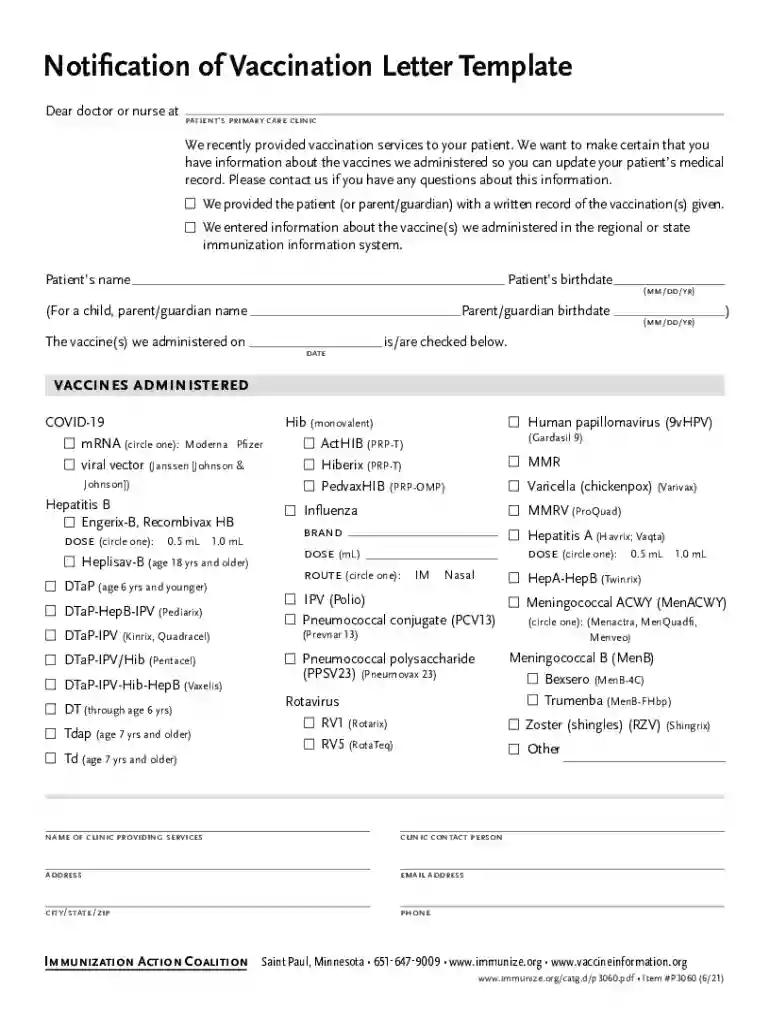
An immunization letter is a formal document typically issued by healthcare providers or clinics. It serves as an official record that informs about the vaccines that have been administered to an individual, particularly in the context of a healthcare setting. The letter contains crucial details about the patient, including personal identification information and the vaccines they have received. It often provides instructions on how to update medical records to ensure that healthcare providers are aware of a patient's immunization history.
Elements of an Immunization Letter
- Patient Information: Includes the name, date of birth, and contact details of the individual.
- Vaccine Details: Lists all administered vaccines, including names, dates of administration, and manufacturer information.
- Healthcare Provider Information: Contact details of the clinic or healthcare facility where the immunizations were provided.
- Instructions for Medical Records: Guidance on updating and managing the patient's immunization status within medical records.
How to Use the Immunization Letter
Immunization letters are used by various stakeholders in the healthcare sector for record-keeping and compliance purposes.
Main Uses
- Healthcare Providers: Utilize the letter to maintain accurate vaccination records. It ensures continuity of care by informing future medical decisions.
- Educational Institutions: Schools may require this letter to ensure students meet vaccination requirements for enrollment.
- Travel Requirements: For international travel, certain countries may require proof of specific vaccinations, which can be verified through an immunization letter.
- Employment: Some workplaces, especially those in healthcare, may mandate vaccination proof from employees for safety compliance.
How to Obtain the Immunization Letter
Obtaining an immunization letter can be straightforward when following the correct procedures.
Steps to Obtain
- Contact Healthcare Provider: Reach out to the clinic or healthcare provider where the vaccinations were administered.
- Request the Document: Make a formal request for the immunization letter. This can often be done in person, over the phone, or via email.
- Verify Personal Information: Ensure that all personal details are accurate to avoid any misinformation in the letter.
- Choose Delivery Method: Decide whether to receive the letter digitally or as a physical copy, based on your convenience and needs.
Steps to Complete the Immunization Letter
Completing an immunization letter involves gathering and verifying several key pieces of information.
Step-by-Step Process
- Identify the Patient: Ensure that the patient’s full name and date of birth are correctly documented.
- List Vaccinations: Detail every vaccine given, along with the dates and lot numbers.
- Include Provider Information: Enter the healthcare provider's contact details on the letter.
- Double-Check Instructions: Review and ensure that the letter includes instructions for updating medical records, if applicable.
- Final Review: Conduct a thorough check to ensure all details are accurate and complete before dissemination.
Why You Should Use an Immunization Letter
The use of an immunization letter plays a critical role in health management and legislative compliance.
Key Benefits
- Ensures Comprehensive Health Records: Keeps all vaccination data in a single, accessible document.
- Facilitates Healthcare Access: Essential for accessing certain medical services or fulfilling public health requirements.
- Legislative Compliance: Helps individuals comply with state or federal immunization mandates.
- Streamlines Emergency Response: Fast access to vaccination history can be critical in medical emergencies or outbreak situations.
Primary Users
- Patients and Parents: Maintain personal health records and ensure children's vaccinations are up-to-date for school.
- Health Providers: Manage patient records and ensure adherence to vaccination schedules.
- Schools and Daycares: Verify students' immunization status as per state regulations.
- Employers in Sensitive Sectors: Ensure employee health and safety, especially in healthcare.
Important Terms Related to Immunization Letter
Understanding key terminology associated with immunization is crucial for comprehending the scope and application of an immunization letter.
Key Terms
- Vaccine: A biological preparation that provides acquired immunity to a particular disease.
- Lot Number: A unique identifier assigned to a specific batch of vaccines for tracking purposes.
- Booster Shot: An additional dose of a vaccine needed periodically to boost the immune system.
- Immunity: The body's ability to resist a particular infection or toxin.
- Contraindication: A specific situation where a vaccine should not be used because it may be harmful.
Key Elements of the Immunization Letter
The effectiveness of an immunization letter largely depends on its completeness and accuracy.
Core Components
- Clear Identification: Accurate personal information of the individual receiving vaccines.
- Comprehensive Vaccine Records: Detailed information about each vaccine, ensuring no gaps in data.
- Provider’s Accreditation: Affirmation from the issuing healthcare facility, proving authenticity.
- Instructional Clause: Directions for updating records and utilizing the letter appropriately in various contexts.
- Date and Signature: Certification from the healthcare provider to validate the letter for official use.