




01. Edit your tenant notice to end tenancy bc online
Type text, add images, blackout confidential details, add comments, highlights and more.

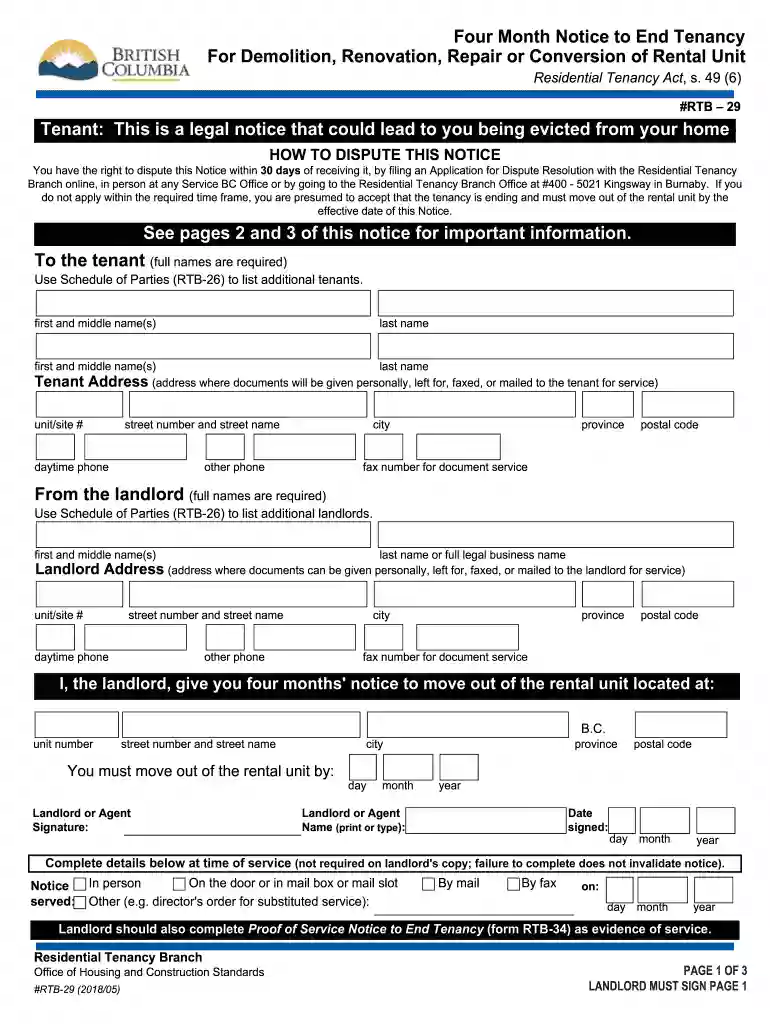
Type text, add images, blackout confidential details, add comments, highlights and more.

Draw your signature, type it, upload its image, or use your mobile device as a signature pad.

Send landlord notice to end tenancy via email, link, or fax. You can also download it, export it or print it out.
The notice to end tenancy BC is a formal document issued by a landlord to notify a tenant of the termination of their rental agreement. This notice is a legal requirement in British Columbia, serving as a way to communicate the end of a lease or rental agreement and informing tenants about their next steps.
There are various types of notices to end tenancy forms utilized in British Columbia, each catering to different situations and time frames:
When tenants receive a notice to end tenancy, they possess certain rights designed to protect them throughout the process:
If tenants do not understand their rights, resources are available through the Residential Tenancy Branch, including guides and professional advice.
Issuing a notice to end tenancy BC is a structured process that landlords must follow to ensure legal compliance. Below are the key steps involved:
Landlords must be mindful of specific elements and requirements when serving a notice to end tenancy, as non-compliance can lead to legal repercussions:
When issuing a notice to end tenancy, landlords should clearly understand and communicate the reasons to ensure compliance with legal norms. Below are valid examples:
By maintaining clear communication and adhering to legal guidelines, landlords can effectively manage the rental process while protecting their interests and those of their tenants.
We've got more versions of the tenant notice to end tenancy bc form. Select the right tenant notice to end tenancy bc version from the list and start editing it straight away!
At DocHub, your data security is our priority. We follow HIPAA, SOC2, GDPR, and other standards, so you can work on your documents with confidence.
We also provide resources for students in their off-campus housing search and guidance during tenant-landlord concerns. Contact. Maloney Hall 448 617-552-3075Read more
Jun 13, 2022 The tenancy will renew automatically unless either you or the landlord give at least 15 days notice before the current term (month or year)Read more
Dec 14, 2012 Brocade reserves the right to make changes to this document at any time, without notice, and assumes no responsibility for its use. ThisRead more


