

592 f 2026

Get Form
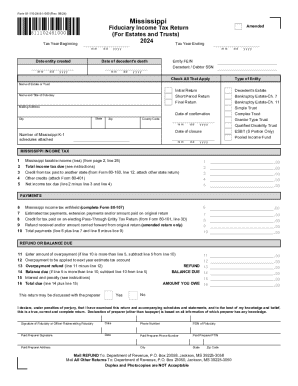
form 592 f Preview on Page 1

Here's how it works

01. Edit your form 592 f online
Type text, add images, blackout confidential details, add comments, highlights and more.
02. Sign it in a few clicks
Draw your signature, type it, upload its image, or use your mobile device as a signature pad.
03. Share your form with others
Send it via email, link, or fax. You can also download it, export it or print it out.

How to use or fill out 592 f with our platform

Form edit decoration
9.5
Ease of Setup
DocHub User Ratings on G2
9.0
Ease of Use
DocHub User Ratings on G2
  1. Click ‘Get Form’ to open the 592 f in the editor.
  2. Begin by filling out the Taxable Year section, entering the beginning and ending dates in the specified format (mm/dd/yyyy).
  3. In Part I, provide your Withholding Agent Information. Fill in your FEIN, CA Corp number, or CA SOS file number, along with your business name, contact details, and address.
  4. Proceed to Part II for Pass-Through Entity Information. Again, enter your SSN or ITIN, FEIN, or CA Corp number as applicable. Complete the entity's name and address details.
  5. In Part III, accurately report the Tax Withheld amounts across lines 1 through 7. Ensure you calculate totals correctly for accurate reporting.
  6. Complete any necessary calculations for overpayment and refunds as indicated on lines 9 through 11.
  7. Finally, sign and date the form where indicated to validate your submission.

Start using our platform today to streamline your form completion process for free!

See more 592 f versions

We've got more versions of the 592 f form. Select the right 592 f version from the list and start editing it straight away!
Versions Form popularity Fillable & printable
2023 4.9 Satisfied (43 Votes)
2022 4.8 Satisfied (50 Votes)
2021 4.3 Satisfied (63 Votes)
2020 4.4 Satisfied (107 Votes)
2019 4.3 Satisfied (107 Votes)
2018 4.4 Satisfied (189 Votes)
2014 4.3 Satisfied (56 Votes)
be ready to get more

Complete this form in 5 minutes or less

Get form

Got questions?

We have answers to the most popular questions from our customers. If you can't find an answer to your question, please contact us.
Contact us
EXEMPTION FROM WITHHOLDING: If you wish to claim exempt, complete the federal Form W-4. You may claim exempt from withholding California income tax if you did not owe any federal income tax last year and you do not expect to owe any federal income tax this year.
Who Certifies this Form. Form 590 is certified (completed and signed) by the payee. California residents or entities exempt from the withholding requirement should complete Form 590 and submit it to the withholding agent before payment is made.
California (CA) State Withholding Tax Laws Non-California residents, including U.S. citizens who are residents of other states, are subject to State income tax withholding of 7% of gross if the total payments excel $1,500 during the calendar year.
At the end of the taxable year, partnerships, limited liability companies (LLCs), and beneficiaries complete Form 592-F, Foreign Partner or Member Annual Return, to report the total withholding for the year, and to allocate the income and related withholding to the foreign partners or members.
A. Purpose. Use Form 592 to report the total withholding under California Revenue and Taxation Code (RTC) Sections 18662 and 18664.

Security and compliance

At DocHub, your data security is our priority. We follow HIPAA, SOC2, GDPR, and other standards, so you can work on your documents with confidence.

Learn more
ccpa2
pci-dss
gdpr-compliance
hipaa
soc-compliance

People also ask

Domestic nonresident partners are calculated a withholding tax of 7.0% of distributions, corporations have a 8.84% withholding rate, and nonresident foreign partners calculate a withholding tax of 12.3% of income.
Pass-through entities who withhold tax on behalf of nonresident owners or have been withheld upon are called withholding agents and are required to file Form 592-PTE on an annual basis to allocate withholding. PTE owners who have been withheld upon are called payees.

Related links