
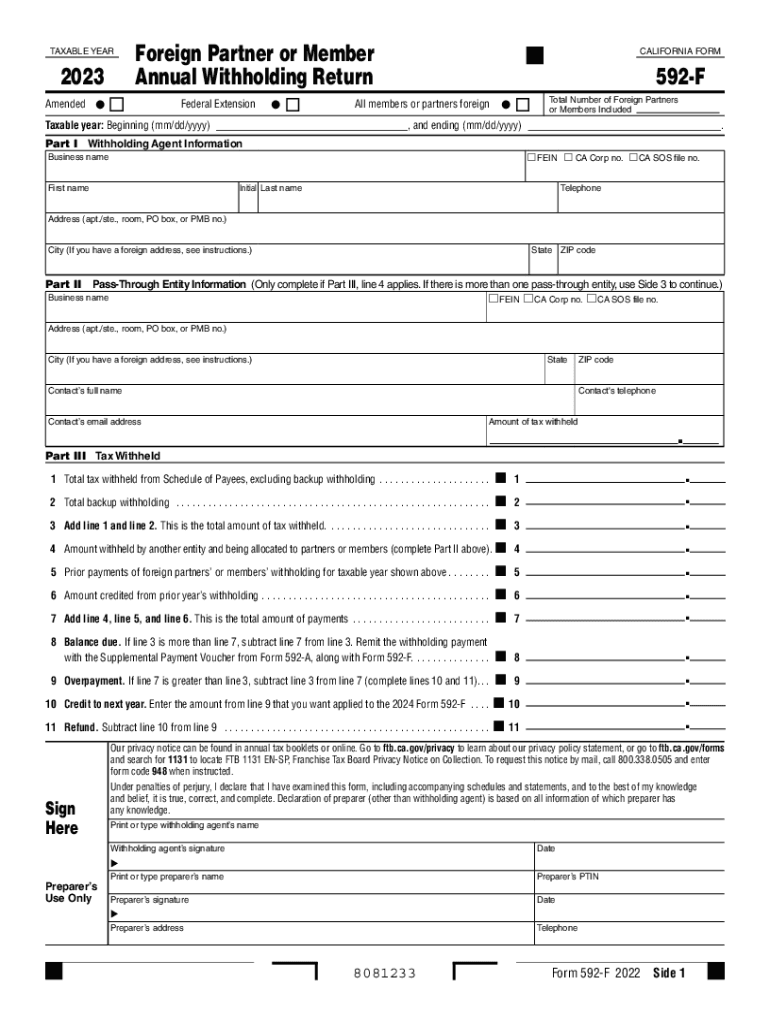







Definition and Meaning
The FTB 1123 - Forms of Ownership - California Franchise Tax is a critical document used to delineate different forms of ownership for businesses operating in California. It is essential for understanding how the state assesses franchise taxes, which are fees imposed on businesses for the privilege of conducting operations within California. This form captures vital information about the business structure, aiding compliance with state tax regulations.
- Business Structures: The form must accurately reflect whether the business is a sole proprietorship, partnership, corporation, or another entity type.
- Tax Implications: Different forms of ownership can affect the tax obligations and liabilities of the business, making correct entry crucial.
- Franchise Tax Assessment: The data provided helps the California Franchise Tax Board (FTB) determine owed franchise taxes based on the business's structure.
How to Obtain the FTB 1123
Securing the FTB 1123 form involves straightforward steps that ensure you have the latest version required for accurate filing.
- Website Download: Visit the official California Franchise Tax Board website for the most recent and official form version. Typically, PDFs are available for direct download.
- Local FTB Office: Head to the nearest FTB office, where forms are available upon request.
- Tax Professionals: Accountants or tax professionals can provide you with the form and assist in its completion.
- Ensure Compliance: Always verify you have the latest form edition to avoid discrepancies or rejections.
Steps to Complete the FTB 1123
Accurately completing the FTB 1123 form requires careful attention to detail. Each section must be filled out precisely to avoid errors that could lead to compliance issues.
- Identify Business Type: Clearly mark the type of ownership your business operates under.
- Provide Business Details: Include the company name, address, and contact information as registered with the state.
- Specify Tax Information: Offer clear and accurate financial data that pertains to your business's taxable activities.
- Review and Submit: Double-check all entered information for accuracy before submission.
- Common Pitfalls: Be wary of entering incorrect business type information, as this could impact your tax liabilities.
Key Elements of the FTB 1123
Certain elements within the FTB 1123 form are crucial for ensuring you meet California's tax regulatory requirements.
-
Business Identification: Ensures the form aligns with the correct entity and avoids misfiling.
-
Ownership Details: Highlights the specific form of ownership, essential for tax calculations.
-
Financial Summary: Briefly encapsulates the business's financial activities relevant to franchise taxes.
-
Documentation Requirements: Include any supporting documents that verify the business's legal and financial standing.
State-Specific Rules
California's tax regulations for businesses can differ significantly from other states, making familiarity with local laws critical.
-
Ownership Forms: California recognizes diverse forms of business ownership, each subject to distinct tax treatment.
-
Filing Requirements: The FTB may demand additional documentation or disclosures not required in other states.
-
Tax Rates: California imposes specific rates that might differ from federal or other state obligations.
-
Update Awareness: Regularly check for changes in legislation that could affect filing processes or requirements.
Legal Use of the FTB 1123
The FTB 1123 form plays a pivotal role in the legal framework surrounding business taxes in California.
-
Compliance: Correct use of the form helps ensure compliance with California tax law.
-
Legal Obligations: Filling out the form accurately fulfills legal obligations to report business structure and tax liabilities.
-
Documentation: Serves as an official record that can be referenced in audits or legal inquiries.
-
Professional Advice: Consulting a tax professional can prevent legal complications arising from incorrect form use.
Important Terms Related to FTB 1123
Understanding key terms associated with the FTB 1123 form is essential for its accurate completion.
-
Franchise Tax: A levy imposed for the privilege of running a business within California.
-
Entity Type: The classification of a business (e.g., LLC, Corporation) affecting how taxes are calculated and paid.
-
Withholding Agent: Individual or entity responsible for managing tax withholdings from payments to foreign partners or members.
-
Glossary: Refer to a detailed glossary provided by the FTB for comprehensive definitions.
Examples of Using the FTB 1123
Real-world examples illustrate the practical application and significance of the FTB 1123 form in different business scenarios.
-
New LLC Formation: An LLC registering in California uses the FTB 1123 to identify itself legally, ensuring correct tax assessments.
-
Corporate Compliance: A growing corporation may amend its ownership structure, necessitating an updated FTB 1123 submission for accurate tax reporting.
-
Partnership Changes: When partners exit or join, the partnership updates the FTB 1123 to reflect new ownership dynamics.
-
Preparation Checklists: Use preparatory checklists to ensure all necessary information is gathered before filling out the form.




