Kansas residents and nonresidents of Kansas earning income from Kansas sources are required to annually file an income tax return, K-40.
What is the HPIP statute in Kansas?
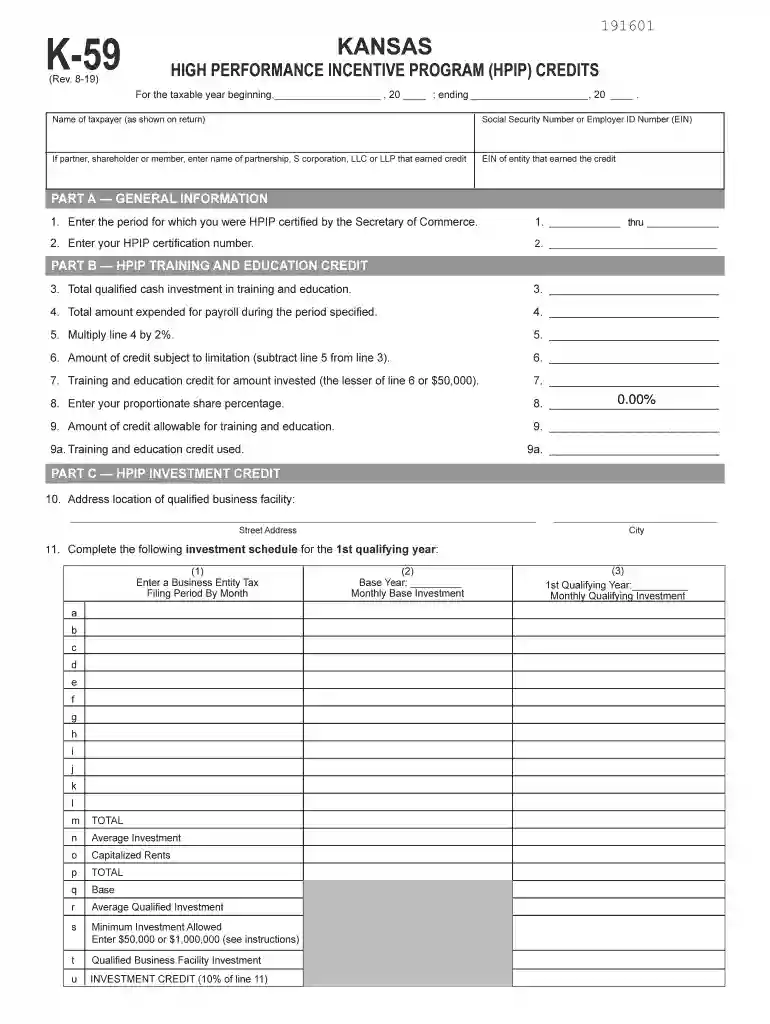
The Kansas High Performance Incentive Program (HPIP) provides credits for: capital investments in business facilities in the state; ( Sec. 79-32,160a(e), K.S.A.) and. investments in the training and education of employees at those facilities.
Is Kansas going to stop taxing social security?
Missouri and Nebraska have decided to stop taxing Social Security benefits in 2024. Kansas also joined in with a bill signed midway through 2024, so the state will not tax Social Security going forward.
What is the tax extension form for Kansas?
Kansas tax extensions are automatic, so theres no application form or written request to submit. In order to automatically receive a Kansas extension, you must first obtain a Federal extension (IRS Form 4868). Remember to include a copy of your approved Federal extension with your Kansas tax return when you file.
How do you qualify for HPIP in Kansas?
Your business must be subject to Kansas income, sales or property taxes; meet certain NAICS code requirements; and pay above average wages for the county or industry. The HPIP Investment Credit amount is 10% of project costs above and beyond $50,000 or $1 million, depending on location.
Related Searches
Ks k 59 form pdfKs k 59 form 2022K-59 INSTRUCTIONSK 120 instructionsForm k 120HPIP KansasKansas form k 9 instructionsKansas form k 220 instructions
Security and compliance
At DocHub, your data security is our priority. We follow HIPAA, SOC2, GDPR, and other standards, so you can work on your documents with confidence.
What is the high performance incentive program in Kansas?
The High Performance Incentive Program (HPIP) provides tax incentives to qualifying employers who pay above average wages, along with having a robust commitment to teach skills development for their workers.
Related links
K-59 High Performance Incentive Program (HPIP) Credits
LINE 9a Enter the amount of training and education credit used against your tax liability (cannot exceed your tax liability) on the appropriate line of Form KRead more
Cookie consent notice
This site uses cookies to enhance site navigation and personalize your experience.
By using this site you agree to our use of cookies as described in our Privacy Notice.
You can modify your selections by visiting our Cookie and Advertising Notice.