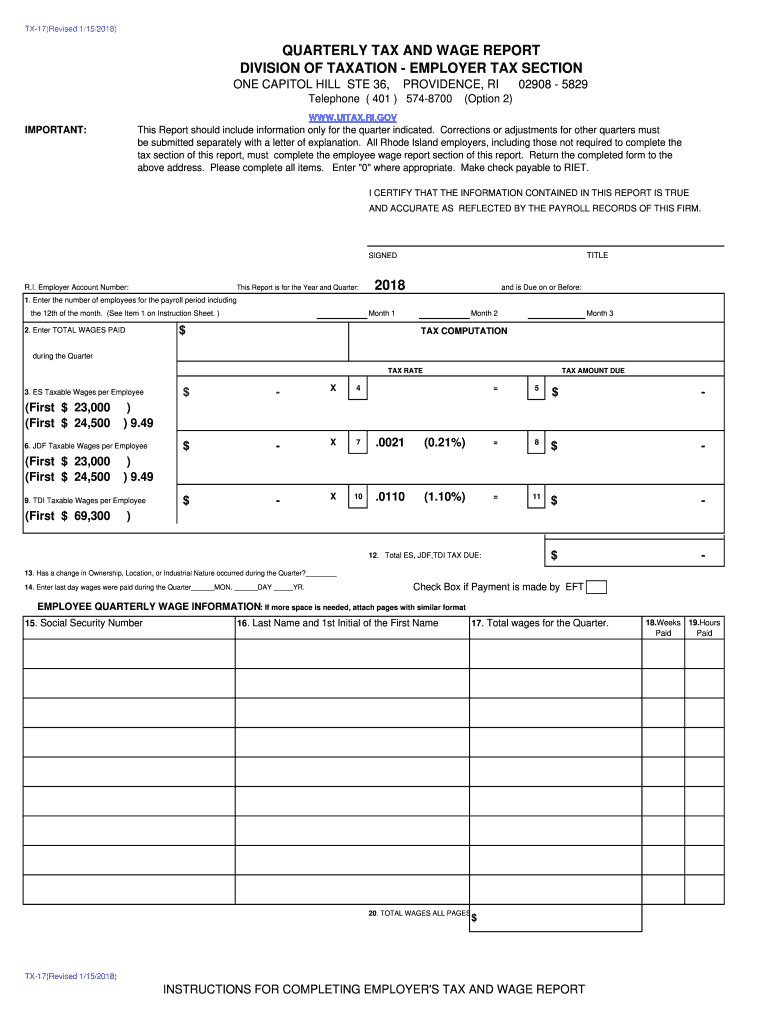
Employer tax section 2018-2026

Get Form
llh claim pay meaning Preview on Page 1

Here's how it works

01. Edit your llh claim pay meaning online
Type text, add images, blackout confidential details, add comments, highlights and more.
02. Sign it in a few clicks
Draw your signature, type it, upload its image, or use your mobile device as a signature pad.
03. Share your form with others
Send llh claim credit meaning via email, link, or fax. You can also download it, export it or print it out.

How to use or fill out employer tax section 2018 with our platform

Form edit decoration
9.5
Ease of Setup
DocHub User Ratings on G2
9.0
Ease of Use
DocHub User Ratings on G2
  1. Click ‘Get Form’ to open the employer tax section 2018 in the editor.
  2. Begin by entering the number of employees for each month in the designated fields. Ensure you include all full-time and part-time workers who received pay during the payroll period that includes the twelfth of the month.
  3. Next, input the total wages paid during the quarter for each month. This should reflect all forms of compensation, including money and in-kind benefits like meals.
  4. For tax computation, calculate ES taxable wages per employee based on the specified wage base limits. Enter these amounts in their respective fields.
  5. Complete sections for JDF and TDI taxable wages similarly, ensuring you adhere to wage base limits outlined in the instructions.
  6. Finally, review all entries for accuracy, sign at the top of the form, and submit it as directed. If adjustments are needed for previous quarters, prepare a separate letter of explanation.

Start using our platform today to streamline your document editing and ensure your employer tax section is completed accurately and efficiently!

See more employer tax section 2018 versions

We've got more versions of the employer tax section 2018 form. Select the right employer tax section 2018 version from the list and start editing it straight away!
Versions Form popularity Fillable & printable
2022 4.9 Satisfied (44 Votes)
2022 4.8 Satisfied (71 Votes)
2021 4.4 Satisfied (53 Votes)
2020 4.4 Satisfied (61 Votes)
2019 4.3 Satisfied (237 Votes)
2018 4.4 Satisfied (204 Votes)
2017 4.3 Satisfied (172 Votes)
2017 4.3 Satisfied (234 Votes)
2016 4.4 Satisfied (371 Votes)
2012 4.3 Satisfied (49 Votes)
be ready to get more

Complete this form in 5 minutes or less

Get form

Got questions?

We have answers to the most popular questions from our customers. If you can't find an answer to your question, please contact us.
Contact us
Your employer is responsible for its fair share of payroll taxes, too. It must pay the other half of your Social Security and Medicare taxes, as well as the full amount of any state and federal unemployment tax.
Employers must pay payroll taxes every pay period. These include: Social Security, taxed at 6.2% for employees and 6.2% for the employer up to the taxable earnings cap. Medicare, taxed at 1.45% for employees and 1.45% for the employer.
Form 944 is designed so the smallest employers (those whose annual liability for social security, Medicare, and withheld federal income taxes is $1,000 or less) will file and pay these taxes only once a year instead of every quarter.
The best place to look your employers EIN (Employer Identification Number) or Tax ID is in Box b of your W-2 form. Look for a 9-digit number with a dash separating the second and third digit (NN-NNNNNNN). Its usually right above your employers name or below their address.
Social Security, taxed at 6.2% for employees and 6.2% for the employer up to the taxable earnings cap. Medicare, taxed at 1.45% for employees and 1.45% for the employer. State unemployment taxes (varies by state) Federal unemployment, taxed at up to 6% for the employer on the first $7,000 paid to the employee.

Security and compliance

At DocHub, your data security is our priority. We follow HIPAA, SOC2, GDPR, and other standards, so you can work on your documents with confidence.

Learn more
ccpa2
pci-dss
gdpr-compliance
hipaa
soc-compliance

People also ask

The withholding rate for supplemental wages is 22 percent. That rate will be applied to any supplemental wages, such as bonuses, up to $1 million during the tax year. If your bonus totals more than $1 million, the withholding rate for any amount of the bonus above $1 million is 37 percent.

what is llh claim pay