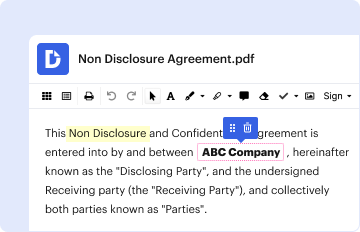
Type text, add images, blackout confidential details, add comments, highlights and more.
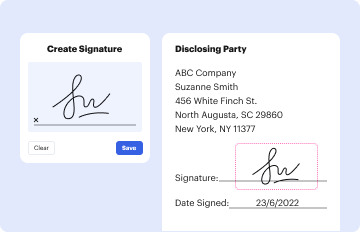
02. Sign it in a few clicks
Draw your signature, type it, upload its image, or use your mobile device as a signature pad.
03. Share your form with others
Send it via email, link, or fax. You can also download it, export it or print it out.
How to use or fill out Interrogatories to Plaintiff for Motor Vehicle Occurrence - North Dakota
Ease of Setup
DocHub User Ratings on G2
Ease of Use
DocHub User Ratings on G2
Click ‘Get Form’ to open it in the editor.
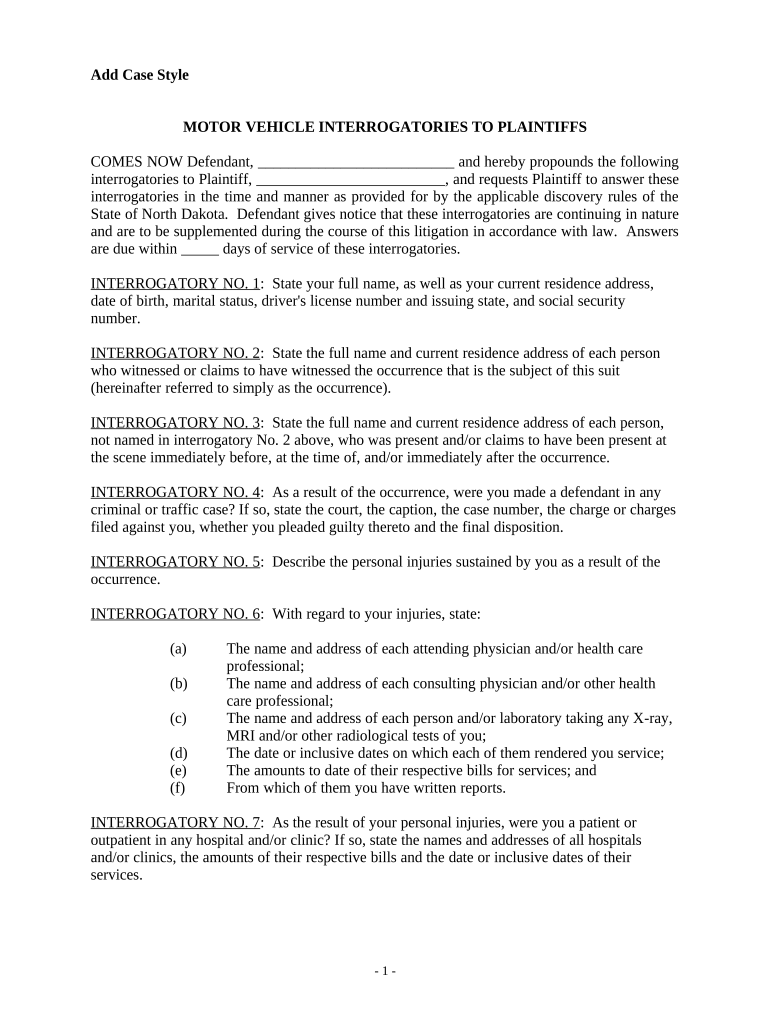
Begin by entering the case style at the top of the form, including the names of the parties involved.
In INTERROGATORY NO. 1, provide your full name, current residence address, date of birth, marital status, driver's license number and issuing state, and social security number.
Continue with INTERROGATORY NO. 2 by listing all witnesses who saw the occurrence. Ensure you include their full names and addresses.
For each subsequent interrogatory, carefully read the questions and fill in your responses accurately. Pay special attention to details regarding injuries, medical treatment, and any prior claims.
Once completed, review your answers for accuracy before saving or exporting your document for submission.
Start using our platform today to streamline your document editing process for free!
Fill out Interrogatories to Plaintiff for Motor Vehicle Occurrence - North Dakota online It's free
How to respond to plaintiffs first set of interrogatories?
In California, you have 30 days to respond to an interrogatory. If you do not respond within this time, the opposing side can file a motion to compel with the court. The court may require them to first consult with you about your failure to respond before officially filing a motion to compel.
What are first interrogatories?
Interrogatories are a discovery tool that the parties can use to have specific questions about a case answered before trial. Interrogatories are lists of questions sent to the other party that s/he must respond to in writing.
What is the rule 33 D interrogatories?
Rule 33(d) states that a party electing to respond to an interrogatory by providing electronically stored information must ensure that the interrogating party can locate and identify it as readily as can the party served, and that the responding party must give the interrogating party a reasonable opportunity to
What is the rule 197 interrogatories?
Rule 197. Interrogatories to Parties (Nov1998) 197.1 Interrogatories. A party may serve on another party no later than 30 days before the end of the discovery period - written interrogatories to inquire about any matter within the scope of discovery except matters covered by Rule 195.
What are the petitioners first interrogatories to the respondent?
Petitioners First Continuing Interrogatories are written questions sent to the Respondent to gather detailed information about custody, visitation, and support. Respondents must answer these under oath within a set deadline, often 30 days. These discovery tools help clarify each partys position before court hearings.
Related Searches
North dakota Court RulesNorth dakota Rule of Civil Procedure 26Nd r civ p 37FRCP 26(b)(5 B)
Security and compliance
At DocHub, your data security is our priority. We follow HIPAA, SOC2, GDPR, and other standards, so you can work on your documents with confidence.
How do you respond to plaintiffs first set of interrogatories?
Your answers to the interrogatories should usually be short, clear, and direct and should answer only the question that is being asked. This is not the time to set out your entire case or defense to the other side. Take the time to make sure your answers are correct and truthful.
How much time do you have to respond to interrogatories?
The responding party must serve its answers and any objections within 30 days after being served with the interrogatories. A shorter or longer time may be stipulated to under Rule 29 or be ordered by the court.
Related links
Pre-Trial Discovery of Liability Insurance Policy Limits
An unresolved procedural question, yet to be passed upon by the Supreme Court of North Dakota, arises in a situation which can best be elucidated by a
Before starting a civil action, or case, the Plaintiff must determine if the North Dakota State. District Courts have jurisdiction. Interrogatories Rule 33
Cookie consent notice
This site uses cookies to enhance site navigation and personalize your experience.
By using this site you agree to our use of cookies as described in our Privacy Notice.
You can modify your selections by visiting our Cookie and Advertising Notice.