
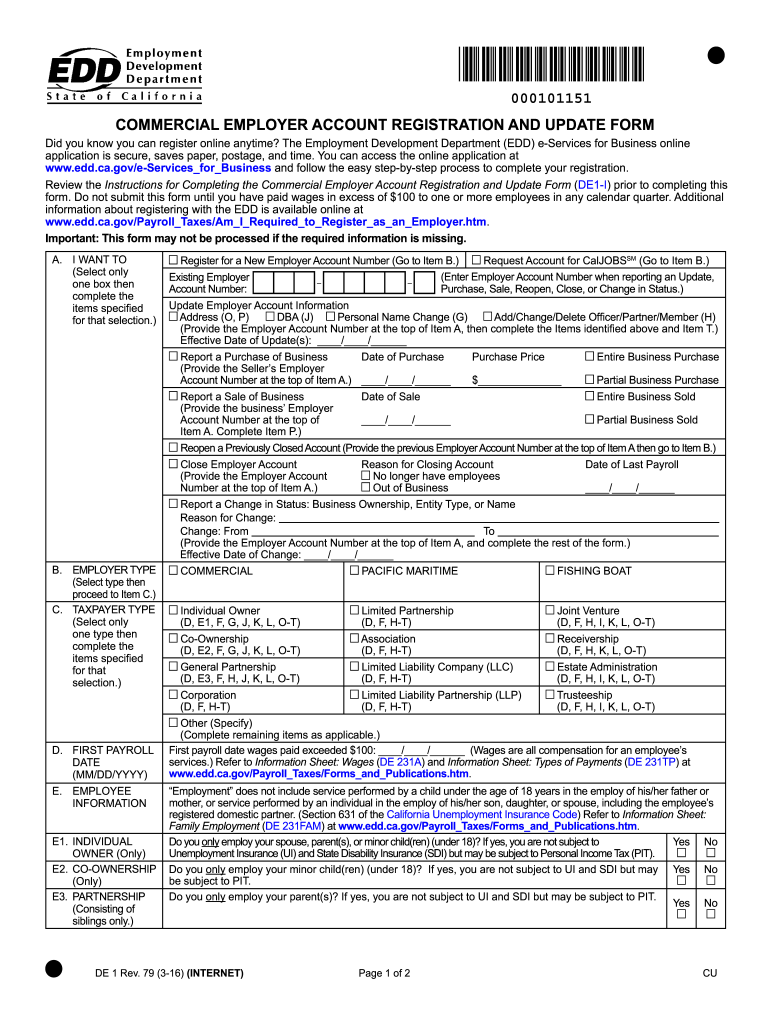







Definition and Purpose of DE-1 Form
The DE-1 form, also known as the Commercial Employer Account Registration and Update Form, is utilized by businesses in California to register as new employers with the Employment Development Department (EDD). It serves as a means to update existing account information or report changes in the business status. The primary aim of this form is to systematically manage employer information for efficient payroll tax administration.
Components of the DE-1 Form
The DE-1 form collects specific details from employers, including:
- Business name and address
- Federal Employer Identification Number (FEIN)
- Type of ownership or management
- Nature and description of business activities
- Payroll details
This comprehensive data facilitates the EDD in maintaining accurate records, ensuring businesses comply with payroll tax requirements.
Steps to Complete the DE-1 Form
Filling out the DE-1 form requires careful attention to detail to ensure compliance with legal and administrative requirements. Here are the essential steps to guide you through the process:
- Gather Required Information: Before starting, collect the necessary details such as the FEIN, business type, and contact information.
- Complete the Form: Fill in sections like business identification, employment details, and ownership information accurately.
- Review for Accuracy: Double-check all entries for errors or omissions to prevent processing delays.
- Submit the Form: Once completed, submit the DE-1 to the EDD either online, via mail, or in person, based on what is most convenient and applicable.
Potential Pitfalls
- Omitting crucial information, such as changes in business structure or contact details, can lead to miscommunication or compliance issues.
How to Obtain the DE-1 Form
Accessing the DE-1 form is straightforward, as it is readily available through various channels. The most common methods for obtaining the form include:
- EDD Website: The form is downloadable directly from the official Employment Development Department's site, ensuring you have the most current version.
- In-Person Request: Visit an EDD office for physical copies if online access is not feasible.
- Postal Request: Request a mailed copy via the EDD's customer service line if you prefer receiving documents through traditional mail.
Consider reviewing guidelines and instructions available on the EDD website to assist in understanding and completing the form accurately.
Who Typically Uses the DE-1 Form
Primarily, the DE-1 form caters to a range of business entities that are required to manage employer-related taxes in California. This includes:
- New Employers: Businesses initiating hiring in California must register for payroll tax reporting by submitting the DE-1 form.
- Existing Employers Updating Information: Companies with changes in business status, such as new ownership, relocations, or business type adjustments, need to update their records via the DE-1 form.
- Consultants and Accountants: Professionals working on behalf of clients may also engage with this form to ensure their clients comply with legal obligations.
This form is crucial for maintaining proper employer records under the jurisdiction of California's EDD, ensuring compliance with state tax laws.


Key Elements of the DE-1 Form
Understanding the sections and their requirements in the DE-1 form is essential for successful submission. Notable elements include:
- Employer Identification Information: Contains fields for business identification numbers and details.
- Business Structure and Type: Captures the legal and operational nature of the business.
- Employment and Payroll Information: Requires details around the number of employees, wages paid, and pay frequency.
Common Mistakes
- Failing to update changes in management or business name can cause discrepancies and potential compliance issues with the EDD.
Legal Use and Compliance for the DE-1 Form
Employers in California must adhere to specific legal standards when using and submitting the DE-1 form to ensure compliance with state labor laws. The form helps in meeting various obligations such as:
- Payroll Tax Reporting: Accurate registration facilitates timely tax reporting and payments.
- Legal Representation of Business Changes: Ensures all business amendments are documented officially, complying with regulatory standards.
Non-Compliance Penalties
Failure to submit or update the DE-1 form can result in penalties, including fines or suspension of business privileges, underscoring the importance of adherence.
Examples of DE-1 Usage in Different Scenarios
Various case studies illustrate the practical application of the DE-1 form:
- Start-ups: A technology start-up registering for the first time to hire employees legally and manage payroll taxes.
- Mergers and Acquisitions: A manufacturing company merging with another entity, necessitating updates to the EDD records to reflect these changes.
- Seasonal Businesses: An agricultural enterprise hiring seasonally and ensuring compliance each year by revisiting the DE-1 form for accuracy.
Such examples underscore how the DE-1 form is pivotal for different business scenarios, safeguarding compliance and smooth operation within California.
Filing Deadlines and Important Dates for DE-1
Timeliness is crucial when dealing with the DE-1 form to avoid penalties or disruptions. Key deadlines include:
- Initial Registration: Employers must file the DE-1 form within 15 days of paying more than $100 in wages to ensure timely compliance.
- Update Submissions: Any business status changes should be reported promptly to avoid penalties.
Calendar Planning
Businesses should incorporate filing deadlines into their planning calendar, ensuring that updates or initial submissions are executed within the allocated timeframe to maintain uninterrupted compliance.




