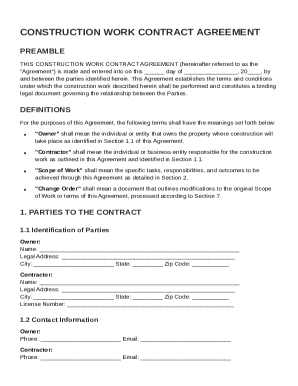
After financial statements 2026

Get Form
after financial statements Preview on Page 1

Here's how it works

01. Edit your form online
Type text, add images, blackout confidential details, add comments, highlights and more.
02. Sign it in a few clicks
Draw your signature, type it, upload its image, or use your mobile device as a signature pad.
03. Share your form with others
Send it via email, link, or fax. You can also download it, export it or print it out.

How to use or fill out after financial statements with our platform

Form edit decoration
9.5
Ease of Setup
DocHub User Ratings on G2
9.0
Ease of Use
DocHub User Ratings on G2
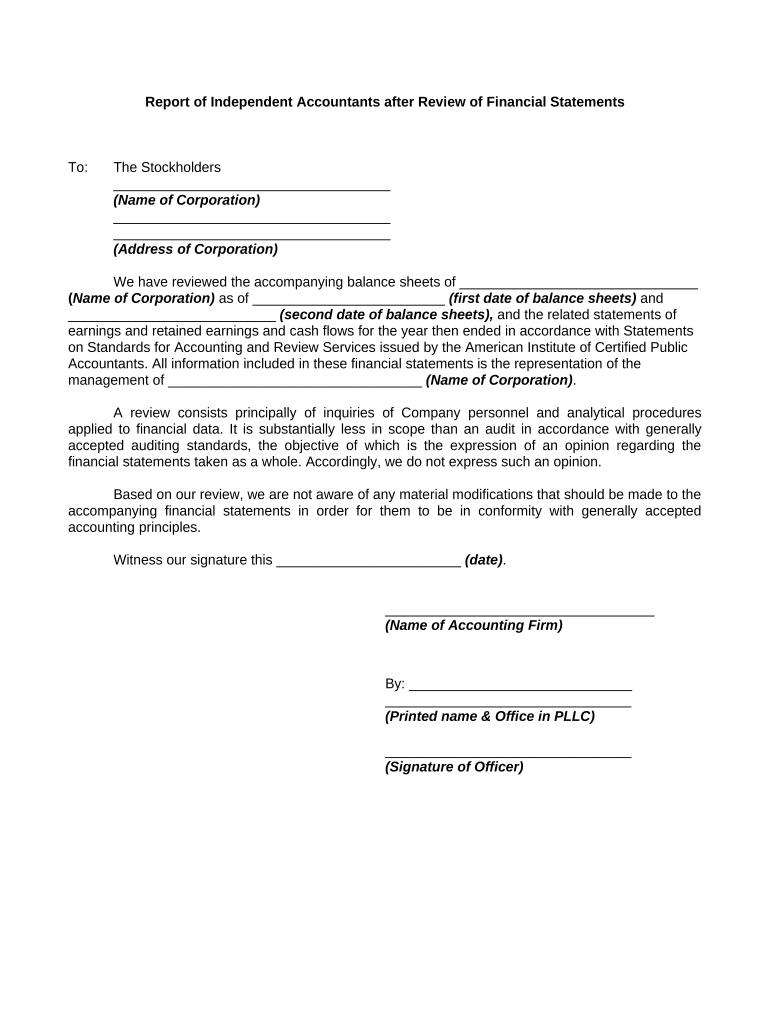
  1. Click ‘Get Form’ to open the after financial statements document in the editor.
  2. Begin by entering the name of the corporation in the designated field at the top of the document. This ensures that all parties are aware of which entity is being reviewed.
  3. Next, fill in the address of the corporation. Accurate contact information is crucial for proper communication and record-keeping.
  4. Proceed to input the dates for the balance sheets. These should reflect the specific periods being reviewed, ensuring clarity on financial performance over time.
  5. In the section regarding management representation, confirm that all information provided is accurate and complete as per management's assertions.
  6. Finally, ensure that you sign and date the document where indicated, including your printed name and office title to validate your review.

Start using our platform today to streamline your document editing and signing process for free!

be ready to get more

Complete this form in 5 minutes or less

Get form

Got questions?

We have answers to the most popular questions from our customers. If you can't find an answer to your question, please contact us.
Contact us
To quickly summarize, the five steps in the accounting cycle include: collecting and analyzing transactions, journalizing the entries, posting the entries into the ledger, checking for errors and trial balance, and lastly, the reporting period.
Accounting comprises four fundamental stages: recording, classifying, summarising, and interpreting financial data. While not typically labelled as a formal phase, effective communication is an indispensable component.
What is the 5 Step Accounting Cycle? Step 1: Identify and Analyze Transactions. Step 2: Record Transactions in the Journal. Step 3: Post Transactions to the Ledger. Step 4: Prepare an Unadjusted Trial Balance. Step 5: Make Adjusting Entries and Prepare Financial Statements.
7 steps of the accounting cycle Step 1 Analysing and Recording Transactions. Step 2 Posting Journal Entries to General Journal. Step 3 Post transactions to general ledger. Step 4 Unadjusted Trial Balance. Step 5 Making Adjusting Entries. Step 6 Generating Financial Statements. Step 7 Closing books.
The five main types of accounting include cost accounting, financial accounting, forensic accounting, management accounting and tax accounting.

Security and compliance

At DocHub, your data security is our priority. We follow HIPAA, SOC2, GDPR, and other standards, so you can work on your documents with confidence.

Learn more
ccpa2
pci-dss
gdpr-compliance
hipaa
soc-compliance

People also ask

Step 8: Closing the Books After the financial statements are completed, its time to close the books. This can be a good time to reflect and compare the firms performance with other periods and peers. Further analysis could reveal areas for improvement and highlight where the company has done well.
How to post in accounting Enter the account information. Create unique journal entries. Enter the debits and credits. Move entries to a general ledger. Calculate account balances. Check for and correct errors.
Developing Accounting Information Systems (AIS) includes five basic steps that include planning, analysis, design, implementation, and support. The time period associated with each of these steps can be as short as a few weeks or as long as several years depending on the objectives.

Related links