




01. Edit your how to file for full custody in ny online online
Type text, add images, blackout confidential details, add comments, highlights and more.

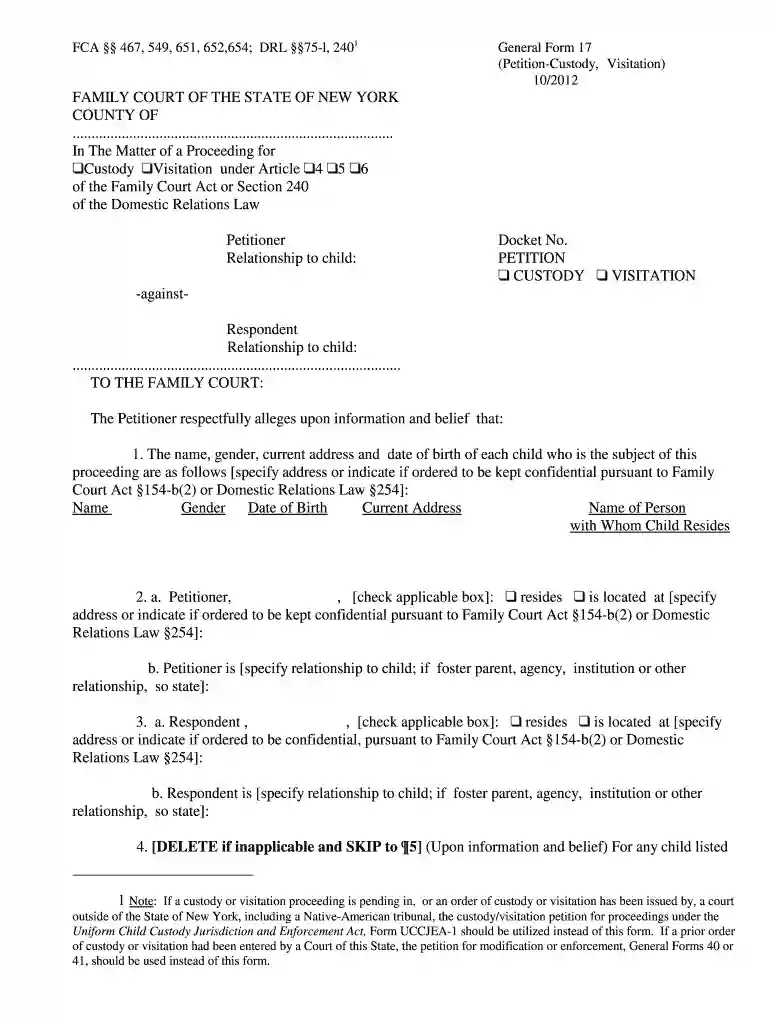
Type text, add images, blackout confidential details, add comments, highlights and more.

Draw your signature, type it, upload its image, or use your mobile device as a signature pad.

Send child custody application form ny via email, link, or fax. You can also download it, export it or print it out.
NYS family court forms are essential legal documents used in New York’s family courts to handle cases involving custody, visitation, child support, divorce, and other familial issues. Each form serves a specific purpose, and filling them out accurately is crucial for proceeding with legal matters. Below we explore the different types of forms available, how to effectively use them, and the overarching legal framework governing their use.
New York State offers various family court forms, each tailored to address specific legal needs. Some of the most common forms include:
Custody and Visitation Forms:
Child Support Forms:
Divorce Forms:
Understanding the specific forms required for your case is the first step toward effective resolution. Directions for each form typically outline necessary information such as the parties involved, the relationship to the children, and any previous legal actions taken.
Filing family court forms online has streamlined the process for many involved in legal proceedings. Here are the essential steps for filing:
Access the Forms:
Choose the Right Form:
Complete the Form:
Submit Online:
Confirmation of Submission:
Understanding how to navigate the online filing system can significantly reduce processing times and create a more efficient experience.
Completing NYS family court forms accurately is vital for your case. Key elements to consider include:
Personal Information:
Case Information:
Supporting Documentation:
When preparing and submitting family court forms, it is important to avoid common pitfalls that could delay your case. Consider the following:
Incomplete Forms:
Incorrect Filing Fee:
Failing to Serve Documents:
Navigating family court can be complex, and seeking additional resources may be beneficial:
Legal Aid Services:
Family Court Locations:
Guidelines from the NYS Unified Court System:
Understanding the range of NYS family court forms, the procedures for filing them, and the potential mistakes to avoid can equip individuals with the knowledge needed to effectively manage their family legal issues. Familiarizing yourself with these aspects is essential for ensuring a smooth process in navigating family law and court requirements.
We've got more versions of the how to file for full custody in ny online form. Select the right how to file for full custody in ny online version from the list and start editing it straight away!
At DocHub, your data security is our priority. We follow HIPAA, SOC2, GDPR, and other standards, so you can work on your documents with confidence.



Guardianship Forms (Family Court Act Article 6; S.C.P.A.; Social Services Law Section 384-B) Form 6-1 - Petition for appointment as (guardian of person) (Read more
(b) The certificate of need shall set forth the names of individuals authorized by the educational institution or commercial or industrial firms to have custodyRead more


