






Definition & Meaning
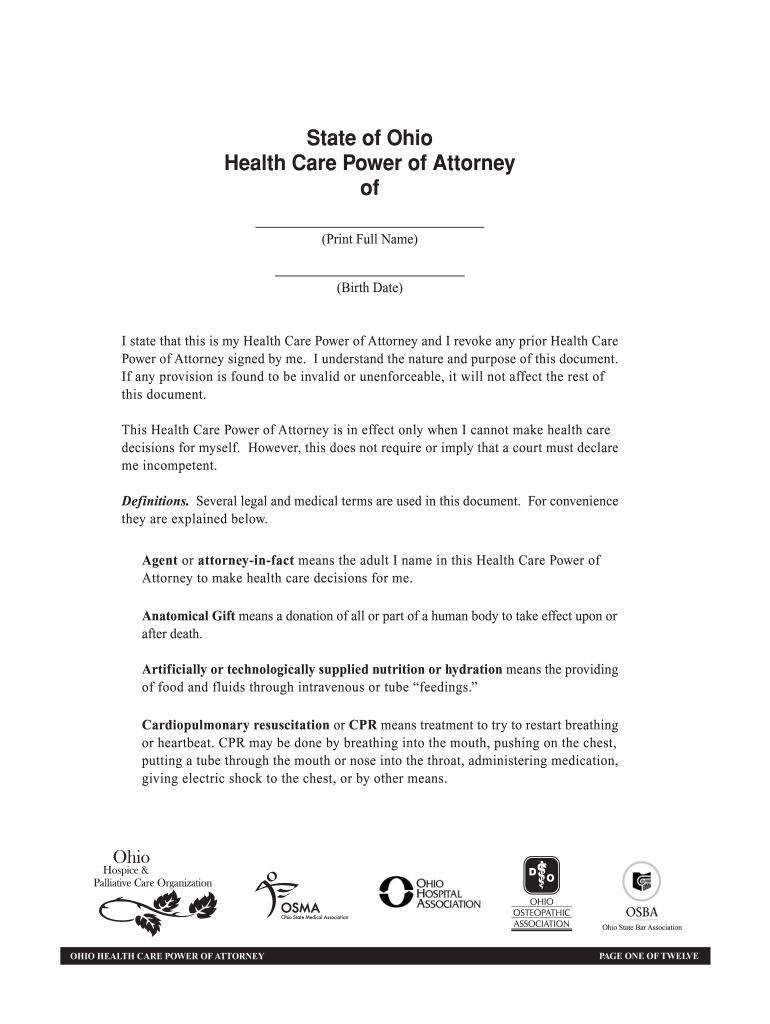
An Ohio Health Care Power of Attorney is a legal document that empowers an individual, known as the principal, to designate an agent to make health care decisions on their behalf when they are incapacitated. This document is vital as it ensures that medical preferences are respected and decisions are made by a trusted person. It also revokes any prior health care powers of attorney, thus maintaining the clarity and assurance of the principal's wishes.
Key Components
- Principal: The individual granting the authority to make health care decisions.
- Agent: The person designated to make decisions on the principal's behalf.
- Scope of Authority: The range of decisions the agent can make, including life-sustaining treatment and comfort care.
Important Terms Related to Ohio Health Care Power of Attorney
Familiarity with key terms is crucial for both principal and agent to ensure the document's proper use and understanding.
Essential Terminology
- Incapacity: The condition in which the principal is unable to make informed health care decisions.
- Alternate Agent: A backup individual designated to act as an agent if the primary agent is unavailable.
- Life-Sustaining Treatment: Medical procedures that extend the life of a patient who is otherwise unable to survive unassisted.
Key Elements of the Ohio Health Care Power of Attorney
The document contains several critical elements that establish the framework and limitations for the agent's decision-making powers.
Core Attributes
- Agent's Authority: Detailed specifications on the types of medical decisions permitted.
- Limitations: Any restrictions on what the agent may decide, ensuring adherence to the principal's specific health care preferences.
- Effective Date: The conditions under which the agent's authority becomes active, typically when the principal is no longer capable of making decisions.
State-Specific Rules for the Ohio Health Care Power of Attorney
The Ohio Health Care Power of Attorney must comply with Ohio state laws, which govern its creation, execution, and applicability.
Ohio Legal Requirements
- Witnesses and Notarization: Often requires two witnesses or a notary public to validate the signing of the document.
- Revocation: The principal can revoke the power of attorney at any time in writing or by destroying the document.
- Statutory Form: Ohio provides a statutory form which, if used, assures compliance with state legal standards.
Steps to Complete the Ohio Health Care Power of Attorney
Completing the document requires careful adherence to specific steps to ensure its legal validity.
Detailed Procedure
- Obtain the Form: Access the form provided by Ohio or through legal resources.
- Fill Out Principal and Agent Information: Include accurate personal details of both parties.
- Specify Health Care Preferences: Clearly articulate any instructions or limitations for medical care.
- Select Alternate Agents: Designate individuals who will serve if the primary agent cannot.
- Sign and Date: The principal must sign the form in the presence of required witnesses or a notary.
Legal Use of the Ohio Health Care Power of Attorney
The legal use of the form is critical in ensuring that health care decisions are carried out according to the principal's directives.
Practical Applications
- Hospital Settings: Authorize the agent to make medical decisions during hospital stays or medical emergencies.
- End-of-Life Care: Enable the agent to determine the scope and manner of life-sustaining treatments.
Who Typically Uses the Ohio Health Care Power of Attorney
This form is widely used by individuals planning for future medical care, especially those with known medical conditions or advanced age.


Common Users
- Elderly Individuals: Often prepare the document as part of estate planning.
- People with Chronic Illnesses: Use the form to ensure medical treatment aligns with personal wishes.
- Veterans and Military Personnel: May employ the document in anticipation of deployment or medical risks.

Examples of Using the Ohio Health Care Power of Attorney
Scenarios in which the Ohio Health Care Power of Attorney can be utilized demonstrate its practical importance.
Common Scenarios
- During Surgery: If unforeseen complications arise, an agent can make critical decisions.
- In Long-Term Care Facilities: Allows for consistent and preferred medical treatment when the principal is unable to communicate.
- Unconscious Conditions: The agent can make timely decisions about treatment if the principal is unconscious.
Why You Should Have an Ohio Health Care Power of Attorney
Understanding the importance of this document underscores why individuals should consider creating one.
Benefits and Importance
- Preparation for Uncertainty: Ensures that medical decisions are made by someone who knows and respects the principal's values and desires.
- Legal Assurance: Protects the principal’s rights by preventing unauthorized decision-making.
- Emotional Relief: Offers peace of mind to both the principal and their family, knowing that medical preferences will be respected in times of need.