

Texas cohabitation 2026

Get Form
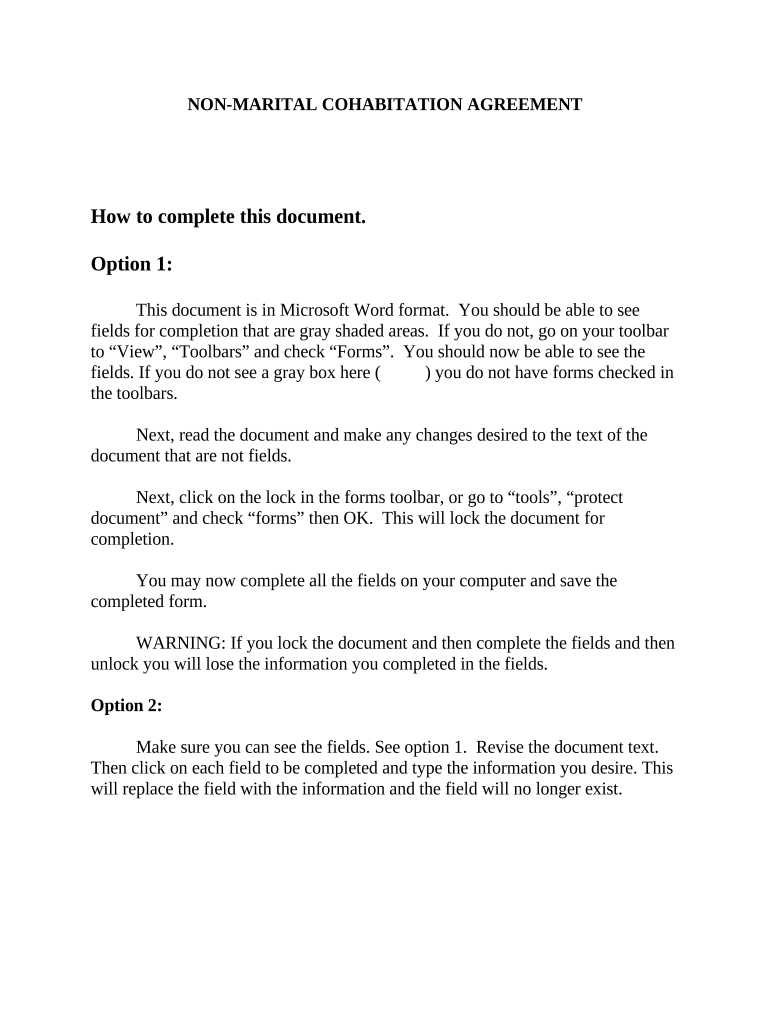
texas cohabitation Preview on Page 1

Here's how it works

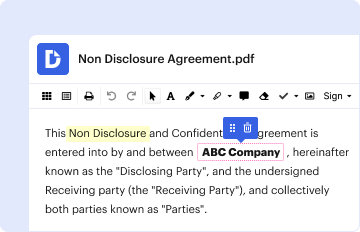
01. Edit your form online
Type text, add images, blackout confidential details, add comments, highlights and more.
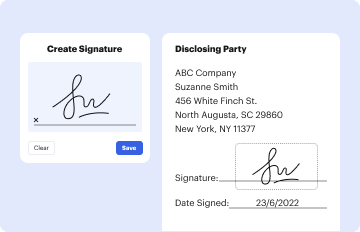
02. Sign it in a few clicks
Draw your signature, type it, upload its image, or use your mobile device as a signature pad.
03. Share your form with others
Send it via email, link, or fax. You can also download it, export it or print it out.

How to use or fill out Texas Cohabitation Agreement

Form edit decoration
9.5
Ease of Setup
DocHub User Ratings on G2
9.0
Ease of Use
DocHub User Ratings on G2
  1. Start by accessing the Texas Cohabitation Agreement on our platform. Click ‘Get Form’ to open it in the editor.
  2. Begin with the introductory section, filling in the names and addresses of both parties involved. Ensure that all information is accurate and up-to-date.
  3. Proceed to the 'Previously Owned Property' section. Clearly outline any property owned prior to cohabitation, specifying ownership details as necessary.
  4. In the 'Debts' section, indicate how debts will be managed during and after cohabitation. Choose whether each party will be responsible for their own debts or if they will share responsibility.
  5. Complete the 'Wills' section by attaching copies of existing wills, ensuring they align with this agreement's terms.
  6. Fill out financial disclosures in Exhibits A and B, detailing assets and liabilities for both parties. This transparency is crucial for mutual understanding.
  7. Review all sections carefully before finalizing. Once satisfied, sign the document digitally using our editor’s signing feature.

Empower your cohabitation journey—start editing your Texas Cohabitation Agreement today for free!

be ready to get more

Complete this form in 5 minutes or less

Get form

Got questions?

We have answers to the most popular questions from our customers. If you can't find an answer to your question, please contact us.
Contact us
Legal Requirements for Cohabitation Agreements in Texas The Texas Family Code contains limited provisions regarding cohabitation agreements. Specifically, it merely states that a cohabitation agreement or promise cannot be enforced unless it is in writing and signed by the person obligated by the agreement.
Under Texas law, if a father leaves his child with someone else for at least six months without support or communication, he may be considered to have abandoned the child.
How long youve been together has no bearing on proving a common law marriage. However, you do need to meet the same residency requirements traditionally married couples do, which means at least one of the two parties must reside in the state for at least 6 months to legally marry.
Cohabitation for at least five years: Both parties must have lived together continuously as husband and wife for at least five years before the date of the marriage. The five-year cohabitation must be uninterrupted and must show that both parties were living in a relationship akin to marriage.
In Texas, specific rules govern the concept of common law marriage, including the common law marriage 6 months rule. This rule stipulates that couples can be considered legally married if they have lived together and presented themselves as a married couple for at least six months, along with meeting other criteria.

Security and compliance

At DocHub, your data security is our priority. We follow HIPAA, SOC2, GDPR, and other standards, so you can work on your documents with confidence.

Learn more
ccpa2
pci-dss
gdpr-compliance
hipaa
soc-compliance

People also ask

Texas law provides some protections to job applicants by prohibiting reports conducted by consumer reporting agencies to include criminal history information older than 7 years in their reports. The federal Fair Credit Reporting Act provides similar protections. However, there are some exceptions to this 7-year rule.
How long do we need to be together? Texas law does not require the couple to be together for a specific period of time before they can declare themselves to be in a common law marriage. As long as both parties agree to the three elements listed in Section 2.401, they meet the requirements of a common law marriage.

Related links