






Definition & Meaning
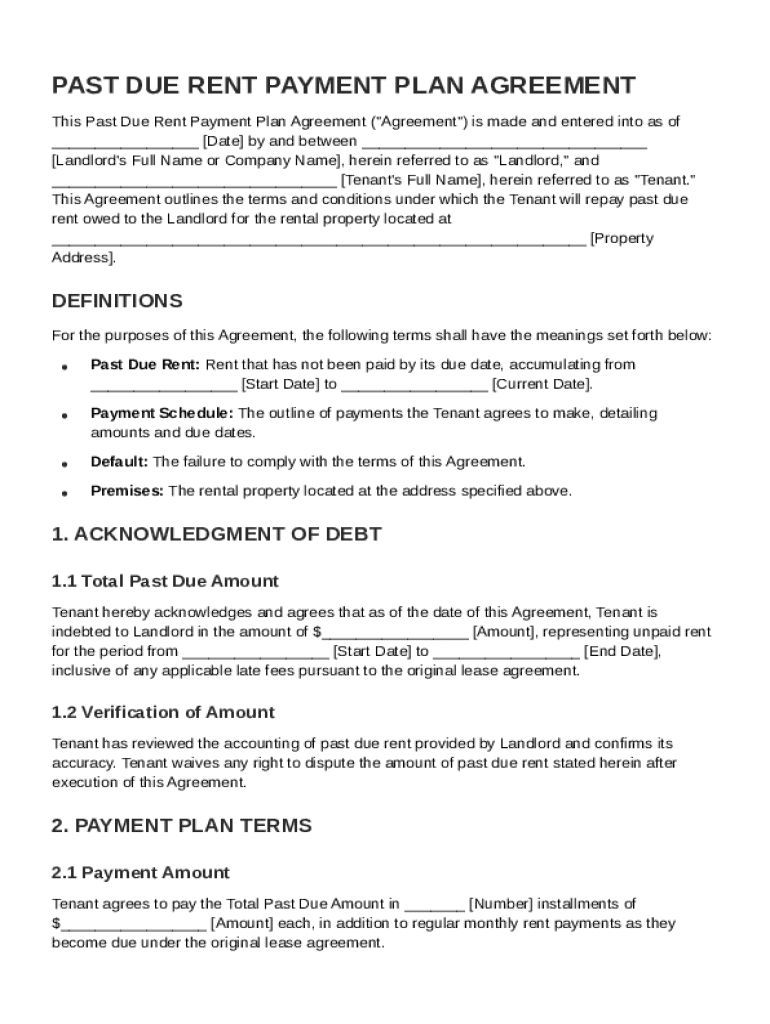
A Past Due Rent Payment Plan Agreement Template is a structured document used to formalize an arrangement between a landlord and a tenant to repay overdue rent. This template provides a clear framework for both parties to agree on the terms of repayment, ensuring all involved understand their commitments. It typically includes definitions of key terms, an acknowledgment of debt, a detailed repayment schedule, and obligations for each party. The agreement aims to protect the rights of both the landlord and tenant while facilitating the repayment of overdue rent in a systematic manner.
Key Elements of the Past Due Rent Payment Plan Agreement Template
Several core components are crucial to a Past Due Rent Payment Plan Agreement Template:
- Acknowledgment of Debt: This section specifies the total overdue amount the tenant owes.
- Repayment Plan: A detailed schedule for repayments, including dates and amounts.
- Parties Obligated: Responsibilities and commitments of both the landlord and tenant.
- Default Consequences: The actions or penalties if the tenant fails to adhere to the agreement.
- Modification Clause: Provisions for altering the agreement if circumstances change.
- Governing Law: Specifies the legal jurisdiction overseeing the agreement.
- Severability Clause: Assures that if one part of the agreement is invalid, the rest remains enforceable.
How to Obtain the Past Due Rent Payment Plan Agreement Template
To acquire a Past Due Rent Payment Plan Agreement Template, several avenues are available to tenants and landlords:
- Online Legal Document Services: Websites offer downloadable templates for a fee or free.
- Real Estate Professional Recommendations: Agents or property managers might provide templates commonly used in the industry.
- Legal Consultations: Attorneys can draft personalized agreements suited to specific situations.
- Property Management Software: Some platforms include templates within their document management features.
Steps to Complete the Past Due Rent Payment Plan Agreement Template
Successfully completing a Past Due Rent Payment Plan Agreement Template involves several clear steps:
- Enter Personal Information: Include the names and contact details of both tenant and landlord.
- Detail Overdue Amounts: Clearly state the total overdue rent that needs repayment.
- Set a Payment Schedule: Outline specific dates and payment amounts agreed upon by both parties.
- Define Additional Terms: Add any specific obligations or clauses that apply to the situation.
- Signatures: Ensure both tenant and landlord sign and date the agreement to validate its terms.
Important Terms Related to Past Due Rent Payment Plan Agreement Template
Understanding the terminology within the agreement is crucial:
- Default: Refers to the failure to meet the terms, such as missing a payment.
- Guarantor: An individual who agrees to be responsible for the tenant's debt if they default.
- Force Majeure: Events outside the control of either party that might prevent fulfillment of the contract.
- Cure Period: The timeframe allowed to rectify a default before penalties apply.
Legal Use of the Past Due Rent Payment Plan Agreement Template
The legal basis for using these agreements includes:
- ESIGN Act: Ensures electronic signatures on agreements are legally binding.
- State Laws: Each state may have specific laws governing rental agreements that must be considered.
- Compliancy Requirements: Ensuring all terms comply with applicable tenant-landlord laws to avoid disputes.
State-Specific Rules for the Past Due Rent Payment Plan Agreement Template
Rental laws can vary by state, affecting the interpretation and enforceability of these agreements:
- Notice Requirements: States differ on whether a formal notice must be given before deeming rent overdue.
- Maximum Late Fees: Some states cap the amount landlords can charge as late fees.
- Grace Periods: Varying grace periods within state laws impact when the overdue status applies.
Examples of Using the Past Due Rent Payment Plan Agreement Template
Real-world applications can provide clearer insights:
- Short-term Financial Hardship: A tenant recovering from a brief financial setback might use a plan to spread repayment over several months.
- End-of-Lease Agreement Adjustments: Tenants nearing the end of their lease can use these agreements to settle accounts without renewing tenancy.
- Tenant Business Closure: Commercial tenants facing business closure might negotiate a plan to pay back outstanding lease payments gradually.