
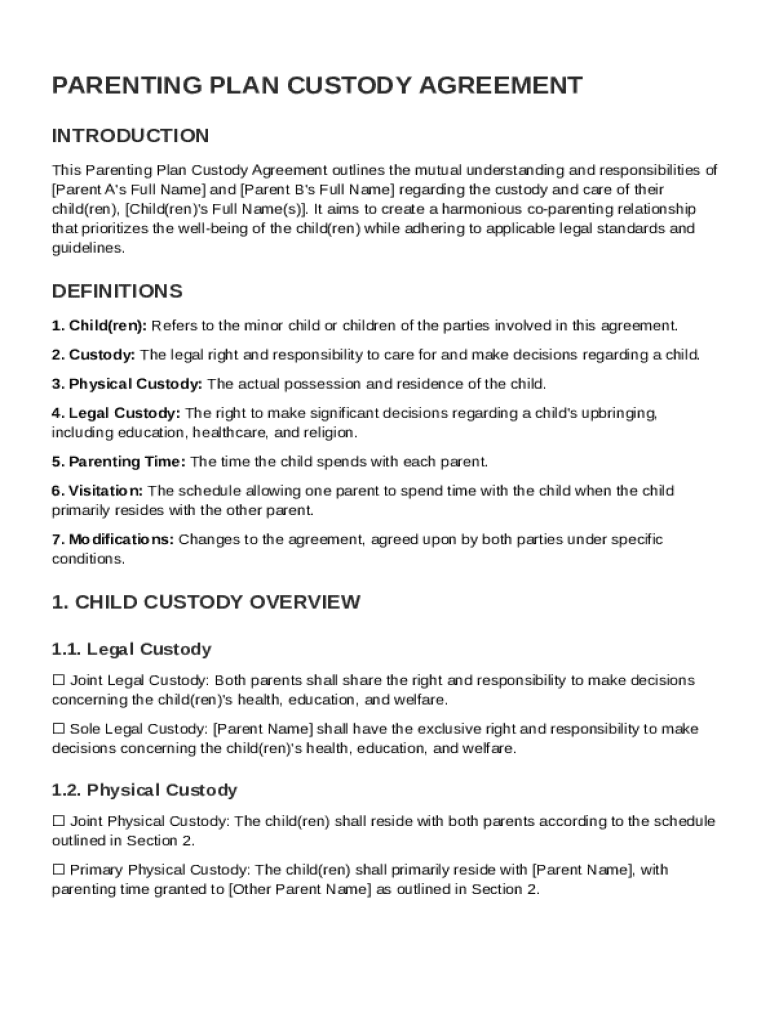







Definition and Meaning
The Parenting Plan Custody Agreement Template provides a framework for parents to outline responsibilities and arrangements regarding the custody and care of their child or children. This agreement typically includes definitions of key terms, details about legal and physical custody options, a parenting time schedule, decision-making responsibilities, and communication protocols. The aim is to foster cooperative co-parenting that prioritizes the child's well-being.
Key Elements of the Parenting Plan Custody Agreement Template
This template addresses various critical components necessary for a comprehensive custody agreement. Key elements include:
- Legal and Physical Custody: Definitions and allocations of these custody types, specifying whether custody is joint or sole, and which parent has decision-making authority.
- Parenting Time Schedule: A detailed calendar specifying when each parent spends time with the children, including holidays, school breaks, and special occasions.
- Decision-Making Responsibilities: Allocation of responsibilities for decisions related to education, healthcare, religious upbringing, and extracurricular activities.
Steps to Complete the Parenting Plan Custody Agreement Template
- Gather Information: Collect all relevant information about the child or children, including personal details, needs, and preferences.
- Define Custody Arrangements: Decide on legal and physical custody arrangements, ensuring that both parents' roles are clearly outlined.
- Establish a Parenting Time Schedule: Develop a calendar explicitly indicating when each parent will spend time with the children.
- Outline Decision-Making Responsibilities: Clearly document which parent is responsible for major life decisions, considering joint or sole decision-making where applicable.
- Set Communication Protocols: Outline methods of communication between parents and with the children, ensuring channels are appropriate and respectful.
Legal Use of the Parenting Plan Custody Agreement Template
This template is designed to ensure compliance with legal requirements related to child custody in the United States. When properly completed, signed, and notarized (if applicable), the agreement becomes a binding legal document. It can be submitted to family courts as part of divorce proceedings, custody disputes, or parental separation agreements. Adjustments based on evolving circumstances must adhere to state-specific legal procedures.
State-Specific Rules for the Parenting Plan Custody Agreement Template
Custody agreements can vary significantly from state to state, reflecting different legal standards and requirements. It's essential to consult local laws or seek legal counsel to ensure that the agreement meets specific state regulations. Some states may require mediation or parental education programs as part of the custody agreement process, influencing the provisions included in the template.
Examples of Using the Parenting Plan Custody Agreement Template
- Co-Parenting After Divorce: The template helps divorced parents establish a formal arrangement for shared parenting responsibilities.
- Legal Separation: Couples opting for a legal separation can use the template to formalize interim parenting arrangements.
- Modification Requests: In cases where current arrangements are no longer feasible, the template allows parents to propose modifications to existing agreements.
Important Terms Related to the Parenting Plan Custody Agreement Template
Understanding key terms is crucial for drafting an effective custody agreement:
-
Joint Custody: An arrangement in which both parents share decision-making responsibilities and/or physical custody of their children.
-
Sole Custody: One parent holds exclusive rights and responsibilities for making decisions and/or housing the child.
-
Visitation Rights: Scheduled periods where the non-custodial parent spends time with their child.
Examples of Variations or Alternatives to the Parenting Plan Custody Agreement Template
While the universal elements are constant, variations can include:
- Custom Schedules: Some families might require unique schedules to accommodate work commitments or special needs.
- Alternative Dispute Resolution: Incorporating mediation or arbitration clauses for resolving future disagreements about the agreed-upon terms.
These alternatives can provide flexibility to meet the unique needs and circumstances of the family involved.


