
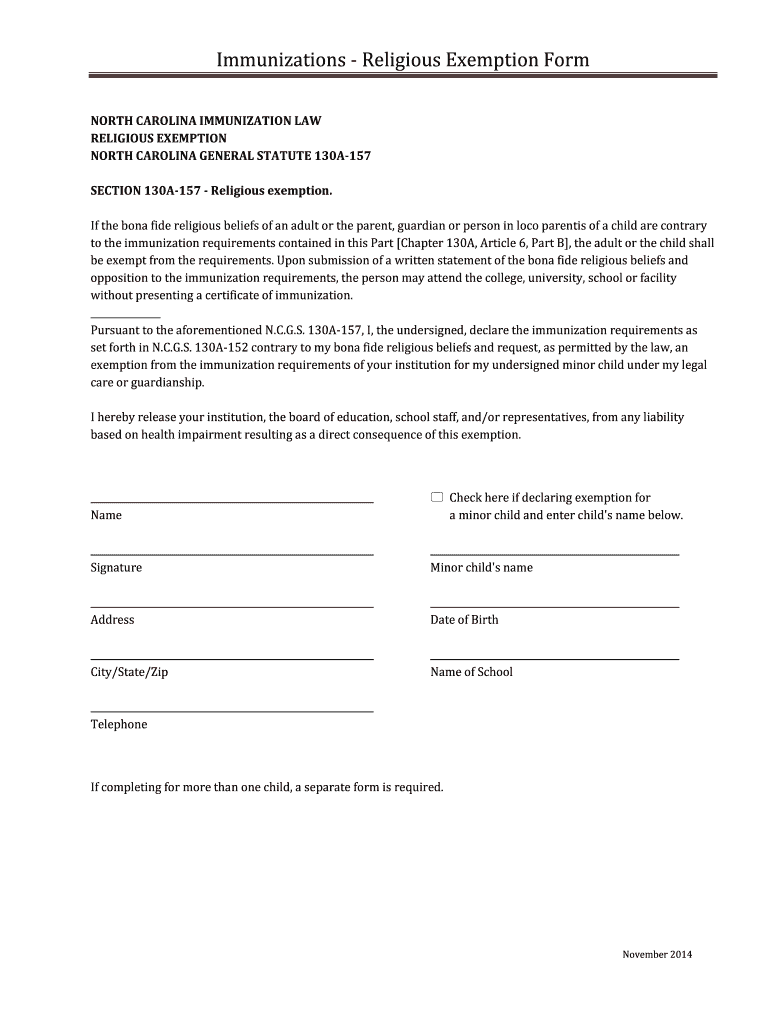







Overview of the Immunization Religious Exemption Form
The Immunization Religious Exemption Form provides a structured way for individuals in the United States, particularly in Ohio, to formally request a religious exemption from immunization requirements. This is often necessary for school enrollment, allowing parents or guardians to declare their genuine religious beliefs opposing immunizations. The form simplifies the process and ensures compliance with local laws concerning public health and religious rights.
Eligibility Criteria for Exemption
To successfully apply for a religious exemption from immunization, applicants must meet specific criteria set by their state. In Ohio, the following points outline the essential eligibility requirements:
- Religious Beliefs: Applicants must have bona fide religious beliefs that contradict the administration of vaccines. These beliefs need to be genuine and rooted in a recognized religion or personal spiritual belief system.
- Age Considerations: Adults can apply for themselves, while guardians must submit the form on behalf of minors. Understanding the age of the child or individual for whom the exemption is sought is essential since regulations may differ.
- School Requirements: The exemption is typically applicable to children attending public and private schools, as well as child care facilities, which often mandate up-to-date immunization records for enrollment.


Steps to Complete the Exemption Form
Filling out the Immunization Religious Exemption Form involves a series of methodical steps to ensure accuracy and compliance:
- Obtain the Form: The form can be downloaded in PDF format from official state education or health department websites.
- Personal Information: Fill in basic details such as the applicant’s name, address, date of birth, and school information. This section ensures that the request is associated with the correct individual.
- Religious Belief Declaration: Clearly articulate the specific religious beliefs preventing immunization. It is important to be detailed yet concise, explaining the belief’s significance to the applicant’s spiritual life.
- Signature and Date: Sign the form to validate the exemption request. It’s also crucial to date the document to establish a clear timeline.
- Submission: Follow the specified submission guidelines, which may include mailing the form to a health department or school district office.
Important Terms Related to Exemption
Understanding the terminology associated with the Immunization Religious Exemption Form can aid applicants in navigating the process with ease:
- Bona Fide: A genuine belief that must be sincerely held by the applicant.
- Immunization: A process through which individuals are made immune or resistant to specific infectious diseases, often through vaccinations.
- Exemption: Official permission to deviate from mandatory immunization requirements due to qualified reasons, including religious beliefs.
Common Misconceptions About Religious Exemptions
Many individuals may harbor misconceptions regarding the religious exemption process for vaccinations in Ohio. Understanding these can provide clarity:
- Automatic Approval: A common myth is that all religious exemption requests are automatically granted. In reality, they are evaluated on a case-by-case basis and must meet the state’s legal criteria.
- Necessity for a specific religion: Some believe that exemptions are only available for particular religions. However, personal beliefs that align with recognized religious tenets can also qualify.
- Misunderstanding of consequences: People often think opting out of vaccinations will not affect school attendance. However, each school and district may have different policies affecting enrollment and attendance.
Legal Framework Surrounding Immunization Exemptions
The legal foundation for obtaining a religious exemption in Ohio is primarily governed by state laws. Here are the key points:
- Ohio Revised Code Section 3313.671: This law outlines the provisions under which exemptions can be granted and the criteria that applicants must meet.
- Health Department Regulations: Local health departments are tasked with reviewing exemption requests and ensuring they comply with state laws on public health and safety.
- Religious Freedom Protections: The U.S. Constitution provides individuals the right to practice their religion freely, influencing how exemptions are viewed within the legal framework.
Case Studies and Practical Examples
Real-world examples of situations where the Religious Exemption Form is utilized can illustrate its implications:
- Scenario One: A parent whose family practice follows a holistic health approach may use the form to exempt their child from receiving required vaccines for school while providing a detailed explanation reflecting their beliefs.
- Scenario Two: An adult may seek to decline vaccinations required for work at a healthcare facility, asserting their religious beliefs following a recognized faith tradition, detailing their ethical stance to support their request.
These scenarios highlight the diverse contexts in which the form can be applicable, ensuring various perspectives are acknowledged in the exemption process.




