




California residential purchase agreement 2020 pdf-2026

Get Form
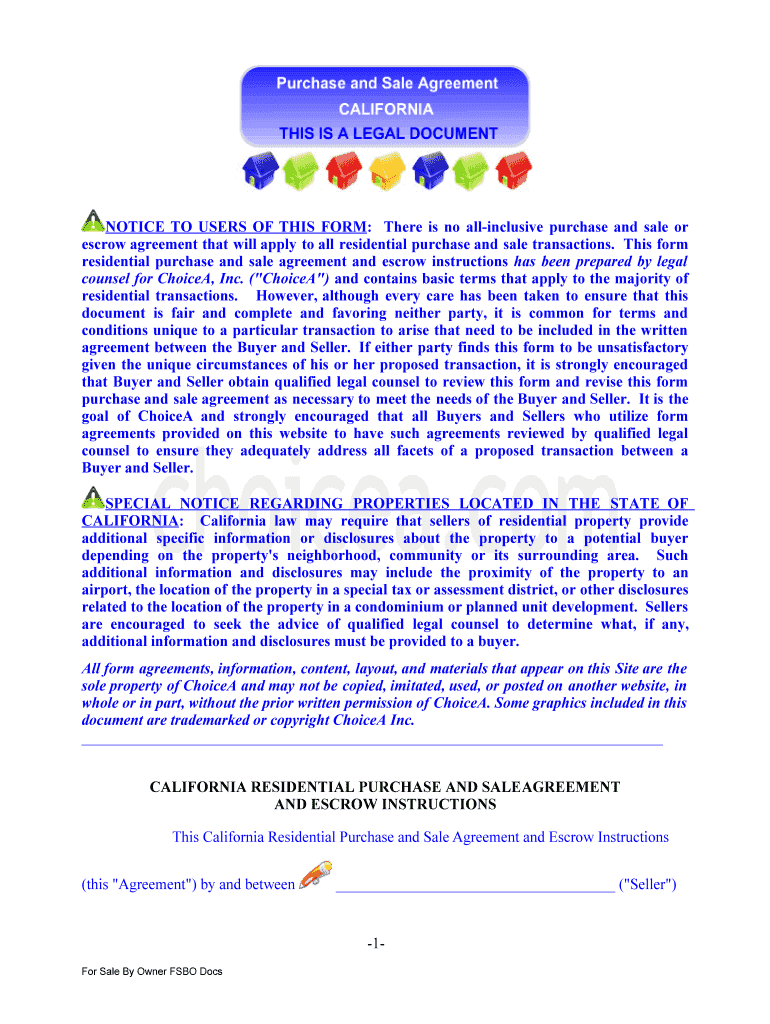
for sale by owner contract Preview on Page 1

Here's how it works

01. Edit your for sale by owner contract online
Type text, add images, blackout confidential details, add comments, highlights and more.
02. Sign it in a few clicks
Draw your signature, type it, upload its image, or use your mobile device as a signature pad.
03. Share your form with others
Send real estate contract for sale by owner via email, link, or fax. You can also download it, export it or print it out.

Definition & Meaning

The California Residential Purchase Agreement 2020 is a legally binding contract used in California real estate transactions. This agreement defines the terms under which a buyer agrees to purchase a residential property from a seller. It covers crucial aspects like purchase price, financing terms, property condition, and closing procedures. The agreement ensures both parties understand their rights and obligations, minimizing disputes and facilitating a smooth property transfer.

How to Obtain the California Residential Purchase Agreement 2020 PDF

Acquiring the California Residential Purchase Agreement 2020 can be done through several channels:

  • Real Estate Professionals: Many realtors and brokers in California provide this form to their clients as part of their services.
  • Official Forms: The California Association of Realtors (CAR) often supplies members with updated forms, including the purchase agreement.
  • Online Document Services: Platforms like DocHub provide access to various legal forms, including the residential purchase agreement in PDF format. Users can download and customize the document to fit specific transaction needs.

Steps to Complete the California Residential Purchase Agreement 2020

  1. Fill in Date and Parties Information: Begin by entering the agreement date and complete names of the buyer and seller.
  2. Describe the Property: Include the full address and any legal property descriptions necessary.
  3. Set the Purchase Price: Clearly state the purchase price and terms of payment, including earnest money deposits and financing details.
  4. Outline Contingencies: Specify any contingencies, such as inspections, appraisals, or financing conditions.
  5. Detail Closing Arrangements: Provide information on the closing date, location, and any required actions from both parties before closing.
  6. Signatures: Both parties must sign and date the agreement where indicated, confirming their acceptance of the terms.

Who Typically Uses the California Residential Purchase Agreement 2020

  • Homebuyers and Sellers: Primarily used by individuals involved in buying or selling a home.
  • Real Estate Agents: Facilitate transactions by preparing and reviewing these agreements for their clients.
  • Attorneys: Often review agreements on behalf of clients to ensure adherence to state laws and protection of their client's interests.
  • Financial Institutions: Utilize the agreement’s details to assess loan applications and confirm property details against their lending criteria.

decoration image ratings of Dochub

Important Terms Related to the California Residential Purchase Agreement 2020

  • Earnest Money Deposit: A financial deposit made by the buyer to demonstrate their commitment to purchasing the property.
  • Contingencies: Specific conditions that must be met for the contract to be executed.
  • Escrow: An arrangement in which a third party temporarily holds the funds until all conditions of the agreement are met.
  • Disclosures: Mandatory information the seller must provide about the property to the buyer as per California law.

Key Elements of the California Residential Purchase Agreement 2020

  • Property Information: Detailed description and address.
  • Financial Terms: Purchase price, payment method, and escrow details.
  • Contingency Clauses: Conditions that protect the buyer, such as obtaining satisfactory home inspection results.
  • Disclosures and Inspections: Obligations of the seller to reveal certain conditions and issues regarding the property.
  • Signatures: The agreement is not legally binding until both parties have signed.

State-Specific Rules for the California Residential Purchase Agreement 2020

California real estate transactions are governed by specific state regulations:

  • Disclosure Requirements: Sellers must provide comprehensive disclosures about the property's condition, environmental hazards, and any legal disputes.
  • Cooling-Off Period: Certain deals must allow for a buyer's right to rescind the agreement within a specific period.
  • Rent Control Laws: Must be acknowledged in agreements involving tenant-occupied properties.

Legal Use of the California Residential Purchase Agreement 2020

  • Binding Contract: Once signed, the agreement is legally binding, obliging both parties to fulfill their respective duties.
  • Modification and Amendments: Any changes to the agreement must be documented in writing and signed by both parties to be valid.
  • Legal Counsel: Both buyers and sellers are encouraged to seek legal advice to understand the implications of the agreement and ensure compliance with legal standards.

Examples of Using the California Residential Purchase Agreement 2020

  • Scenario 1: A first-time homebuyer utilizes the form through their realtor, who explains each section and ensures all terms reflect the buyer’s requirements.
  • Scenario 2: A real estate investor uses the agreement to purchase multiple properties simultaneously, negotiating terms that include an inspection contingency to assess each property's condition.
  • Scenario 3: An estate attorney reviews the agreement on behalf of a client who is selling an inherited home to ensure compliance with both the contract terms and state law.
be ready to get more

Complete this form in 5 minutes or less

Get form

Got questions?

We have answers to the most popular questions from our customers. If you can't find an answer to your question, please contact us.
Contact us
A California Residential Purchase Agreement (RPA) is a legally binding contract between a buyer and seller. It lays out the terms of a real estate transaction, covering everything from price to closing dates.Feb 28, 2025
The four main types of real estate contracts are Purchase Agreements (for buying/selling), Lease Agreements (for renting), Assignment Contracts (transferring contract rights, often in wholesaling), and Power of Attorney (allowing someone to sign on your behalf). These cover different transaction types, from property transfer to temporary occupancy and legal representation. Heres a breakdown of each: Purchase Agreement: A contract between a buyer and seller detailing the terms (price, contingencies, closing date) for a property sale. Lease Agreement: An agreement between a landlord and tenant for renting property, outlining rent, duration, and rules. Assignment Contract: Transfers rights (like the right to buy) from one party to another, common in real estate investing. Power of Attorney (POA): Grants someone else the legal authority to act on your behalf in real estate transactions, useful if you cant be present. Other related real estate contracts include Listing Agreements (with agents) and Option Contracts, but the four above are foundational for transactions. AI can make mistakes, so double-check responsesWhat Are the Four Types of Real Estate Contracts? - MVSK Law FirmFeb 7, 2023 The four types of real estate contracts include purchase agreements, assignment contracts, lease agreements, and power Mazzoni Valvano Szewczyk Karam4 Types of Real Estate Contracts for Beginners | MashvisorJul 9, 2019Mashvisor
Yes, you can write your own purchase agreement, as its a legal document that doesnt strictly require a lawyer, but its generally not recommended for complex transactions like real estate without professional review due to DocHub legal risks, as its easy to miss crucial clauses, state-specific requirements, or unintentionally create unfavorable terms, which can lead to costly disputes. Using standardized templates or seeking help from a real estate agent or lawyer is usually best to ensure its clear, enforceable, and protects both parties. When You Might Write Your Own (Simple Transactions) Private Sales: For simple, low-value transactions where both parties are knowledgeable and agreeable. Basic Terms: If the deal involves straightforward terms, minimal contingencies, and no complex assets. Key Elements to Include Regardless of who writes it, a valid agreement needs: Parties Details: Full names and addresses of buyer and seller. Property Description: Legal description and address. Financial Terms: Purchase price, deposit amount, payment method. Conditions/Contingencies: Financing approval, inspections, sale of another property, etc. Dates: Closing date, possession date, acceptance deadline. Signatures: Legally binding when signed by all parties. Why Professional Help is Recommended (Especially for Real Estate) Legal Complexity: Real estate laws vary by state, and agreements have specific legal jargon. Risk Management: Agents and lawyers have insurance (Errors Omissions) for mistakes, which you wont have if you draft it yourself. Avoiding Pitfalls: Prevents missing essential clauses or unenforceable terms that could cost you dearly later. Best Practices Use Templates Wisely: Start with reputable templates (from legal sites, agents) but customize carefully. Get a Lawyers Review: Have an attorney review any agreement before signing, especially for DocHub purchases, to ensure it meets all legal needs and protects you. AI can make mistakes, so double-check responsesHow to draft a purchase agreement - DocHubApr 28, 2025 Can I write my own purchase agreement? Yes, you can absolutely write your own purchase agreement! But starting from scDocHubWhat is a real estate purchase agreement? - Rocket MortgageJun 20, 2025 Can I write my own purchase agreement? In theory, yes: Youre free to do so, given that a buyer or seller is allowed tRocket Mortgage
Yes, you can write your own house purchase agreement, and it can be legally binding if it includes all essential terms and is signed by both parties, but its generally highly unrecommended due to the complexity and risks, as standard forms from agents or attorneys are comprehensive and tailored to state laws, with many potential pitfalls for DIY contracts. You can use templates from legal sites as a starting point, but having a real estate attorney review it is crucial for protection, especially in complex deals, to ensure it covers all contingencies like inspections, financing, and legal descriptions. Why you might write your own (and why you shouldnt) DIY Feasibility: A simple, handwritten contract can be legally valid if it covers all terms (price, property, parties, conditions) and is signed, but this is risky, note users on Reddit and Avvo. Complexity: Real estate contracts involve detailed legal language, disclosures, and specific state requirements that standard forms from realtors or the state association already incorporate. Recommended approach Use Templates (with caution): Start with customizable templates from platforms like Rocket Lawyer, LawDepot, or DocHub as a base to understand key components. Include Key Details: Ensure you have the propertys legal description, purchase price, deposit amount, closing date, included fixtures/chattels, and essential contingencies (inspection, financing, appraisal). Get Professional Review: Strongly consider hiring a real estate attorney or title company to review your draft before signing. They ensure it aligns with current state laws and protects your interests, especially in For Sale By Owner (FSBO) situations. Key Takeaway While possible, writing your own purchase agreement for a house is fraught with potential legal issues; professional review is highly recommended to avoid costly mistakes, even if you use a template or write it yourself. AI can make mistakes, so double-check responsesCan/should I write and submit an offer myself and then engage a Oct 31, 2024 It has given me some crazy stuff that is absolutely not true and would have gotten someone in trouble if they had follRedditHow to draft a purchase agreement - DocHubApr 28, 2025 A real estate purchase agreement is typically created using a standardized form provided by a real estate agent, brokeDocHub
The California Instructions (RPA-CA) contract is used by real estate agents when a buyer makes an offer anywhere in California.

Security and compliance

At DocHub, your data security is our priority. We follow HIPAA, SOC2, GDPR, and other standards, so you can work on your documents with confidence.

Learn more
ccpa2
pci-dss
gdpr-compliance
hipaa
soc-compliance

People also ask

Failure to meet a contingency within the specified timeframe can entitle the seller to cancel the contract. BDocHub by Buyer: If the buyer fails to meet their obligations as laid out in the sales contract, the seller may have grounds for cancellation.
A valid real estate contract needs competent parties, a legal purpose, a clear offer and acceptance (meeting of the minds), consideration (value exchanged like money), and must be in writing and signed, ensuring all parties understand and agree to the terms, with specifics like property description and closing details included for enforceability. Here are the 5 core elements: Competent Parties: Both buyer and seller must be of legal age, sound mind, and not under duress, ensuring they have the legal capacity to enter the agreement. Legal Purpose: The contracts goal must be lawful, meaning it cant involve illegal activities or property use. Offer and Acceptance (Mutual Assent): One party makes a clear offer, and the other accepts it unequivocally, creating a meeting of the minds on the property and terms. Consideration: Something of value exchanged, typically the agreed-upon purchase price, but also includes other promises or items of value. Written Signed (Statute of Frauds): While verbal agreements can exist, real estate contracts must be in writing and signed by all parties to be enforceable, as required by the Statute of Frauds. Other Key Components for a Strong Contract: Property Description: A precise legal description, not just a street address. Contingencies: Conditions like financing, inspections, or appraisal that must be met. Disclosures: Required seller disclosures about property conditions. Timelines: Deadlines for inspections, financing, and closing. AI can make mistakes, so double-check responses5 Essential Elements of a Real Estate ContractLegally Competent Parties: The parties involved in the contract must be legally competent, meaning they are of legal age and have Eagle Property ManagementEssential Elements of a Real Estate Contract - RedfinAug 21, 2025 Essential elements of a real estate contract * Offer and acceptance. The buyer proposes an offer, and the seller mustRedfin

sell by owner contract